Bittersweet Nightshade
Solanum dulcamara
Family · Solanaceae
Solanum dulcamara climbs hedges with purple, yellow-anthered flowers and red berries toxic to pets. Tell it apart from deadly nightshade and dig it out for good
Solanum dulcamara
Plant profile
- WateringModerateWater every 10 days
- Light exposurePartial sun
Growth
- Family
- Solanaceae
- Life cycle
- Perennial
- Growth speed
- 7/10
- Mature size
- 100–400 cm
- Propagation
- Seed
- Division
FloweringPurple star-shaped flowers with yellow anthers, June to September, followed by berries ripening green to red (RHS)
DormancyDeciduous, woody base persists
Soil & climate
- Soil types
- sand, loam, clay
- Saline soil
- Not tolerated
- Drought tolerance
- No
Light & Placement
- Origin
- Azores, temperate Eurasia to northern Indo-China, and northwest Africa (POWO)
- Where to place it
- hedgerow
- fence
- riverbank
- waste ground
Safety
- Toxicity
- CatsToxic
- DogsToxic
- HorsesToxic
- HumansToxic
Invasive speciesNon-native and invasive outside its native Eurasian and North African range, including parts of North America, where it scrambles over shrubs and other vegetation and can form dense stands that shade out native plants (CABI).
Data fromGBIF Backbone Taxonomy: Solanum dulcamarPlants of the World Online (Kew): SolanuRHS: Solanum dulcamara (bittersweet)ASPCA Toxic and Non-Toxic Plants: EuropeCABI Compendium: Solanum dulcamara (bitt
Where it grows
World distribution
Bittersweet Nightshade is native to 50 countries: Afghanistan, Albania, Algeria, Austria, Belarus, Belgium, Bhutan, and Bulgaria….GBIF records 763,472 documented identifications across 94 countries, with the largest concentrations in United Kingdom, France, and Netherlands.
- Afghanistan
- Albania
- Algeria
- Austria
- Belarus
- Belgium
- Bhutan
- Bulgaria
- China
- Croatia
- Czechia
- Denmark
Show 38 more countriesShow fewer countries
- Estonia
- Finland
- France
- Georgia
- Germany
- Greece
- Hungary
- India
- Iran
- Iraq
- Ireland
- Italy
- Japan
- Kazakhstan
- Kyrgyzstan
- Lebanon
- Mongolia
- Morocco
- Myanmar (Burma)
- Netherlands
- Norway
- Pakistan
- Palestinian Territories
- Poland
- Portugal
- Romania
- Russia
- Spain
- Sweden
- Switzerland
- Tajikistan
- Tunisia
- Türkiye
- Turkmenistan
- Ukraine
- United Kingdom
- Uzbekistan
- Vietnam
Yellow to orange dots: concentration of documented identifications per country. Green countries: sourced native range. Source: GBIFNative range from POWO (Kew).
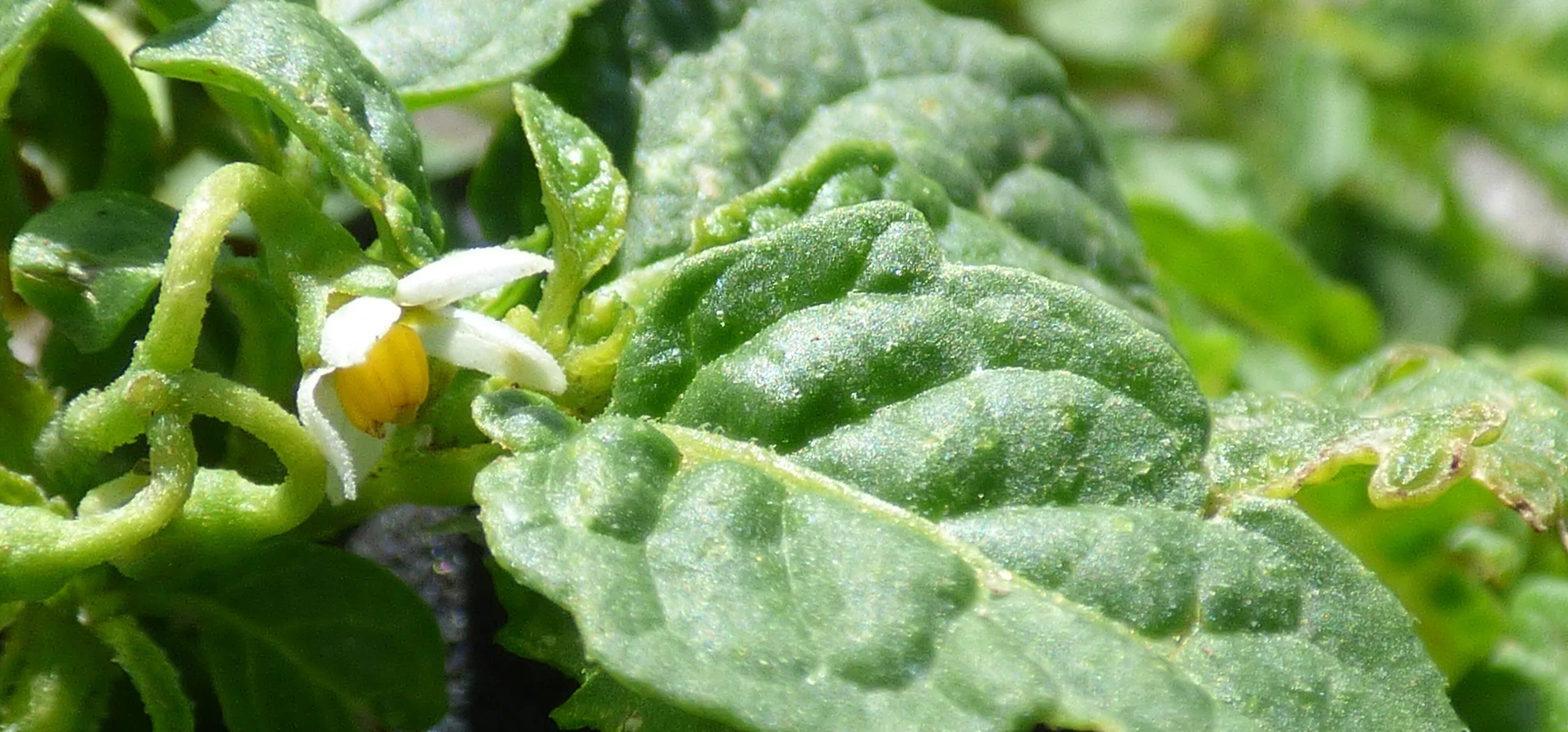
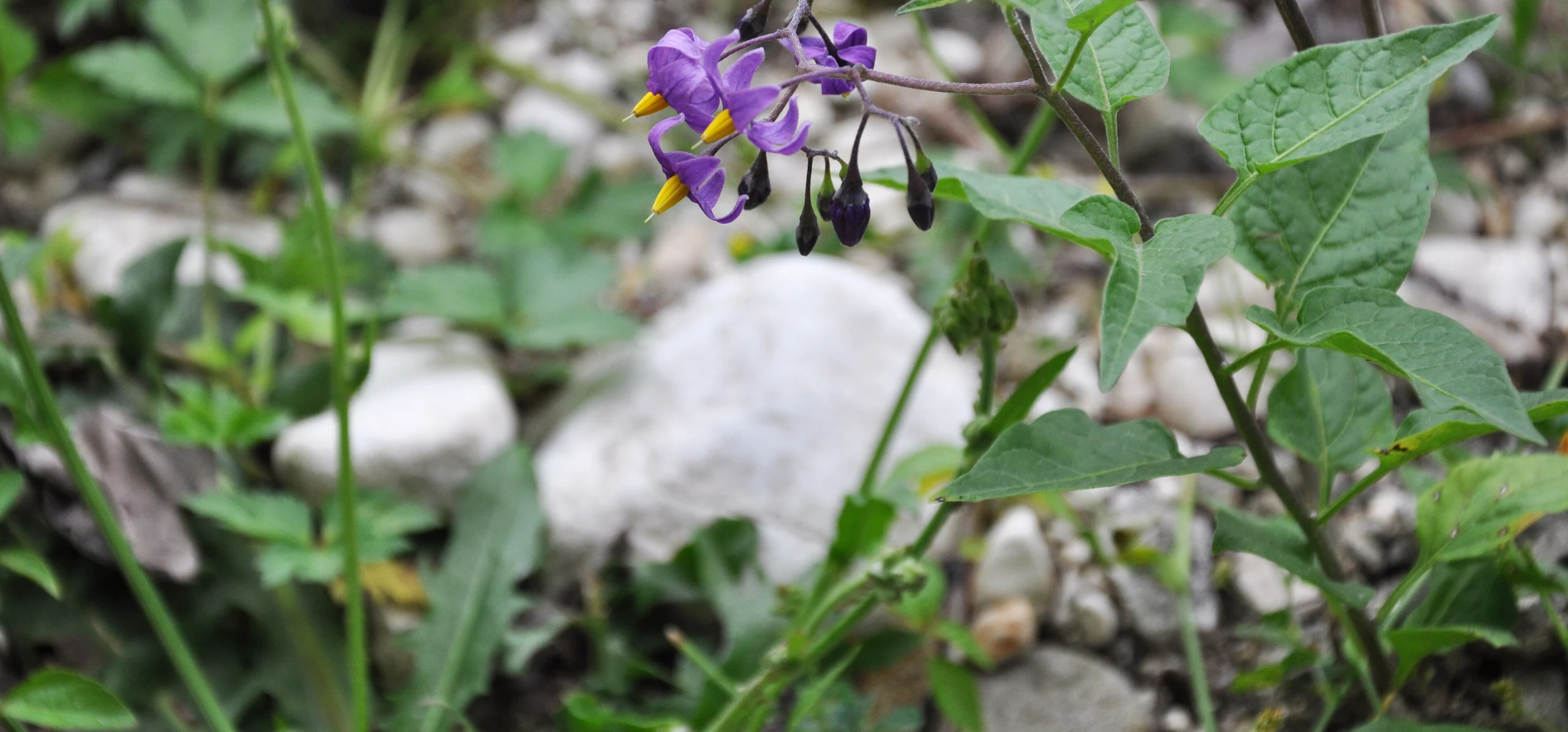
A woody, sprawling vine leaning out of a hedge or fence with small purple, star-shaped flowers and a cluster of bright yellow anthers pointing forward is almost certainly Solanum dulcamara, bittersweet nightshade. Almost nobody plants it: it arrives on its own, seeded in by a bird that ate the berries somewhere nearby, and by the time anyone notices the flowers it has usually already climbed several feet through whatever branch or wire it reached first. The berries that follow are toxic, which is the first thing most people want to know, and the plant is routinely confused with the far more dangerous deadly nightshade despite belonging to a different genus entirely. Getting rid of it for good means treating the root system as the target, not the vine on top of the fence.
Identifying Bittersweet Nightshade
The flowers give it away first: five reflexed purple petals swept back around a tight cone of bright yellow anthers, the same basic shape as a potato or tomato flower, since all three share the Solanaceae family. They open from around June through September, then give way to oval berries that hang in loose, drooping clusters, green at first and ripening through yellow to a glossy red. The leaves are usually arrow-shaped with one or two small lobes near the base that look like a pair of ears, on stems that are woody and gnarled toward the ground but soft and climbing higher up. Left to scramble over a hedge or fence, RHS notes it usually reaches 1 to 2 meters, occasionally climbing as high as 4 meters where there is enough support to hold it.
Solanum, Not Atropa: The Deadly Nightshade Confusion
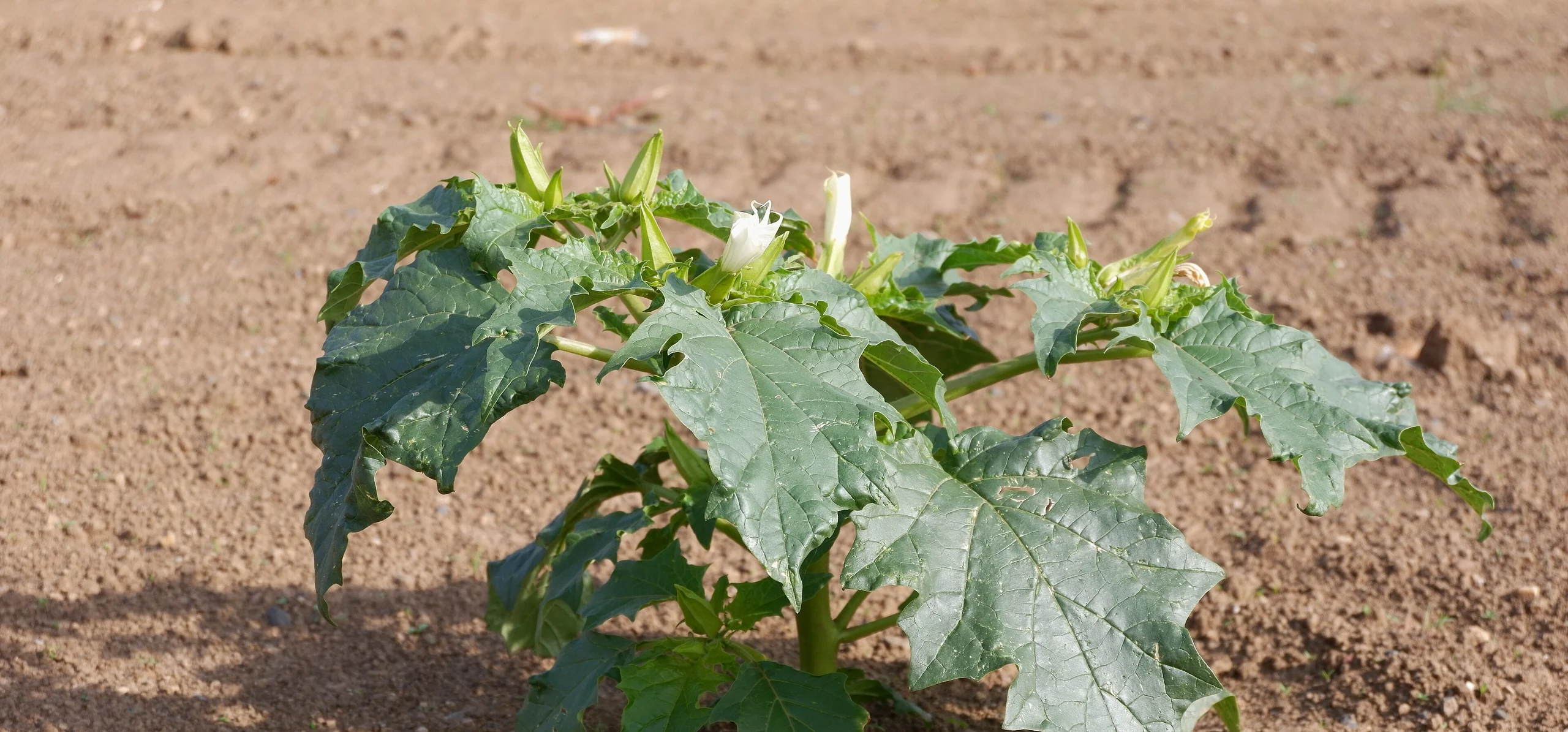
The name creates most of the confusion. Deadly nightshade, Atropa belladonna, is a different genus in the same family, and the two get mixed up constantly in casual conversation. Atropa has dull, bell-shaped, purplish-brown flowers and single shiny black berries sitting low in a bushy, non-climbing plant, while Solanum dulcamara has small star-shaped purple flowers with a yellow beak, red berries carried in clusters, and a climbing or scrambling habit that Atropa does not share. The toxic chemistry differs too: Atropa's tropane alkaloids, atropine and scopolamine, are far more dangerous in small doses than the solanine found in bittersweet nightshade, which is why the two should never be treated as interchangeable when someone is trying to work out what a child or pet has eaten.

Where It Grows: Hedges, Fences, and Damp Ground
Plants of the World Online lists its native range as the Azores, temperate Eurasia through to northern Indo-China, and northwest Africa, a spread that matches where it turns up as a true wildling: hedgerows, riverbanks, damp waste ground, and the base of fences and walls. RHS records it tolerating sandy, loamy, and clay soils, in conditions from mildly acid through neutral to mildly alkaline, provided drainage is reasonable, which explains why it shows up in such a wide range of gardens without anyone inviting it. It does not need coddling, and that tolerance for ordinary, unimproved ground is exactly what lets it establish in a gap in a hedge or a neglected corner and then keep going.
Toxic Berries and Solanine: What the ASPCA Says
The ASPCA lists European bittersweet as toxic to dogs, cats, and horses, naming solanine as the toxic principle. The clinical signs it records are vomiting and diarrhea as the common reaction, with drowsiness, low blood pressure, and a slowed heart rate listed as less common effects. RHS is blunter still, noting that all parts of the plant are toxic, not just the berries, so leaves and stems handled or chewed carry some risk as well. Unripe green berries carry more solanine than the ripe red ones, but relying on ripeness as a safety test is not something to try with a curious dog or a toddler; the safer approach is removing fruiting stems within reach and keeping pets and children away from the plant while it is up.
Why Birds Keep Spreading It
Bittersweet nightshade's berries are fleshy and conspicuously red once ripe, a combination that exists specifically to get eaten. CABI's compendium entry on the species describes birds as the main vector, swallowing the berries whole and passing the seed elsewhere in their droppings, which is how a plant nobody sowed ends up threaded through a hedge on the far side of a garden or town. It is the same mechanism that makes it hard to keep out permanently: even a garden that has had every visible vine dug out can get a fresh seedling the following spring from a bird perched on the fence.
An Aggressive Invader Outside Its Native Range
Within its native Eurasian and North African range, bittersweet nightshade behaves like an ordinary hedgerow plant, present but not dominant. CABI's compendium records it as introduced and invasive well beyond that range, including across parts of North America, where it scrambles over shrubs and other vegetation and can build up into dense stands that shade out what was growing underneath. Because the same bird dispersal that spreads it locally also carries it into new territory, and because it tolerates such a wide range of soils, it keeps turning up on disturbed ground, riverbanks, and forest edges far from where it started.
Removing It: Dig Out the Roots, Do Not Just Pull the Vine
Cutting or pulling the top growth feels productive but rarely finishes the job, because the plant is rhizomatous: it spreads by roots running under the soil as much as by seed, and a piece of root left behind is enough to send up a new shoot. The more reliable approach is to dig around the base and follow the roots out as far as they can be traced, rather than snapping the stem at ground level and calling it done. Where the root system is too extensive to remove in one session, repeated pulling of the regrowth every few weeks, over one or two full seasons, gradually exhausts the plant's reserves. Wear gloves throughout, both for the sap and for the toxicity, and bag up berries and root fragments rather than composting them, since compost heaps rarely get hot enough to kill viable seed.
A Real but Marginal Wildlife Value
None of this makes the plant worthless where it is native. Its flowers open through the height of summer, later than many hedgerow shrubs, and draw bees and other pollinating insects at a point in the season when some other nectar sources have already finished. The berries that make it a hazard to pets are exactly what songbirds rely on for late-season food, and a stretch of hedgerow with a few nightshade vines threaded through it is doing something for the birds that a nightshade-free hedge is not. That balance, useful in a native hedgerow and a liability in a garden bed or an introduced range, is the same one behind most plants people spend energy removing.
Test your plant knowledge
Tap a card to flip it and reveal the answer.
Bittersweet nightshade's purple flowers have a pointed cone of bright yellow anthers at the center. Tap to reveal ✓ True
The ASPCA lists bittersweet nightshade as non-toxic to cats and dogs. Tap to reveal ✕ False
Deadly nightshade (Atropa belladonna) and bittersweet nightshade (Solanum dulcamara) are the same genus. Tap to reveal ✕ False
Birds that eat the ripe red berries help spread bittersweet nightshade's seeds to new places. Tap to reveal ✓ True
Pulling the visible vine once is usually enough to get rid of bittersweet nightshade for good. Tap to reveal ✕ False
Sources
References consulted for this guide
- GBIF Backbone Taxonomy: Solanum dulcamara L.gbif.org
- Plants of the World Online (Kew): Solanum dulcamara L.powo.science.kew.org
- RHS: Solanum dulcamara (bittersweet)rhs.org.uk
- ASPCA Toxic and Non-Toxic Plants: European Bittersweetaspca.org
- CABI Compendium: Solanum dulcamara (bittersweet nightshade)cabi.org
- Reference entity : Wikipédiaen.wikipedia.org