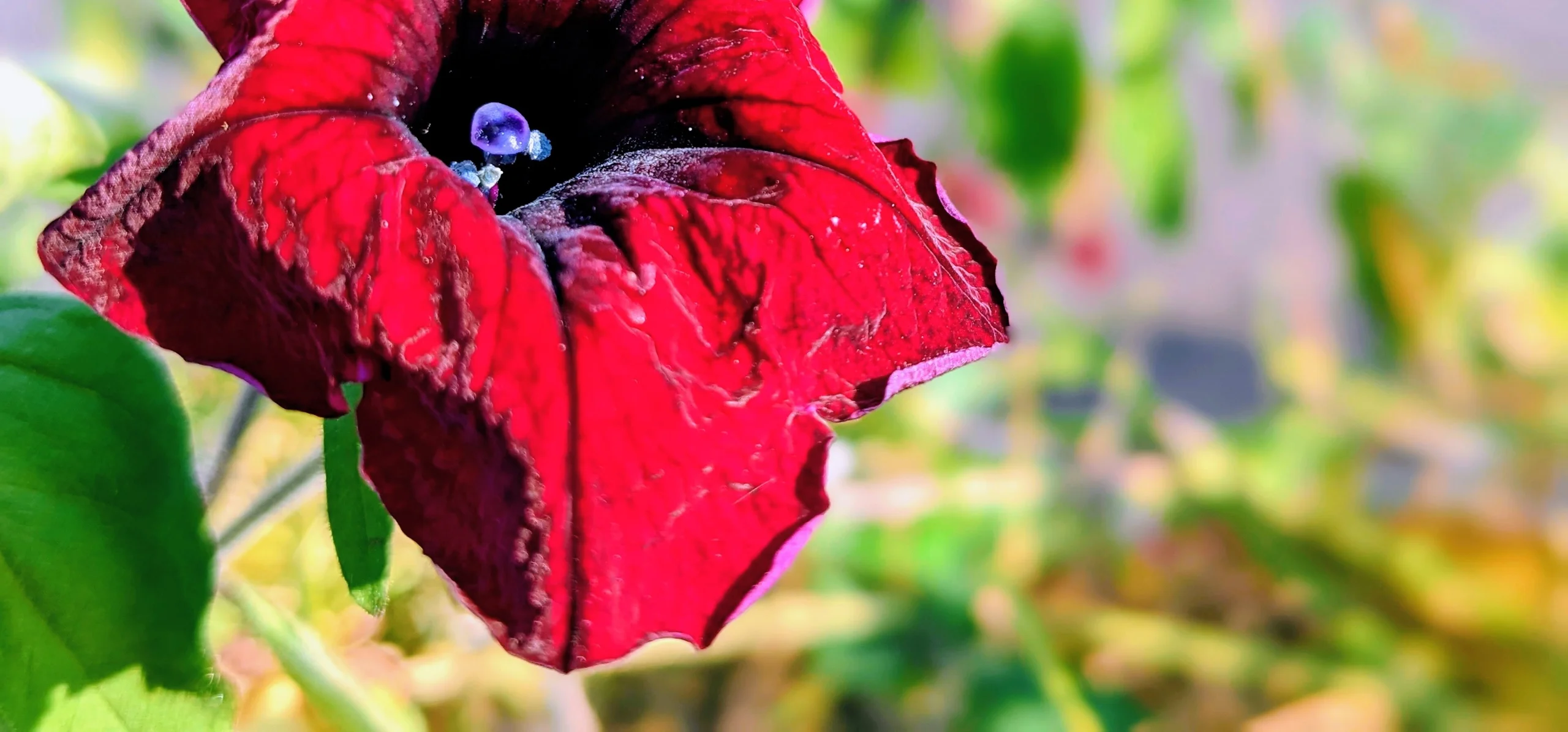
Garden Petunia
Petunia atkinsiana
Family · Solanaceae
Garden petunia care: full sun, deep watering every 7 to 10 days, monthly feeding, and pinching young plants for months of non-stop, weather-resistant blooms.
Petunia atkinsiana
Plant profile
- WateringModerateWater every 8 days
- Light exposurePartial sun
- Ideal temperature1–5 °C
- Hardiness zoneUSDA 10–11
Growth
- Family
- Solanaceae
- Life cycle
- Perennial
- Growth speed
- 7/10
- Mature size
- 15–45 cm
- Spread
- 30–90 cm
- Flowering
- Spring to first frost
- Propagation
- Seed
Dormancynone in warmth; killed by frost and grown as a half-hardy annual outside USDA zones 10a-11b, where it survives year round as a tender perennial with no real winter dormancy
Time to maturityflowers within its first season from sowing or planting out; NC State Extension lists a germination temperature of 72-75 degrees F (22-24 degrees C)
Soil & climate
- Soil pH
- pH 6–7
- Soil types
- sand, loam
- Drought tolerance
- No
Light & Placement
- Where to place it
- sunny border
- hanging basket
- window box
- large container
- free-draining, fertile potting mix in a container with drainage holes
OriginGarden hybrid, no native range; parent species from southern Brazil, Uruguay and Argentina
Safety
- Toxicity
- CatsSafe
- DogsSafe
- HorsesSafe
Data fromPetunia ×atkinsiana D.Don ex Loudon, GBIPOWO: Petunia ×atkinsiana (Sweet) D.Don ASPCA: Toxic and Non-Toxic Plants, PetunRHS: PetuniaNC State Extension Gardener Plant Toolbo
Where it grows
World distribution
GBIF records 5,222 documented identifications across 101 countries, with the largest concentrations in Sweden, United States, and Belgium.
Yellow to orange dots: concentration of documented identifications per country. Green countries: sourced native range. Source: GBIF.
A freshly bought garden petunia in a nursery six-pack is usually already in bloom, and it will keep flowering almost non-stop from planting out until the first hard frost if it gets full sun, regular water and a monthly feed. Despite the faint tomato-like smell of its crushed leaves, Petunia ×atkinsiana is not a species that grows wild anywhere: it is a complex garden hybrid, and every variety sold today, from compact bedding types to trailing basket series, descends from the same cross. It behaves as an annual almost everywhere, dying at the first freeze, and persists outdoors year round only in the mildest climates. The single most useful thing to know before planting it out is that it wants more sun and more regular water than most people expect from a small bedding plant.
A hybrid, not a wild species
Petunia ×atkinsiana is the accepted name (GBIF) for the complex hybrid swarm raised from two wild South American species: Petunia axillaris, a white, evening-scented petunia native from southern Brazil to central Argentina, and Petunia integrifolia, a smaller violet-purple flowered species native to southern Brazil, Uruguay and north-eastern Argentina. Nurseries and older references usually sell it under the synonym Petunia ×hybrida, same plant, different label. Because it is a hybrid rather than a wild species, it has no native range of its own to speak of, only garden and trial-ground origins going back to nineteenth-century British and French breeders who crossed the two parents.
What you buy at a garden centre falls into a handful of practical groups rather than botanical subspecies. Grandiflora types carry the largest, most ruffled single blooms and bruise fastest in heavy rain. Multiflora types trade flower size for sheer number of blooms and shrug off weather far better. Compact, mounding and trailing series bred for hanging baskets and ground cover are the ones spilling over walls and window boxes in midsummer. All of them are still Petunia ×atkinsiana, just selected for different habits.
Light and where to plant it
Give it full sun, six hours or more of direct light a day. It will limp along in two to six hours of light shade, but the flower count drops noticeably and stems stretch and thin out reaching for light. A sunny border, a hanging basket under open sky, a window box facing south, or a large container on a bright patio all suit it well. Pick a spot sheltered from strong, drying wind, thin petunia stems and large blooms both take damage in exposed positions, and wind also dries out containers far faster than gardeners expect.
Watering without drowning it
Established petunias in the ground need roughly 1 to 2 inches of water every seven to ten days, applied as a deep soak rather than little and often; frequent light watering trains roots to stay shallow and makes the whole plant less resilient in a hot spell. Water at the base rather than overhead where possible: wet flowers and foliage sitting damp overnight is exactly what invites grey mould and petal blight in humid weather. Containers and hanging baskets dry out far faster than garden soil because of their small volume and constant air exposure, so check them daily in warm weather rather than following a fixed garden schedule.


Soil, potting and feeding
Petunias want light, well-drained soil of medium fertility with a pH around 6.0 to 7.0. They tolerate fairly poor ground as long as drainage is good, waterlogged roots are a far bigger problem than lean soil. In heavy clay or low-lying beds that stay wet, a raised bed or mounded row solves most drainage complaints. Feed monthly with a balanced fertiliser through the growing season to sustain the heavy, continuous bloom this plant is grown for. Container and basket plants get watered more often, which leaches nutrients out of the mix faster, so they generally need feeding more frequently than the same variety planted in a border.
Pinching and deadheading for non-stop bloom
Pinch back the growing tip by about an inch before or shortly after planting out. It feels counterproductive on a plant already in flower, but it forces side branching and produces a fuller, longer-blooming plant instead of a few leggy stems. Deadheading policy depends on the variety: large-flowered and double-flowered types stop producing new buds if spent blooms are left on, so snap them off regularly through the season. Many of the smaller-flowered trailing and Multiflora types sold today are bred to be self-cleaning, dropping spent flowers on their own, and tolerate a more hands-off approach.
Pests and diseases
Aphids and flea beetles are the most common insect problems, both treatable with a strong water jet or insecticidal soap before numbers build up. Slugs and snails go after young transplants especially in damp spring weather. On the disease side, root rot and grey mould are the two to watch for, both linked to wet soil, poor airflow or overhead watering, and some named cultivars show notably weak resistance to phytophthora root and stem rot in soggy ground. Tobacco mosaic virus turns up occasionally too, recognisable by mottled, distorted new leaves, and there is no cure once a plant is infected, remove and discard it rather than composting it.
Is garden petunia a perennial? Hardiness and overwintering
Garden petunia carries an RHS hardiness rating of H2, tolerant down to roughly 1 to 5 degrees Celsius but killed outright by a hard freeze, which is why it is grown almost everywhere as a half-hardy annual planted out after the last frost. Only in USDA hardiness zones 10a to 11b does it reliably survive outdoors year round as a genuine tender perennial with no real winter dormancy. Overwintering a favourite plant indoors in a bright, frost-free spot is possible, watered sparingly while growth slows, but most gardeners simply start fresh from new seed or nursery plants each spring since named hybrid varieties do not come true from their own seed.
Garden petunia and pet safety
Despite belonging to the nightshade family alongside tomatoes and potatoes, a reputation that makes some pet owners nervous, the ASPCA lists petunia as non-toxic to cats, dogs and horses. It is one of the few reliably pet-safe flowering bedding plants for a garden or patio shared with animals, though as with any plant it is still worth discouraging pets from making a habit of chewing through a whole hanging basket.
Test your plant knowledge
Tap a card to flip it and reveal the answer.
All garden petunia varieties are self-cleaning, so deadheading is never necessary. Tap to reveal ✕ False
Petunia ×atkinsiana is a hybrid raised from two wild South American species, not a species found growing wild in nature. Tap to reveal ✓ True
The ASPCA lists garden petunia as non-toxic to cats, dogs and horses. Tap to reveal ✓ True
In most temperate gardens, garden petunia survives outdoors through winter without any protection. Tap to reveal ✕ False
Watering overhead so the flowers and foliage get wet increases the risk of disease in garden petunia. Tap to reveal ✓ True
Sources
References consulted for this guide
- Petunia ×atkinsiana D.Don ex Loudon, GBIF Backbone Taxonomygbif.org
- POWO: Petunia ×atkinsiana (Sweet) D.Don ex W.H.Baxterpowo.science.kew.org
- ASPCA: Toxic and Non-Toxic Plants, Petuniaaspca.org
- RHS: Petuniarhs.org.uk
- NC State Extension Gardener Plant Toolbox: Petunia x hybrida (Garden Petunia)plants.ces.ncsu.edu
- Reference entity : Wikipédiaen.wikipedia.org