Snapdragon
Antirrhinum majus
Family · Plantaginaceae
Antirrhinum majus is grown from surface-sown seed, needs light to germinate. Covers pinching for bushiness, deadheading, rust resistance and picking a variety.
Antirrhinum majus
Plant profile
- WateringModerateWater every 7 days
- Light exposurePartial sun
- Ideal temperature1–5 °C
- Hardiness zoneUSDA 7–10
Growth
- Family
- Plantaginaceae
- Life cycle
- Perennial
- Growth speed
- 6/10
- Mature size
- 15–90 cm
- Spread
- 15–25 cm
- Flowering
- Late spring into autumn; earliest from an autumn sowing overwintered under glass
- Propagation
- Seed
Dormancynone in mild winters; a short-lived perennial hardy to only about 1 to 5 degrees C, killed by a hard freeze and usually grown as a half-hardy annual
Time to maturitysow at 16 to 18 degrees C; seedlings usually come into flower the same season they are sown
Soil & climate
- Soil types
- sand, chalk, loam
- Drought tolerance
- No
Light & Placement
- Origin
- N. Spain to south-central and eastern France
- Where to place it
- sunny border
- cutting garden
- raised bed
- large container
- container with peat-free, well-drained compost
Safety
- Toxicity
- CatsSafe
- DogsSafe
- HorsesSafe
Invasive speciesself-seeds readily where happy and naturalizes in old stone walls, gravel paths and paving cracks well beyond its native range
Data fromAntirrhinum majus L., GBIF Backbone TaxoPOWO: Antirrhinum majus L.ASPCA: Garden Snapdragon toxicity to catRHS: Antirrhinum majusNC State Extension Gardener Plant Toolbo
Where it grows
World distribution
Snapdragon is native to 2 countries: France and Spain.GBIF records 57,835 documented identifications across 111 countries, with the largest concentrations in United Kingdom, France, and Spain.
- France
- Spain
Yellow to orange dots: concentration of documented identifications per country. Green countries: sourced native range. Source: GBIFNative range from POWO (Kew).
A Short-Lived Perennial You Grow as a Half-Hardy Annual
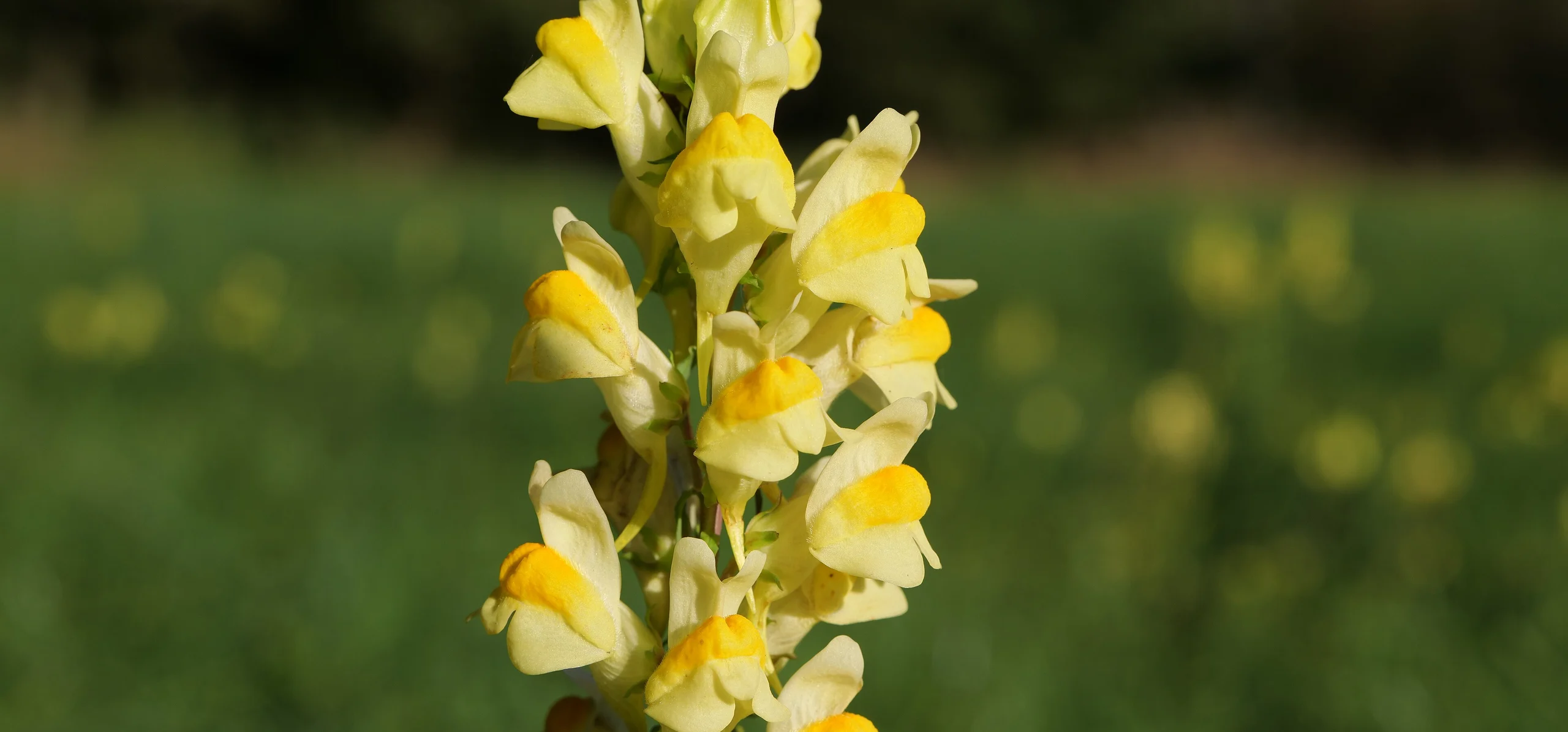
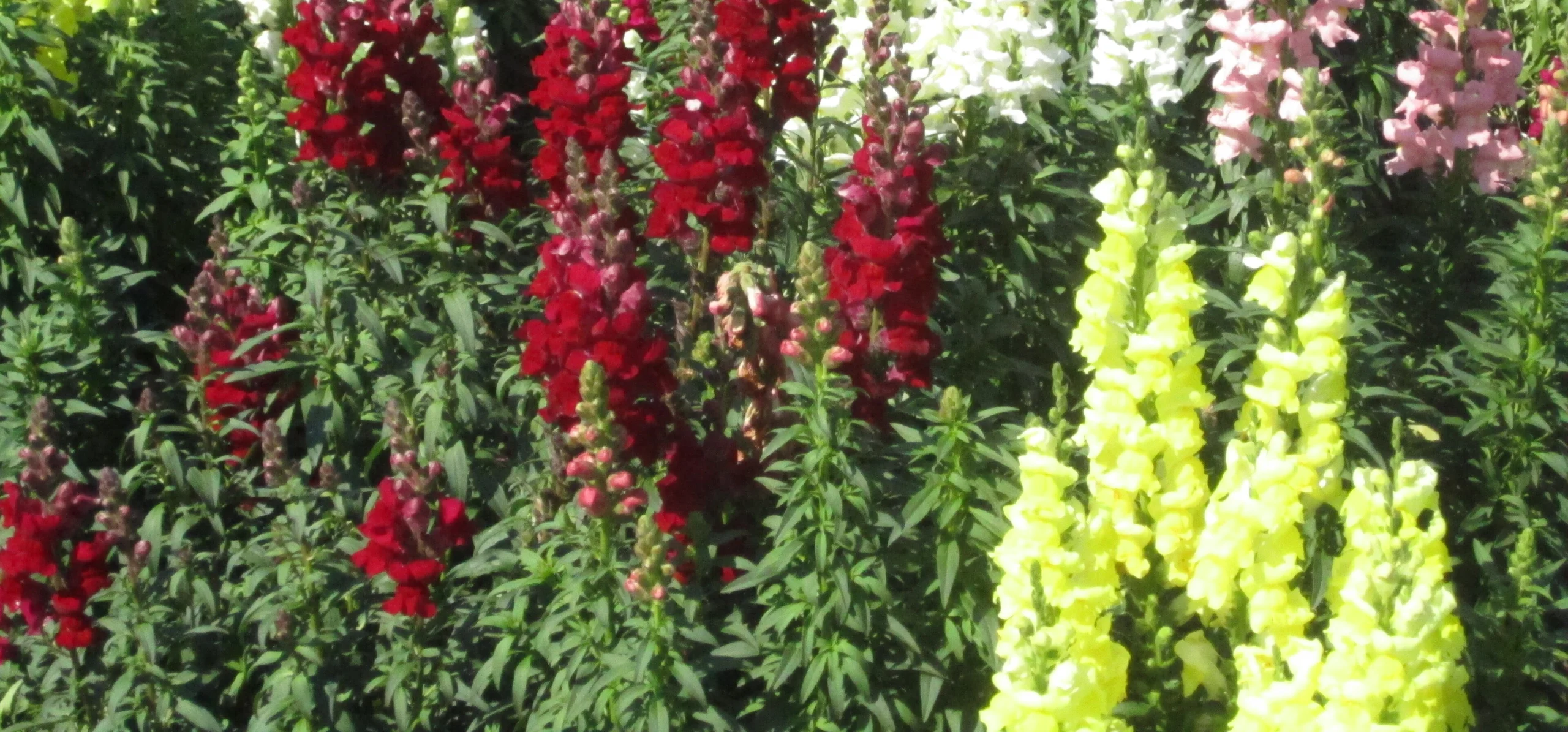
Antirrhinum majus, the garden snapdragon, comes from a narrow band of southern Europe, from northern Spain to south-central and eastern France, and its dragon-shaped flowers only trip open for the weight of a bumblebee. In the wild it is a short-lived perennial, but in most gardens it is lucky to survive one winter: the RHS rates it H2, tolerant of low temperatures down to about 1 to 5 degrees C but not surviving a hard freeze, which is why almost everyone grows it as a half-hardy annual, sown fresh or bought as bedding each spring. Give it full sun and free-draining soil and it flowers from late spring into autumn, one of the longest performances of any bedding plant. Most people meet it first as a punnet of mixed seedlings at the garden centre, already past the tricky germination stage described below.
The Dragon's Mouth: A Flower Built for Bumblebees
Squeeze the sides of a snapdragon flower and the two-lipped corolla pops open like a jaw, a trick generations of children have discovered in gardens long before anyone explained the botany behind it. The mechanism is not decorative: the lips are spring-loaded shut, and only an insect heavy enough to force them apart, in practice almost always a bumblebee, can push inside to reach the pollen and nectar. Lighter visitors generally cannot trip the hinge, which keeps the flower's reward for the pollinators strong enough to do the job properly rather than for anything that happens to land on it. It is worth remembering the next time deadheading feels like a chore: every spike left to fade and set seed is a small colony of bumblebees that went unfed.


Sowing on the Surface: Indoors Early, or Outdoors in Autumn
Snapdragon seed is dust-fine and needs light to germinate, so press it onto the surface of moist, free-draining compost and resist the urge to cover it, burying the seed is one of the most common reasons a sowing fails to come up. The RHS recommends sowing at 16 to 18 degrees C in late summer or early autumn, then overwintering the young plants under glass for an early flush of bloom the following spring, a schedule that suits gardeners who want spikes open before most other bedding has even gone in. A second sowing in early spring, again started under cover ahead of the last frost, is the simpler route to a normal summer display. Either way, seedlings resent being planted too deep; set them at the same depth they were growing in the tray and firm the soil gently around the base.
Choosing a Variety: Tall Cut Flowers to Dwarf Bedding
Modern snapdragon strains fall into distinct height classes bred for very different jobs. 'Rocket' is a tall series reaching around 90 cm on strong, upright stems, bred for the cutting garden: long single-colour spikes are exactly what a florist wants, and the plant usually needs a stake or twiggy support to stay upright in wind. 'Madame Butterfly' is also tall but structurally different, an azalea-flowered strain whose blooms open flat and fully double instead of staying pouched shut, a shape that happens to last longer in a vase because it is harder for insects to force open and pollinate. At the other end of the range, dwarf, mounding series bred for bedding and containers, 'Snappy' among them, stay compact and need no staking at all, trading height for a dense, self-supporting habit that suits the front of a border or a pot by the door.
Pinching Young Plants for Bushier, Sturdier Spikes
Left alone, a young snapdragon runs up on a single stem, so once seedlings have several pairs of true leaves it is worth pinching out the growing tip, snapping off the top centimetre or two just above a leaf node. The plant responds by branching from lower down, producing several flowering spikes instead of one and a noticeably bushier, more floriferous plant by midsummer. Tall cutting varieties benefit most from this treatment and from an early stake, since a full-grown 'Rocket' spike is heavy enough to snap in wind or rain once it is carrying open flowers; dwarf bedding types are naturally compact and need neither pinching nor support.
Site, Soil and Feeding
Full sun and a fertile, well-drained bed suit snapdragons best; the RHS lists sand, chalk and loam as suitable soil types and rates the plant tolerant of acid, neutral or alkaline ground, one reason it turns up growing wild out of the lime mortar in old stone walls. Keep young plants evenly watered while they establish, then ease off: snapdragons have only moderate drought tolerance and wilt visibly in a prolonged hot, dry spell, so a dry summer border is not the place to forget them. Avoid overhead watering where possible, wetting the foliage repeatedly is one of the easiest ways to invite the fungal problems covered below.
Deadheading for Repeat Flowering
A snapdragon needs no formal pruning, but the RHS is direct about the one job that matters: deadheading prolongs the flowering period substantially. Cut or pinch off each spike once its lower flowers have faded, back to just above a healthy pair of leaves, before it sets seed, and the plant redirects its energy into opening new side shoots rather than ripening a seed head. Left unchecked, flowering tails off hard by midsummer; deadheaded regularly, the same plant can still be opening fresh blooms into autumn.
Rust and Other Problems
Rust is the disease every snapdragon grower eventually meets: small yellow-brown swellings erupt on the undersides of leaves and along the stems, bursting open to release rust-coloured spore dust that spreads readily in humid, still weather. NC State Extension notes that Antirrhinum majus has significant susceptibility to the disease, alongside occasional problems with mould, leaf spot and downy mildew. Good airflow, spacing plants so foliage dries quickly, and watering at the base rather than overhead all cut the risk, and breeders have answered with resistant strains: seed sold as 'Giant Rust Resistant' mixes is bred specifically to shrug off the disease that plagues older varieties. Aphids are the main pest to watch for on young growth; otherwise this is a fairly trouble-free plant for the flowers it repays.
A Wall Colonist, and Safe Around Pets
Snapdragons self-seed readily where they are happy, and in mild climates volunteer seedlings turn up unplanted the following year, wedged into the mortar of old stone walls, gravel paths and paving cracks, a habit that has let the species naturalize well beyond its native range in northern Spain and south-central and eastern France. For households with cats, dogs or horses, the ASPCA lists the garden snapdragon as non-toxic, one less concern for a plant that ends up, sooner or later, within reach of a curious pet or a squeezing toddler.
Test your plant knowledge
Tap a card to flip it and reveal the answer.
Snapdragon seed germinates best left uncovered on the surface of the compost, since it needs light to sprout. Tap to reveal ✓ True
Only insects heavy enough, in practice almost always bumblebees, can force open a snapdragon's hinged flower. Tap to reveal ✓ True
Regular deadheading has little effect on how long a snapdragon keeps flowering. Tap to reveal ✕ False
The ASPCA lists garden snapdragon as toxic to cats, dogs and horses. Tap to reveal ✕ False
Rust is one of the main diseases affecting Antirrhinum majus, and some seed strains have been bred specifically to resist it. Tap to reveal ✓ True
Sources
References consulted for this guide
- Antirrhinum majus L., GBIF Backbone Taxonomygbif.org
- POWO: Antirrhinum majus L.powo.science.kew.org
- ASPCA: Garden Snapdragon toxicity to cats, dogs and horsesaspca.org
- RHS: Antirrhinum majusrhs.org.uk
- NC State Extension Gardener Plant Toolbox: Antirrhinum majusplants.ces.ncsu.edu
- Reference entity : Wikipédiaen.wikipedia.org