Siebold's Hosta
Hosta sieboldiana
Family · Asparagaceae
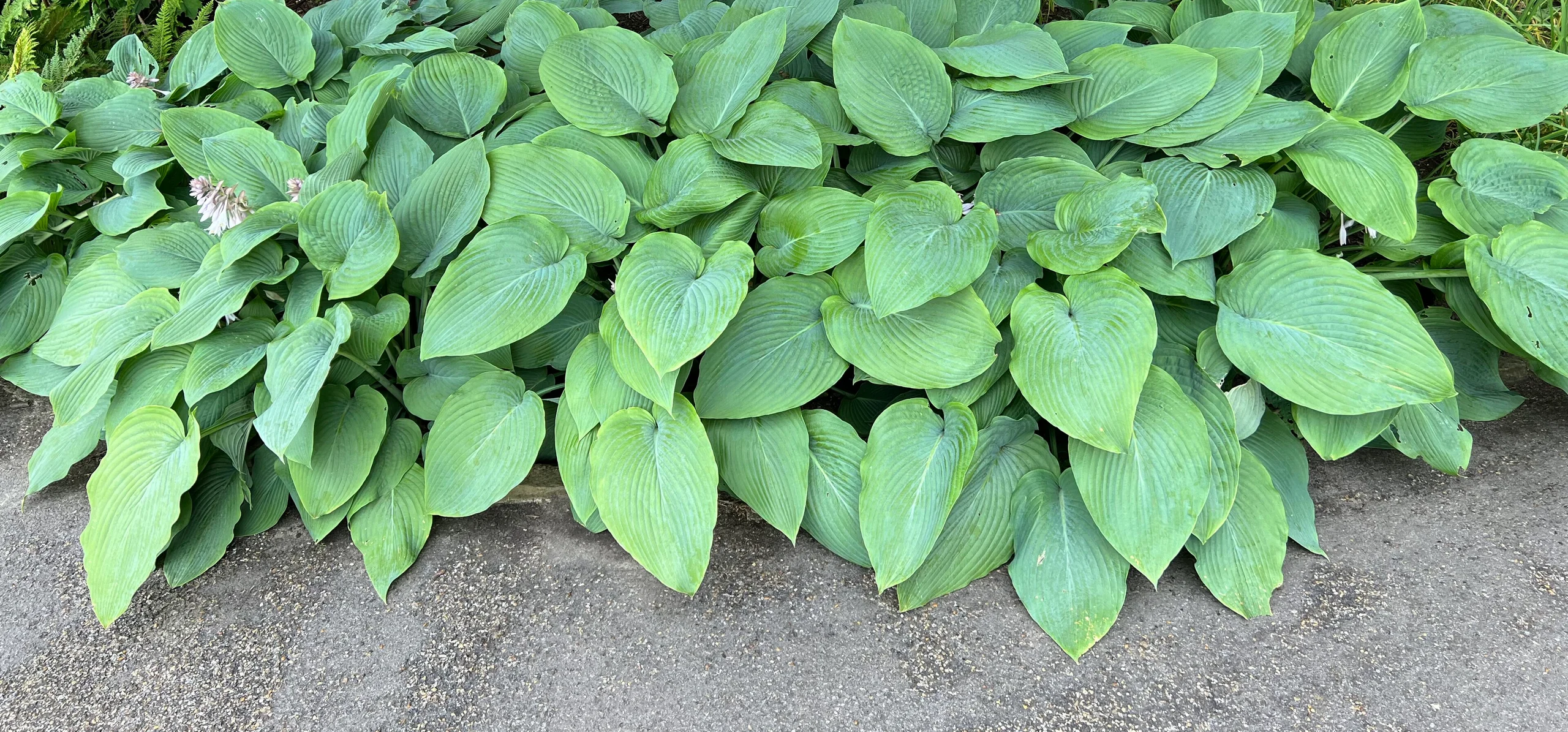
Hosta sieboldiana carries a waxy blue bloom that fades in sun and rain, thick puckered leaves slugs struggle with, and short white flowers each summer.
Hosta sieboldiana
Plant profile
- WateringModerateWater every 6 days
- Light exposurePartial shade
- Hardiness zoneUSDA 4–9
Growth
- Family
- Asparagaceae
- Life cycle
- Perennial
- Growth speed
- 2/10
- Mature size
- 50–100 cm
- Spread
- 100–150 cm
- Propagation
- Division
FloweringEarly to midsummer, near-white flowers sometimes lilac-tinged at the base, on scapes about as tall as the foliage
Dormancydeciduous; foliage collapses after autumn frost, new shoots (pips) emerge from the crown in spring
Time to maturityseveral years
Soil & climate
- Soil pH
- pH 5.5–7.5
- Soil types
- loam, humus-rich soil
- Drought tolerance
- No
Light & Placement
- Origin
- Japan, per Plants of the World Online
- Where to place it
- shaded woodland border
- north- or east-facing bed
- shaded patio container
Safety
- Toxicity
- CatsToxic
- DogsToxic
- HorsesToxic
Invasive speciesnot reported as invasive
Data fromHosta sieboldiana (Hook.) Engl., GBIF BaHosta sieboldiana (Hook.) Engl., Plants RHS: Hosta sieboldiana, Siebold's plantaMissouri Botanical Garden Plant Finder: ASPCA: Toxic and Non-toxic Plants, Hosta
Where it grows
World distribution
Siebold's Hosta is native to a single country: Japan.GBIF records 3,329 documented identifications across 26 countries, with the largest concentrations in Japan, Sweden, and Norway.
- Japan
Yellow to orange dots: concentration of documented identifications per country. Green countries: sourced native range. Source: GBIFNative range from POWO (Kew).
Hosta sieboldiana is the blue one, the parent behind almost every powder-blue hosta sold under names like 'Elegans' or 'Frances Williams'. The color is not pigment but a waxy bloom coating each thick, deeply puckered leaf, and understanding that is the key to growing this species well: shade preserves it, strong sun and heavy rain wear it away. The leaves are large, rounded and quilted, thick enough to shrug off slug rasping better than the thin foliage of other hostas, though far from immune to it. Near-white flowers open on short stalks in early summer, barely clearing the leaf mound, which surprises gardeners expecting the taller spikes of other hosta species. Give it moist, humus-rich soil in part to full shade and it settles into a slow, dense, architectural clump that easily outlives the border it was planted in.
The Blue Is Wax, Not Pigment
The frosted, blue-grey surface of a sieboldiana leaf is a layer of epicuticular wax, the same kind of bloom seen on plums and grapes, sitting over leaf tissue that is actually green underneath. Missouri Botanical Garden describes the foliage as thick, puckered and cupped, with new leaves often emerging smoky blue in spring. That wax layer is fragile: hot afternoon sun breaks it down, and repeated heavy rain physically rinses it away, both effects fading the leaf toward plain green as the season goes on. A clump that looked silvery blue in May can be solidly green by August in a spot with too much light or too much overhead watering, with nothing actually wrong with the plant.
'Elegans' and 'Frances Williams' are the two cultivars responsible for most of this species' popularity, both selected for extra-thick, extra-blue leaves; 'Frances Williams' adds an irregular gold-green margin and, unlike the plain species and 'Elegans', is generally resistant to hosta virus X.
Light and Placement
Grow it in part to full shade, ideally light shade with a little gentle morning sun rather than deep, dry shade under a dense canopy. Missouri Botanical Garden lists average, medium-moisture, well-drained soil in part to full shade as the standard recommendation, and RHS growing notes call for shelter from cold, drying wind, which can scorch broad leaf margins even where the light itself is not the problem. A north- or east-facing border, or the shaded side of a wall or hedge, keeps the wax bloom intact longer into the season than a bed that catches afternoon sun.


Soil, Watering and Feeding
This is not a plant that tolerates drying out. Work compost or well-rotted manure into the planting hole, then keep a mulch layer over the root zone to hold moisture and moderate soil temperature through summer. A large sieboldiana clump, with its wide leaf canopy, draws more water from the same patch of ground than a smaller hosta planted beside it, so established plantings still need watching in a dry spell rather than being left to fend for themselves. Feed once in early spring with a balanced, slow-release fertilizer as new shoots emerge; a clump in reasonable soil needs little else through the rest of the year.
Flowers in Early Summer
Funnel-shaped, near-white flowers, sometimes lightly tinged lilac at the base, open from early into midsummer. Missouri Botanical Garden notes the scapes rise only to about the height of the foliage mound, so the blooms sit at or just above the leaves instead of towering over them the way a plantain lily's flowers do. Gardeners who grow this species mainly for foliage often treat flowering as a minor event; deadheading the spent scapes tidies the clump but is not necessary for the plant's health.
Slugs and Snails
Slugs and snails are the defining pest of this species, as they are for the whole genus, but sieboldiana's thick, heavily textured leaves hold up better against light rasping damage than the thin leaves of species like Hosta plantaginea. That resistance is relative, not absolute: new spring shoots, still soft before they unfurl and sitting just above damp soil, remain vulnerable, and a bad slug year can still perforate mature leaves. Copper tape around pot rims, a barrier of coarse grit or crushed eggshell around the crown, ferric phosphate slug bait scattered at the base, and an evening patrol with a torch during wet spells are the standard non-chemical defenses; picking slugs off by hand after dark works precisely because that is when they come out to feed.
Deer, Nematodes and Hosta Virus X
Deer browse this hosta readily where they have access to a garden, and a single determined visit can strip a clump overnight; fencing or repellents are the practical response, since sieboldiana offers no natural deterrent to grazing. Foliar nematodes cause brown, interveinal streaking that runs between the leaf veins and worsens through the season; there is no cure, and affected foliage should be cut off and removed rather than composted, since the nematodes persist in fallen leaf litter. Hosta virus X causes mottled, puckered or ink-bleed patterning and has no treatment either; an infected plant should be dug out and discarded rather than kept for its unusual look, since it can spread through sap on cutting tools to nearby hostas. 'Frances Williams' is the exception among common cultivars, generally reported as resistant to the virus.
Dividing in Spring
Divide established clumps in early spring, before the tightly rolled shoots, often called pips, unfurl into full leaves, since that is when the crown is easiest to see and split cleanly. Lift the whole clump and separate it into sections with a spade or two garden forks worked back to back, keeping at least one strong bud on each division. Because this is a slow-growing species that takes several years to reach mature size, a small division needs patience: expect a modest plant for the first season or two rather than an instant copy of the parent clump.
Toxicity to Cats and Dogs
The ASPCA lists hosta as toxic to cats, dogs and horses, with saponins as the toxic principle; ingestion typically causes vomiting, diarrhea and lethargy rather than anything life-threatening in small amounts, but a plant this palatable is worth keeping out of reach of a curious dog or cat that chews foliage. Between the slugs, the deer and the household pets, sieboldiana is, in short, a plant a lot of animals want to eat, and siting it with that in mind saves both the leaves and a vet visit.
Test your plant knowledge
Tap a card to flip it and reveal the answer.
The blue-grey color of Hosta sieboldiana leaves comes from a waxy coating rather than a pigment. Tap to reveal ✓ True
Hosta sieboldiana produces tall flower spikes that rise well above its foliage mound. Tap to reveal ✕ False
Its thick, heavily textured leaves make Hosta sieboldiana somewhat more resistant to slug damage than thin-leaved hosta species. Tap to reveal ✓ True
The ASPCA lists hosta, including Hosta sieboldiana, as non-toxic to cats and dogs. Tap to reveal ✕ False
'Frances Williams', one of the best-known Hosta sieboldiana cultivars, is generally resistant to hosta virus X. Tap to reveal ✓ True
Sources
References consulted for this guide
- Hosta sieboldiana (Hook.) Engl., GBIF Backbone Taxonomygbif.org
- Hosta sieboldiana (Hook.) Engl., Plants of the World Online (Kew)powo.science.kew.org
- RHS: Hosta sieboldiana, Siebold's plantain lilyrhs.org.uk
- Missouri Botanical Garden Plant Finder: Hosta sieboldianamissouribotanicalgarden.org
- ASPCA: Toxic and Non-toxic Plants, Hostaaspca.org
- Reference entity : Wikipédiaen.wikipedia.org