Rose Geranium
Pelargonium graveolens
Family · Geraniaceae
Rose geranium is grown for rose-lemon scented foliage: full sun, lean well-drained soil, autumn cuttings against frost, and regular pinching for a bushy plant.
Pelargonium graveolens
Plant profile
- WateringModerateWater every 7 days
- Light exposureFull sun
- Hardiness zoneUSDA 10–11
Growth
- Family
- Geraniaceae
- Life cycle
- Perennial
- Growth speed
- 6/10
- Mature size
- 10–50 cm
- Spread
- 10–50 cm
- Propagation
- Cutting
- Seed
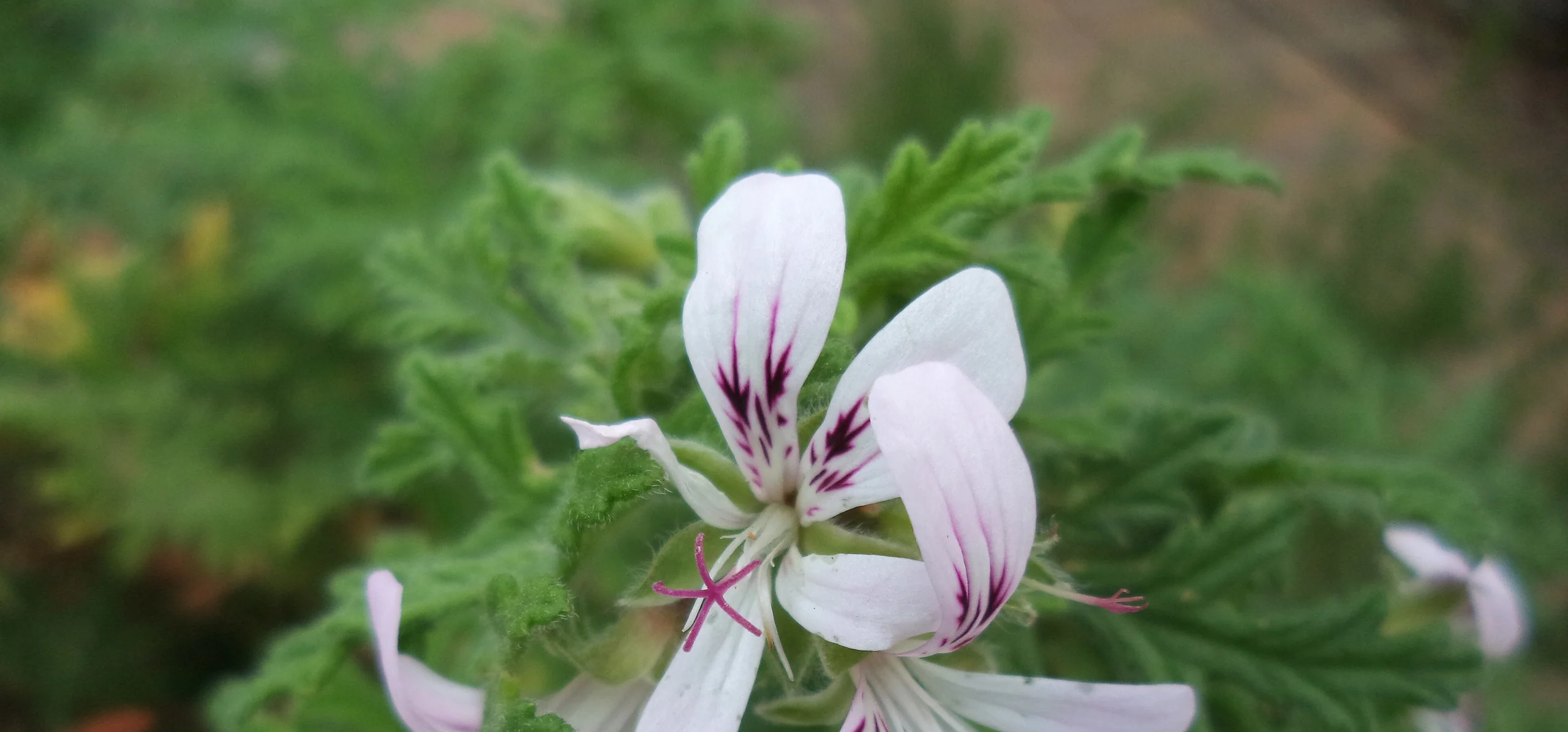
FloweringSmall pink flowers with dark magenta feathering, spring to autumn, secondary to the foliage
Dormancygrowth slows sharply and can stop indoors over winter when kept cool and on the dry side
Time to maturity6-12 months of regular pinching to fill a pot as a dense, bushy plant
Soil & climate
- Soil pH
- pH 6.5–7.5
- Soil types
- loam, sand
- Drought tolerance
- Yes
Light & Placement
- Origin
- Eastern Zimbabwe to Eastern Cape Province, South Africa
- Where to place it
- bright south-facing windowsill
- sunroom or conservatory
- sunny terrace or patio
- sheltered sunny border in mild, frost-free climates
- terracotta or other unglazed pot with drainage holes
Safety
- Toxicity
- CatsToxic
- DogsToxic
- HorsesToxic
Data fromPelargonium graveolens (Thunb.) L'Hér., Pelargonium graveolens L'Hér., Plants ofASPCA: Geranium toxicity to petsRHS: Pelargonium graveolens L'Hér.Missouri Botanical Garden Plant Finder:
Where it grows
World distribution
Rose Geranium is native to 2 countries: South Africa and Zimbabwe.GBIF records 865 documented identifications across 49 countries, with the largest concentrations in South Africa, Brazil, and Spain.
- South Africa
- Zimbabwe
Yellow to orange dots: concentration of documented identifications per country. Green countries: sourced native range. Source: GBIFNative range from POWO (Kew).
Grown for the Leaves, Not the Small Pink Flowers
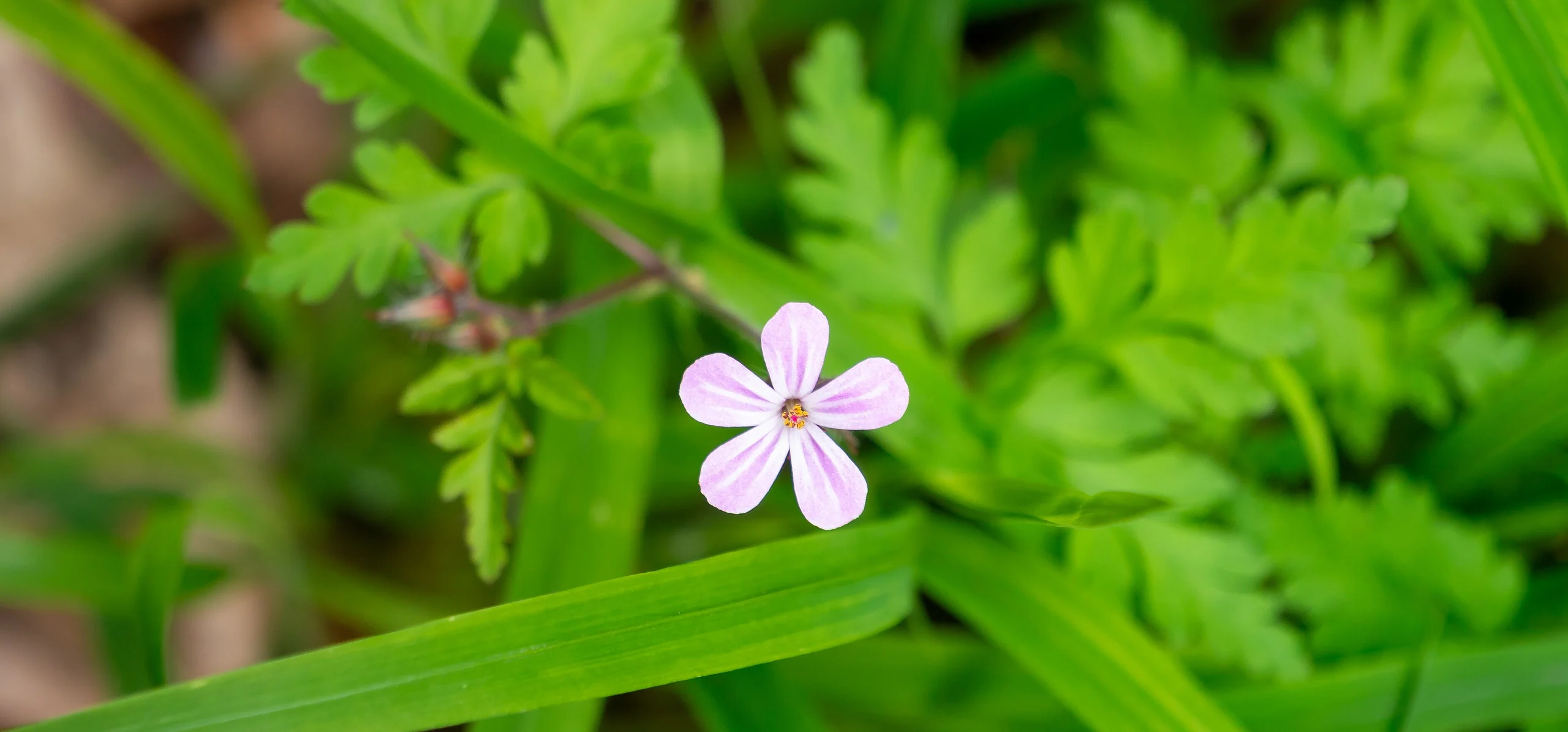
Rub a leaf of Pelargonium graveolens between two fingers and the payoff is immediate: a sharp, rose-lemon scent that clings to the skin for hours. That smell, not the flowers, is the reason this pelargonium earns a spot on a sunny windowsill or terrace table. The flowers themselves are small, five petalled, pale pink with darker magenta feathering on the two upper petals, produced in loose clusters from spring into autumn, and easy to overlook next to the deeply lobed, softly hairy foliage that carries the plant's real appeal. Buy it, or take a cutting from a friend's plant, and the leaves are already doing their job the day it arrives.
A Sunny Spot and a Lean, Well-Drained Mix
Full sun is non-negotiable: six hours of direct light a day keeps the growth compact and the scent strong, while a shaded spot produces stretched, pale stems and noticeably less fragrant foliage. The soil side matters just as much and works against instinct. A rich, heavily fed compost pushes out lush green growth at the expense of the aromatic oils concentrated in the leaf hairs, so a leaner, gritty, well-drained mix, closer to neutral or mildly alkaline, grows a smaller but more fragrant plant. Adding a third horticultural sand or perlite to a standard potting mix, and skipping the fertile garden loam, gets closer to the poor, rocky ground this pelargonium grows in naturally.
Watering Between Dry Spells
Let the top few centimetres of the mix dry out before watering again through the growing season, then water thoroughly so it runs from the drainage holes rather than trickling a little at a time. Constantly damp compost around the roots is the fastest way to lose this plant to rot, far more so than a missed watering. From autumn, cut back hard: a plant brought indoors for winter needs only enough water to keep the mix from turning to dust, since a wet root ball sitting cold and dim is what kills more rose geraniums over winter than actual frost does. A weak, balanced liquid feed every three or four weeks in summer is plenty; skip it entirely once growth slows.


Pinching for a Bushy, Terrace-Ready Plant
Left alone, a young rose geranium sends up one or two long, leggy stems that flop over the pot rim within a season. Pinching the growing tip out with thumb and forefinger every few weeks through spring and summer, just above a leaf node, forces the plant to branch from lower down instead, and repeating this on the new side shoots builds a dense, rounded mound of foliage rather than a few bare stems with leaves at the top. A plant pinched regularly through its first year fills a 20 to 25 cm pot far better than one left to grow unchecked, and the pinched tips root readily if pushed straight into damp compost rather than composted.
Cuttings Are the Easy Way to Keep This Plant Going
Rose geranium is not reliably hardy where winters bring real frost, and taking cuttings in early autumn is the simplest insurance against losing the parent plant, easier by far than nursing a whole pot through a dim winter. Cut a non-flowering shoot tip about 10 cm long, just below a node, strip the lower leaves, and let the cut end dry and callus for a few hours before pushing it into a gritty, barely damp cutting mix. Rooting happens within two to four weeks on a bright windowsill without any rooting hormone, and a handful of small rooted cuttings overwinter in far less space, and with far less risk of rot, than one large mother plant. Seed is possible too but slower and less true to a named variety such as the old rose-scented selection sold as 'Attar of Roses'.
Overwintering a Frost-Tender Plant
Bring potted plants indoors before the first frost is forecast, once night temperatures start dropping toward 5°C (41°F), and set them in the brightest spot available, ideally a cool room rather than a warm, dry living room where the dim winter light cannot keep pace with the heat. Growth slows or stops almost entirely, leaves may yellow and drop from the lower stems, and that is normal rather than a sign of a dying plant as long as the roots stay dry and firm. Cut the plant back by roughly a third before moving it in, both to reduce the leaf area it has to support in low light and to make room on the sill; new growth resumes reliably once it goes back outside after the last frost.
Geranium Oil, Cooking Leaves, and the Mosquito Myth
The essential oil steam distilled from the leaves, sold as geranium oil, is a genuine perfumery ingredient prized as a rose substitute, and the cultivar name 'Attar of Roses' nods directly to that trade. In the kitchen, a leaf or two infused in sugar or in a simple syrup for a few days lends a rose-lemon note to cakes, sorbets and cocktails, and is lifted out before serving since the leaf itself is tough and unpleasant to eat. The plant is also sold on its reputation as a mosquito deterrent, sometimes under the name citronella geranium, but that claim is worth putting in perspective: the intact leaf releases very little scent into the air, and studies of the crushed oil applied to skin show it repels mosquitoes far less effectively and for far less time than DEET or picaridin based products. A potted plant on the table is pleasant company, not a substitute for repellent when biting insects are actually a problem.
Keep It Away From Cats and Dogs
The ASPCA lists geranium, the genus that covers Pelargonium species including this one, as toxic to cats, dogs and horses, with geraniol and linalool named as the toxic principles; reported signs include vomiting, loss of appetite, lethargy and skin irritation. A plant kept on a high shelf or a windowsill a cat cannot easily reach avoids most problems, since serious poisoning from a stray nibble is uncommon, but a curious puppy or a cat that regularly chews foliage is worth watching, and any suspected ingestion is worth a call to a vet or the ASPCA Animal Poison Control Center.
Test your plant knowledge
Tap a card to flip it and reveal the answer.
Rose geranium is grown mainly for its scented leaves rather than its flowers. Tap to reveal ✓ True
This plant grows best in rich, constantly moist compost. Tap to reveal ✕ False
Taking cuttings in early autumn is one of the easiest ways to carry this plant through winter. Tap to reveal ✓ True
The essential oil distilled from the leaves is commonly sold as geranium oil. Tap to reveal ✓ True
The ASPCA lists this plant as safe for cats and dogs to chew on. Tap to reveal ✕ False
Sources
References consulted for this guide
- Pelargonium graveolens (Thunb.) L'Hér., GBIF Backbone Taxonomygbif.org
- Pelargonium graveolens L'Hér., Plants of the World Online, Kew Sciencepowo.science.kew.org
- ASPCA: Geranium toxicity to petsaspca.org
- RHS: Pelargonium graveolens L'Hér.rhs.org.uk
- Missouri Botanical Garden Plant Finder: Pelargonium (scented-leaved group)missouribotanicalgarden.org
- Reference entity : Wikipédiaen.wikipedia.org