Herb Robert
Geranium robertianum
Family · Geraniaceae
Herb Robert self-seeds by catapult, smells sharp when crushed, and pulls out with one tug: how to identify it, when to remove it, and when to leave it be.
Geranium robertianum
Plant profile
- WateringLittleWater every 10 days
- Light exposurePartial shade
Growth
- Family
- Geraniaceae
- Life cycle
- Biennial
- Growth speed
- 8/10
- Mature size
- 5–40 cm
- Spread
- 10–40 cm
- Flowering
- Small five-petaled pink to pinkish-purple flowers, roughly spring through autumn
- Propagation
- Seed
DormancyOverwinters as a low semi-evergreen rosette in mild climates; under favorable conditions it can complete its cycle within a single year instead of two
Time to maturityTypically flowers in its second season from seed, though it can flower in its first under mild, moist conditions
Soil & climate
- Soil types
- chalk, clay, loam, sand
- Drought tolerance
- Yes
Light & Placement
- Origin
- Temperate Northern Hemisphere, Macaronesia, and North Africa to Ethiopia
- Where to place it
- shaded border
- hedge base
- wall crevice
- gravel path
- woodland edge
Safety
- Pet safe
- No
ToxicityNot listed by name by the ASPCA; its Geranium entry there refers to Pelargonium species, a different genus
Invasive speciesNative across the temperate Old World; a Class B noxious weed in Washington and Oregon (WSU Hortsense), where it spreads into undisturbed forest and displaces native plants
Data fromGBIF: Geranium robertianum L.Plants of the World Online (Kew): GeraniRHS Weeds: Herb RobertWSU Hortsense: Herb Robert (Robert GeranASPCA: Toxic and Non-Toxic Plants, Geran
Where it grows
World distribution
Herb Robert is native to 51 countries: Albania, Algeria, Austria, Belarus, Belgium, Bhutan, Bulgaria, and Canada….GBIF records 1,145,729 documented identifications across 99 countries, with the largest concentrations in United Kingdom, France, and Netherlands.
- Albania
- Algeria
- Austria
- Belarus
- Belgium
- Bhutan
- Bulgaria
- Canada
- China
- Croatia
- Cyprus
- Czechia
Show 39 more countriesShow fewer countries
- Denmark
- Estonia
- Ethiopia
- Finland
- France
- Georgia
- Germany
- Greece
- Hungary
- India
- Iran
- Ireland
- Italy
- Kazakhstan
- Kyrgyzstan
- Lebanon
- Libya
- Morocco
- Nepal
- Netherlands
- Norway
- Pakistan
- Poland
- Portugal
- Romania
- Russia
- Saudi Arabia
- Spain
- Sweden
- Switzerland
- Tajikistan
- Tunisia
- Türkiye
- Turkmenistan
- Ukraine
- United Kingdom
- United States
- Uzbekistan
- Yemen
Yellow to orange dots: concentration of documented identifications per country. Green countries: sourced native range. Source: GBIFNative range from POWO (Kew).
A low, ferny plant with wiry red stems and small five-petaled pink flowers, giving off a sharp, unpleasant smell the moment a leaf is crushed: that combination in a shaded border, a gravel path or a crack in a wall is almost always Geranium robertianum, commonly called Herb Robert. GBIF's accepted classification places it in the family Geraniaceae, genus Geranium, and it is genuinely one of the easiest weeds in the garden to deal with: the whole plant usually lifts out with one tug. Whether it is worth pulling at all, and how urgently, depends on where it has turned up and, in parts of the United States, on what the law in the county says.
Identifying Herb Robert: Red Stems, Lacy Leaves, Pink Flowers
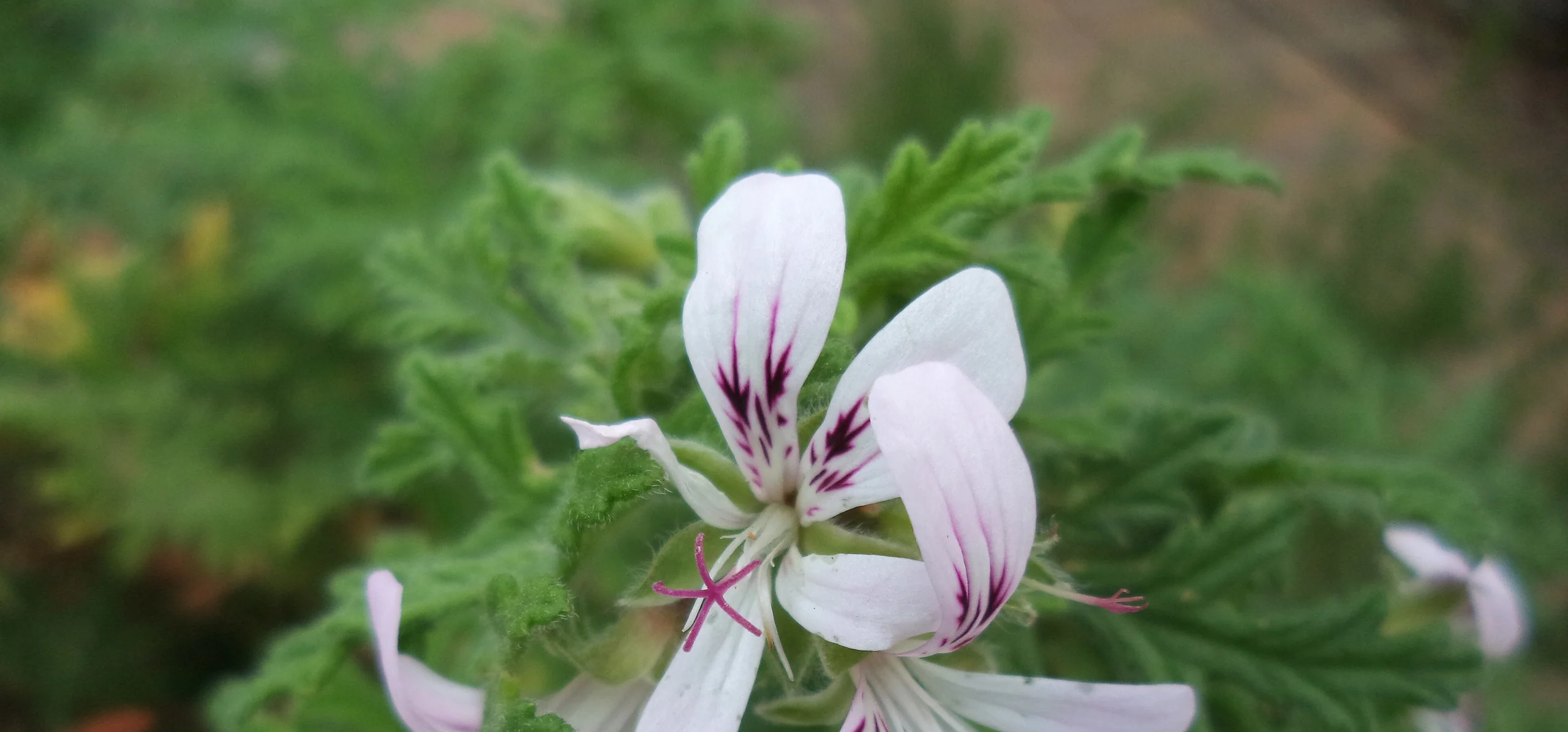
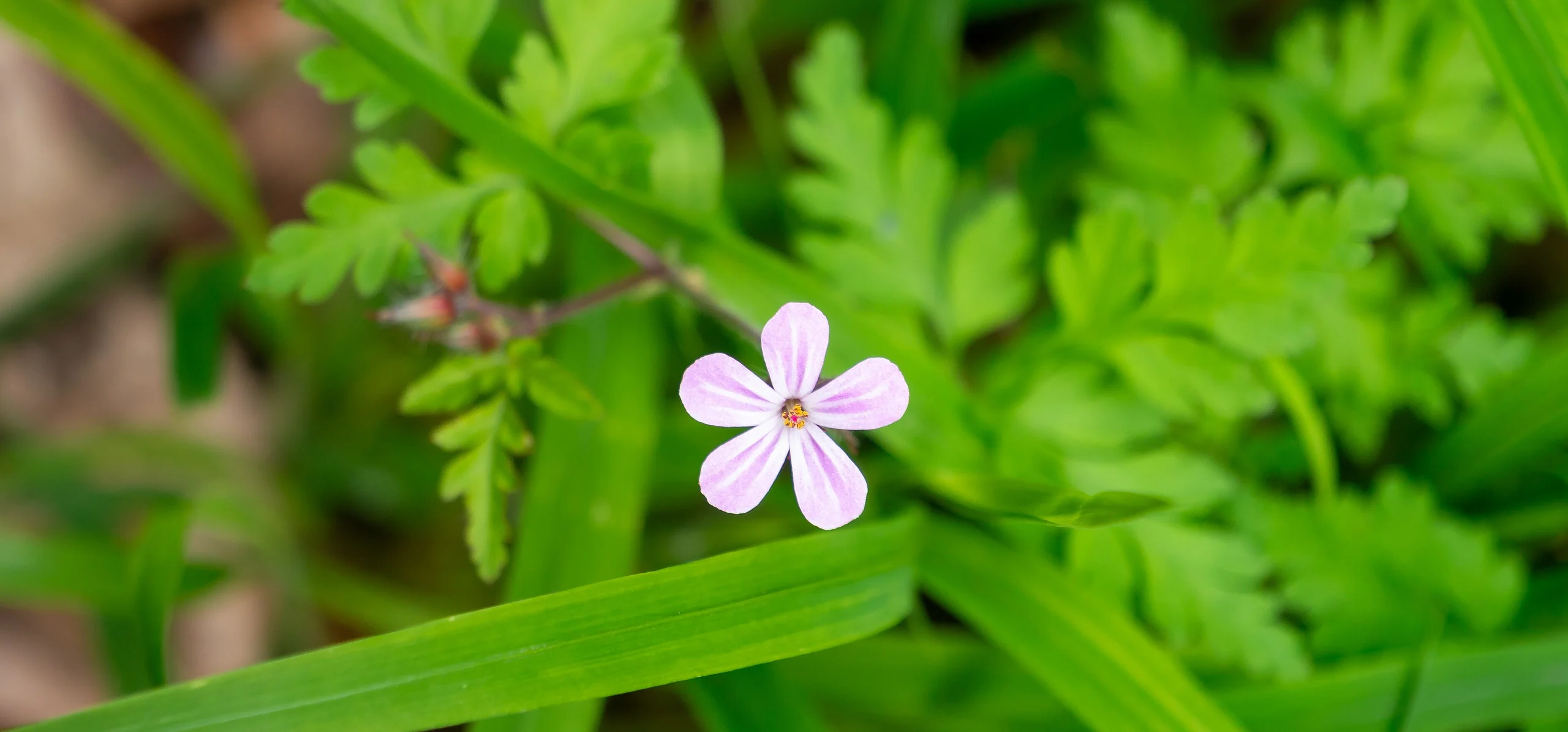
The leaves are deeply divided into three main lobes, giving each one a lacy, almost fern-like look, and they sit on stems covered in fine hairs that range from green to a distinct red, deepening further in dry or sunny spots or as the season turns to autumn. The flowers are small, around a centimeter across, with five pink to pinkish-purple petals, occasionally white, and they keep appearing from spring through autumn rather than in one short flush. The whole plant has a sprawling, branching habit rather than an upright one, and it grows to roughly 40 cm tall and wide at most, though a plant rooted in a dry wall crevice will stay far smaller.
A True Geranium, Not a Garden Pelargonium
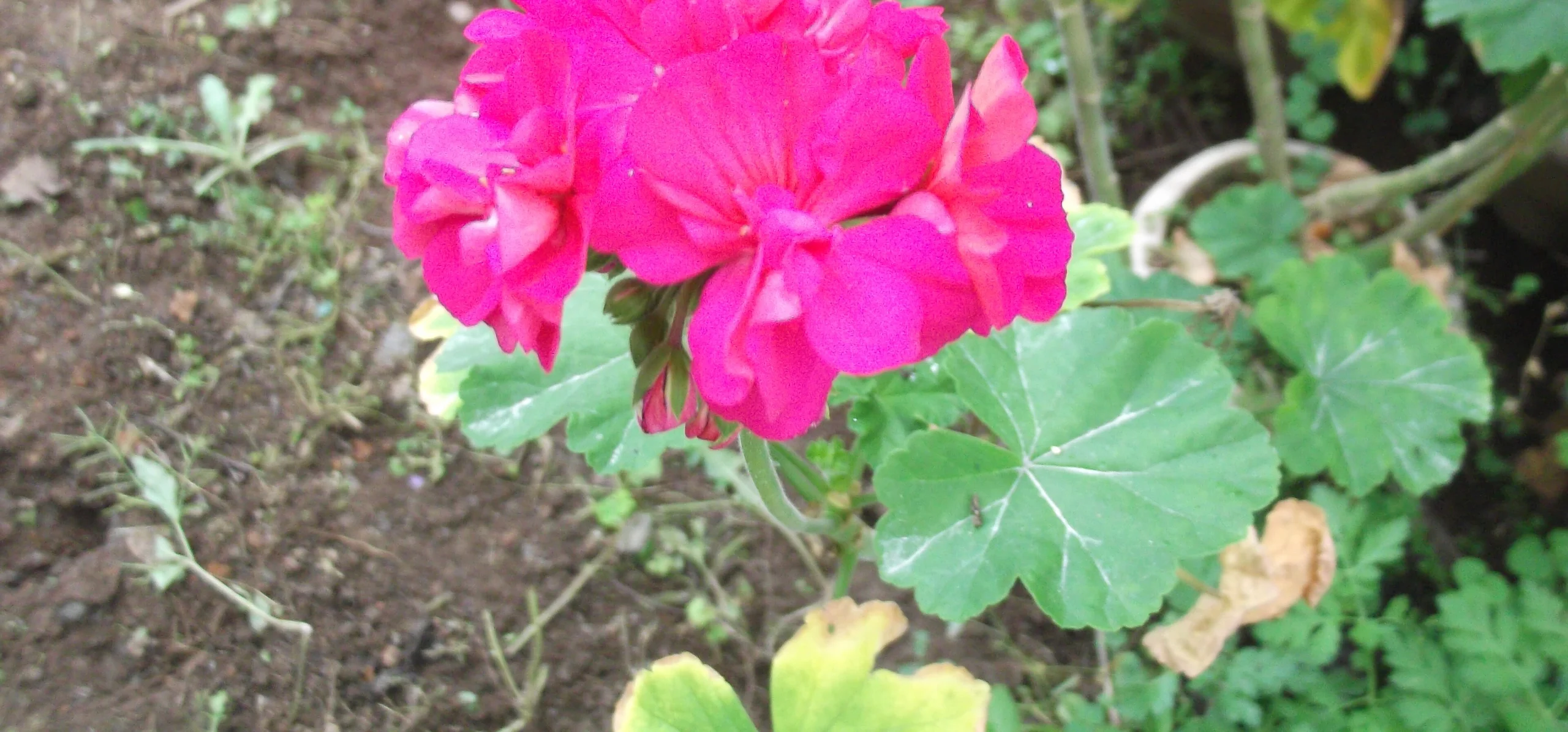
The name causes constant confusion: the bold red or pink flowering plants sold in garden centers and hanging baskets as geraniums are almost always Pelargonium, a related but separate genus of mostly frost-tender South African species that need to be brought indoors before frost. Herb Robert is a true Geranium, the genus that gives the whole family its common name cranesbill, after the long beaked seed capsule shared by both. The distinction is not just taxonomic trivia. It matters for care, since Herb Robert is a fully hardy, self-seeding wild annual or biennial rather than a tender potted plant, and it matters for checking toxicity, since a search for 'geranium' toxicity will usually turn up data for Pelargonium instead of this species.


Why It's Called Stinky Bob
Snap a stem or crush a leaf between two fingers and the smell is immediate: a strong, musky, faintly foxy odor that is the reason this plant is nicknamed stinky Bob, a name used often enough in the Pacific Northwest that it has become the more common label there than Herb Robert itself. The smell is strongest on a warm day or right after the foliage is bruised, whether by weeding, foot traffic or simply brushing past a patch on a path, and it fades quickly once the cut material dries out.
The Seed Catapult: How One Plant Becomes Many
Like other members of the geranium family, Herb Robert sets seed inside a capsule with a long, beaked shape. At maturity the beak's tissue springs apart and forcefully ejects the tiny seeds, which travel up to 20 feet from the parent plant. That single mechanism explains most of what is frustrating about this weed: new rosettes appear scattered across a gravel path, tucked into wall crevices well away from any obvious source clump, or dotted through a border, because each capsule is effectively a small, self-loading catapult rather than a seed that simply drops at the base of the plant.
Shallow Roots Make Hand-Pulling the Best Control
The root system is fibrous and shallow rather than a single deep taproot, so grasping the plant firmly near the base and pulling usually brings the whole thing out cleanly, especially from moist soil. The RHS is explicit that there is no need to reach for a weedkiller: hand-pulling, or hoeing on a warm dry day before seed sets, deals with it, and a mulch layer around 8 cm deep smothers any seedlings still germinating from seed shed in previous seasons. The single most useful habit is pulling plants before the seed capsules ripen, since that removes the whole next catapulted generation in one go rather than leaving it to disperse.
When to Leave It Alone
Not every patch needs pulling. The RHS includes Herb Robert on its Plants for Pollinators list, and its flowers draw bumblebees and butterflies across a flowering season that runs far longer than most border perennials manage. It is also one of the few plants that will hold green ground cover in the driest, most awkward shaded corners, the crack in a wall or the dry patch under a hedge where border plants routinely fail to establish. Left in a wild corner, at a hedge base, or in gravel that is not otherwise planted, it earns its keep; pulled from a border under active cultivation before it sets seed, it causes no harm either way. The plants worth removing on sight are the ones already in flower in a bed meant to stay tidy.
An Officially Regulated Weed in the US Pacific Northwest
In its native range across the temperate Old World, Herb Robert is simply a common wildflower of hedgerows and shaded ground. In the United States it is a different story in places: WSU Hortsense lists it as a Class B noxious weed in both Washington and Oregon, noting that it is capable of spreading into undisturbed forest and displacing native plants, and that management may be required by county law. Gardeners in the Pacific Northwest weighing whether to leave a patch for its pollinator value should check local noxious weed rules before deciding to tolerate it, since the calculation that works in a European hedgerow does not automatically apply to an introduced population in a Cascade forest understory.
Is Herb Robert Toxic to Pets or People?
The ASPCA does not carry a listing for Geranium robertianum by name. Its 'Geranium' entry, which is marked toxic to dogs, cats and horses, is scientifically Pelargonium species, the same florist's geranium discussed above, not this plant. With no dedicated ASPCA assessment of Herb Robert itself, the honest answer is that its toxicity to pets is unconfirmed rather than proven safe, so it is worth keeping curious dogs and cats from eating it in quantity and contacting a vet if a pet consumes a large amount, the same caution worth applying to any uncatalogued garden plant.
Test your plant knowledge
Tap a card to flip it and reveal the answer.
Herb Robert's ripe seed capsules fling their seeds away from the parent plant instead of simply dropping them. Tap to reveal ✓ True
Herb Robert belongs to Pelargonium, the same genus as the scented geraniums sold in garden centers. Tap to reveal ✕ False
In Washington and Oregon, Herb Robert is officially classified as a noxious weed. Tap to reveal ✓ True
The ASPCA lists Geranium robertianum by name as toxic to cats and dogs. Tap to reveal ✕ False
Herb Robert's shallow, fibrous roots mean the whole plant usually lifts out cleanly by hand. Tap to reveal ✓ True
Sources
References consulted for this guide
- GBIF: Geranium robertianum L.gbif.org
- Plants of the World Online (Kew): Geranium robertianumpowo.science.kew.org
- RHS Weeds: Herb Robertrhs.org.uk
- WSU Hortsense: Herb Robert (Robert Geranium, Stinky Bob)hortsense.cahnrs.wsu.edu
- ASPCA: Toxic and Non-Toxic Plants, Geraniumaspca.org
- Reference entity : Wikipédiaen.wikipedia.org