Common Pear
Pyrus communis
Family · Rosaceae
Plant and care for a common pear tree: pick Quince A or C rootstock, water and prune correctly, prevent fireblight, and harvest pears before they soften.
Pyrus communis
Plant profile
- WateringModerateWater every 7 days
- Light exposureFull sun
- Ideal temperature-20–-15 °C
- Hardiness zoneUSDA 4–8
Growth
- Family
- Rosaceae
- Life cycle
- Perennial
- Growth speed
- 7/10
- Mature size
- 1200–1500 cm
- Spread
- 750–1070 cm
- Flowering
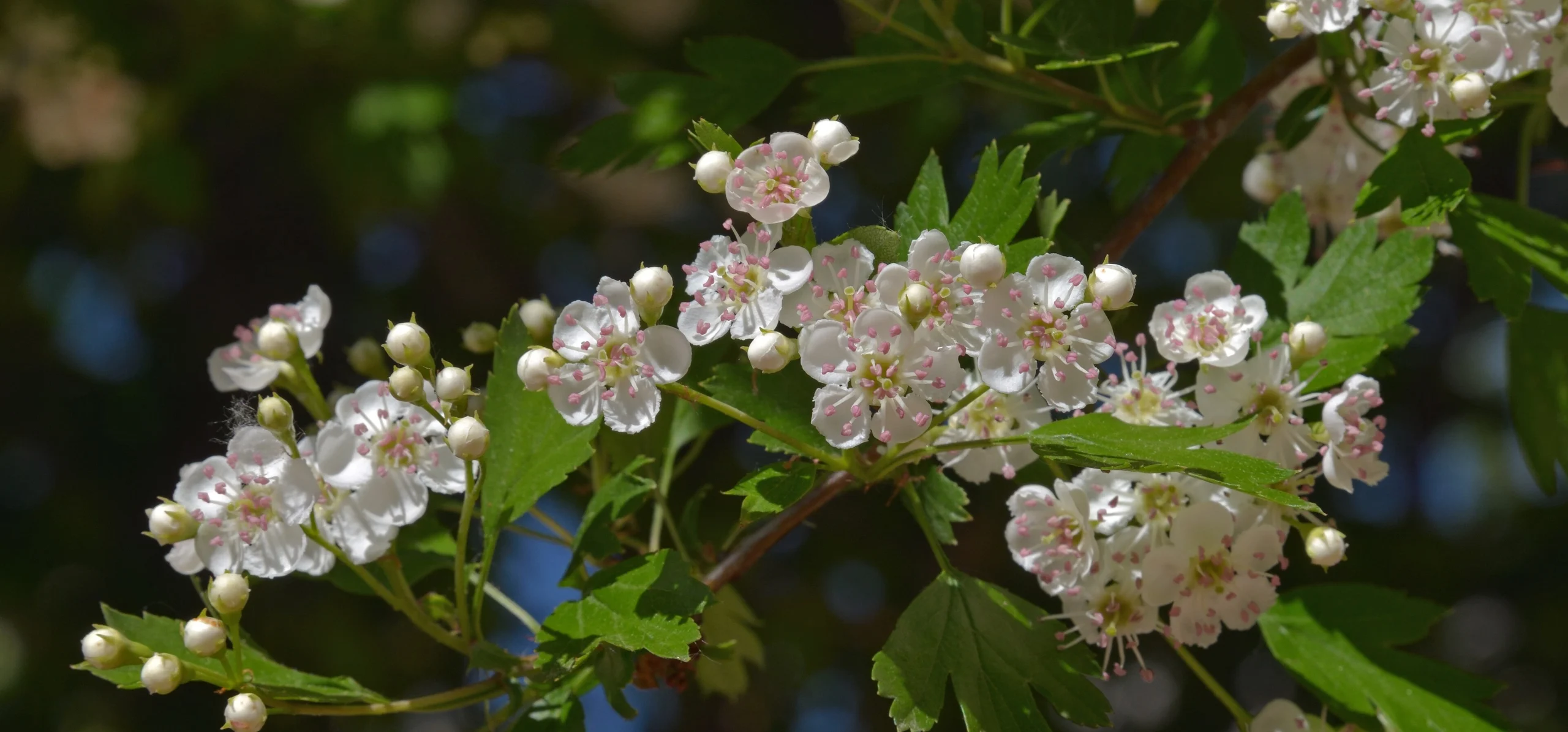
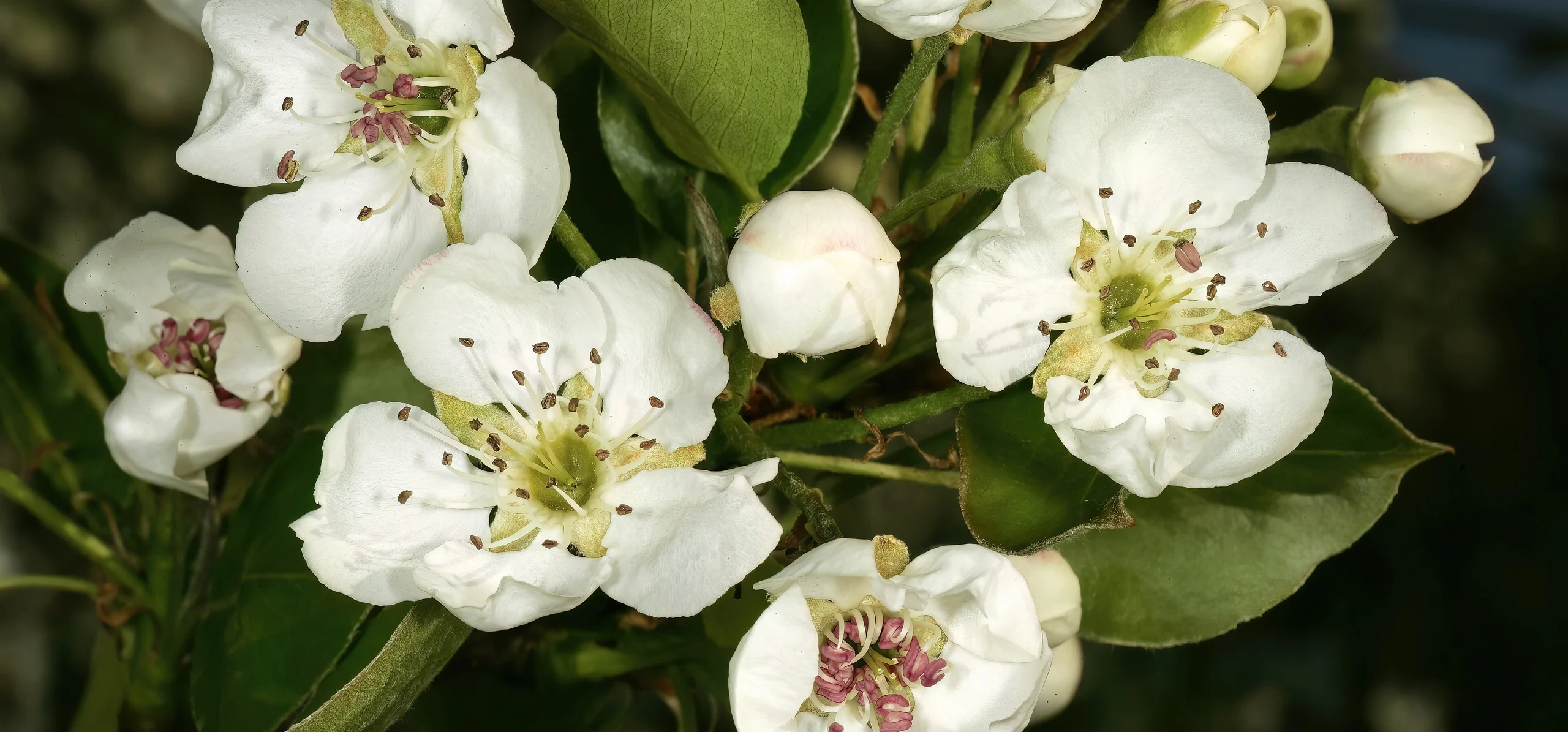
- Clusters of white blossom in mid-spring
- Propagation
- Grafting
- Cutting
- Seed
DormancyDeciduous; leafless and dormant in winter
Time to maturityFirst proper crop about 4 to 5 years after planting (Missouri Botanical Garden)
Soil & climate
- Soil pH
- pH 6–8
- Soil types
- Deep loam, Clay, Sand, Well-drained
- Drought tolerance
- No
Light & Placement
- Origin
- Europe to N. Iraq (POWO)
- Where to place it
- Open sunny garden bed
- South or west-facing wall for espalier or fan training
- Sheltered orchard planting away from frost pockets
- Large container on Quince C rootstock, short to medium term
Safety
- Toxicity
- Not evaluated by the ASPCA; toxicity undetermined
- Pet safe
- No
Data fromPyrus communis L., GBIF Backbone TaxonomPyrus communis L., Plants of the World OPyrus communis (common pear), RHSHow to grow pears, RHSPyrus communis, North Carolina Extension
Where it grows
World distribution
Common Pear is native to 24 countries: Albania, Austria, Belarus, Belgium, Bulgaria, Croatia, Cyprus, and Czechia….GBIF records 105,933 documented identifications across 102 countries, with the largest concentrations in United Kingdom, Germany, and France.
- Albania
- Austria
- Belarus
- Belgium
- Bulgaria
- Croatia
- Cyprus
- Czechia
- Estonia
- France
- Georgia
- Germany
Show 12 more countriesShow fewer countries
- Greece
- Hungary
- Iraq
- Italy
- Netherlands
- Poland
- Romania
- Russia
- Spain
- Switzerland
- Türkiye
- Ukraine
Yellow to orange dots: concentration of documented identifications per country. Green countries: sourced native range. Source: GBIFNative range from POWO (Kew).
A young common pear (Pyrus communis) planted this year will not need much beyond steady watering and a sunny, sheltered spot, but the decisions that matter most, which rootstock it is grafted onto, whether it has a pollination partner nearby, and how it gets pruned, are usually made before the tree even goes in the ground. Left to its own roots, this species grows into a 12 to 15 m woodland tree, which is why almost every garden pear sold today is grafted onto a quince rootstock that keeps it to a manageable size. Expect blossom in mid-spring, fruit from midsummer into autumn depending on the variety, and, on a well-sited tree, a first proper crop within four or five years.
Choosing a Variety and Rootstock
Pyrus communis is the species behind almost all dessert and cooking pears grown in temperate gardens, from Comice and Bartlett to Conference and Williams. The tree itself is never grown on its own roots in cultivation; it is grafted onto quince rootstock so its final size stays predictable. Quince A is semi-vigorous and produces a tree 3 to 4.5 m tall, suited to a free-standing bush or an espalier, spaced 3.5 to 5.5 m apart. Quince C is more dwarfing, staying at 2.5 to 3 m, ideal for cordons, small espaliers and large containers, spaced 2.5 to 3.5 m apart, and it tends to bear its first fruit slightly sooner than a tree on Quince A. Match the rootstock to the space you actually have rather than the tree you picture in five years; a pear on Quince A left unpruned in a small garden becomes a genuine maintenance problem.
Planting: Site and Soil
Give a pear the sunniest position available: it wants direct sun for most of the day and sulks in shade for more than half of it. The soil should be deep, fertile and free draining but moisture retentive, ideally close to neutral; very acid soils and shallow soils over chalk both hold the tree back. Pears tolerate clay, loam and sandy soils more readily than most fruit trees as long as drainage is adequate, with a workable pH range of roughly 6.0 to 8.0. Avoid a site prone to late frosts, since a pear's mid-spring blossom is far more exposed to cold snaps than its winter buds, and give the tree the spacing its rootstock calls for, since a crowded canopy blocks the light a pear needs to fruit well.
Watering and Feeding
A newly planted pear needs a deep soak roughly once a week through its first one to two growing seasons while the roots establish; after that the tree tolerates short dry spells reasonably well, especially in the clay and loam soils it is suited to. The moment watering matters most is while the fruit is swelling in summer: keep it even, because a dry spell followed by heavy rain or a sudden deep watering can split the skins. A yearly mulch of well-rotted compost or manure spread under the canopy, kept clear of the trunk, feeds the tree gently and holds moisture through the summer better than any liquid feed applied on its own.


Pollination and Fruit Set
Most pear cultivars are only partially self-fertile at best, and a single isolated tree usually sets a light, unreliable crop even when it flowers well. Missouri Botanical Garden recommends planting two or more varieties for reliable cross-pollination, and the same logic applies to a lone tree growing near a neighbour's pear within bee range, provided the two bloom at overlapping times. Cold, wet or windy weather during the narrow mid-spring flowering window keeps pollinating insects away and is one of the biggest causes of a poor pear harvest in an otherwise healthy tree.
Pruning and Training
How a pear is pruned depends entirely on its shape. A free-standing or bush tree is structurally pruned in winter while it is dormant, cutting out dead, crossing and crowded wood to keep an open centre that lets in light. Restricted forms, espaliers, cordons and pyramids trained flat against a wall or wire, are different: they are pruned mainly in summer, once the lower third of the season's new shoots has turned woody, generally from late July for pears, to check vigorous regrowth and keep the framework in shape. Espaliers are typically trained with three or four tiers of horizontal arms off a central stem, reaching around 1.8 m tall; each new tier is started by cutting back the central leader in winter to force the side shoots that become the next pair of arms.
Pests and Diseases
The common pear's regular pest problems include aphids, caterpillars, codling moth, pear blister mite, pear midge and pear and cherry slugworm, alongside diseases such as pear scab, European pear rust, brown rot and blossom wilt, all listed by the RHS for this species. Fireblight is the one that demands the fastest response: blossom wilts and blackens as though scorched, then the infection travels down the inner bark and shoots shrivel and die, with damage visible from late spring into autumn. There is no chemical control. Cut out infected wood as soon as you see it, peeling back the bark until the staining underneath turns healthy again, taking the cut 30 cm into healthy wood on small branches and 60 cm on larger ones, and wipe the blade with disinfectant between every cut. Burn or bin the prunings rather than composting them, since the bacteria survives in cut wood.
Harvest, Ripening and Storage
Pears are the rare fruit that ripens better off the tree than on it: picked and left to soften indoors, the flesh ripens evenly from the inside out, while a pear left to ripen on the branch typically turns mealy or rots around the core before the outside looks ready. Harvest when a fruit lifts away with a gentle twist rather than needing to be pulled, usually while it is still firm and full sized but not yet soft. Spread the crop on slatted trays or crates in a cool, dark place with airflow, without letting individual fruits touch, and check daily: early varieties can be ready to eat within about a week, while late-season pears may need weeks or months of storage before they soften. A few fruits kept loose in the fridge salad drawer ripen more slowly, which staggers the harvest instead of it all coming ready at once.
Common Mistakes
The most frequent error is leaving fruit on the tree until it looks ripe from the outside, which for a pear usually means it is already overripe and grainy at the core. A close second is planting a single ungrafted or seedling pear and expecting full crops from year one, when most cultivars need a genuinely compatible partner nearby and several years to reach bearing size. Gardeners with trained forms also lose shape fast by pruning espaliers and cordons in winter out of habit, which pushes exactly the soft regrowth that summer pruning is meant to prevent. Finally, composting fireblight prunings instead of destroying them quietly reinfects the tree the following season, undoing what looked like a clean removal.
Test your plant knowledge
Tap a card to flip it and reveal the answer.
Pears should be left on the tree until they feel soft before picking. Tap to reveal ✕ False
Nearly all garden pear trees are grafted onto quince rootstock rather than grown on their own roots. Tap to reveal ✓ True
Quince C rootstock produces a larger tree than Quince A. Tap to reveal ✕ False
Restricted forms such as espaliers and cordons are pruned mainly in summer rather than winter. Tap to reveal ✓ True
There is no chemical treatment for fireblight; removing infected wood is the main control. Tap to reveal ✓ True
Sources
References consulted for this guide
- Pyrus communis L., GBIF Backbone Taxonomygbif.org
- Pyrus communis L., Plants of the World Online (Kew)powo.science.kew.org
- Pyrus communis (common pear), RHSrhs.org.uk
- How to grow pears, RHSrhs.org.uk
- Pyrus communis, North Carolina Extension Gardener Plant Toolboxplants.ces.ncsu.edu
- Reference entity : Wikipédiaen.wikipedia.org