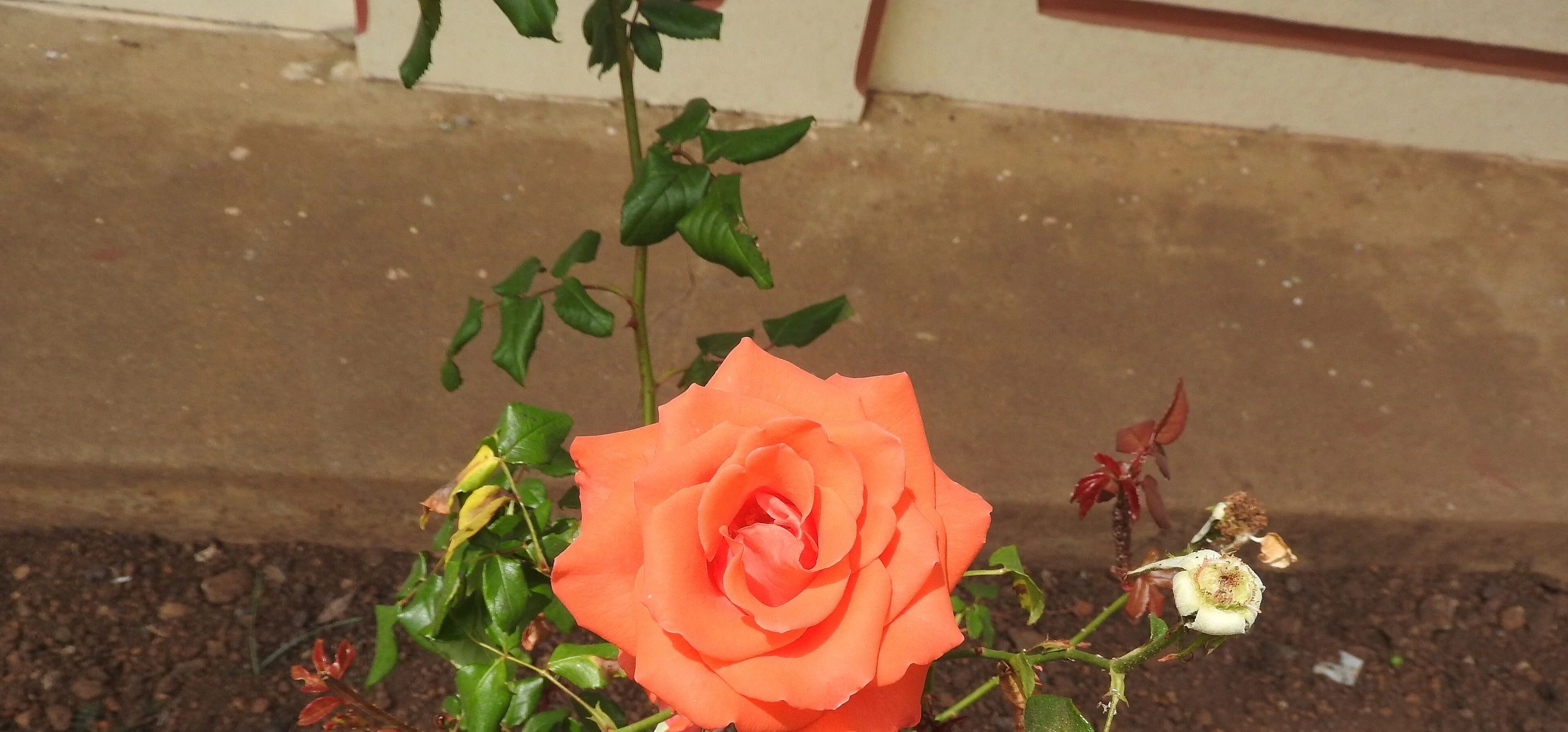
China Rose
Rosa chinensis
Family · Rosaceae
China rose care by variety: Old Blush, Mutabilis and Slater's Crimson China, with sourced light, soil, pruning and disease guidance.
Rosa chinensis
Plant profile
- WateringModerateWater every 5 days
- Light exposurePartial sun
- Hardiness zoneUSDA 6–10
Growth
- Family
- Rosaceae
- Life cycle
- Perennial
- Growth speed
- 5/10
- Mature size
- 90–250 cm
- Spread
- 90–150 cm
- Flowering
- Repeat-blooming from early summer to late autumn (RHS)
- Propagation
- Cutting
- Grafting
DormancyDeciduous; drops leaves and rests over winter in cooler climates (RHS)
Time to maturityReaches full size in 2 to 5 years (RHS)
Soil & climate
- Soil types
- chalk, clay, loam, sand
- Drought tolerance
- No
Light & Placement
- Origin
- Native to China: Shaanxi, Sichuan, Hubei and Guizhou (POWO)
- Where to place it
- Sheltered south-, west-, east- or north-facing border (RHS)
- Sunny wall or fence line out of strong wind
- Large container with excellent drainage, best for compact cultivars like 'Slater's Crimson China'
Safety
- Toxicity
- CatsSafe
- DogsSafe
- HorsesSafe
Data fromRosa chinensis Jacq., GBIF Backbone TaxoRHS: Rosa chinensis 'Old Blush'NC State Extension Gardener Plant ToolboMissouri Botanical Garden Plant Finder: ASPCA: Toxic and Non-Toxic Plants, Rose
Where it grows
World distribution
China Rose is native to a single country: China.GBIF records 3,175 documented identifications across 76 countries, with the largest concentrations in China, Mexico, and United States.
- China
Yellow to orange dots: concentration of documented identifications per country. Green countries: sourced native range. Source: GBIFNative range from POWO (Kew).
A China Rose That Rewrote What a Rose Could Do
Rosa chinensis Jacq. is the GBIF-accepted name for the china rose, a shrub in the family Rosaceae, order Rosales, alongside plums, brambles and hawthorns. POWO records its native range as China: Shaanxi, Sichuan, Hubei and Guizhou, hill country where the wild species still grows among other shrubs on rocky slopes. What made it consequential outside China is a trait almost no European rose possessed before it arrived: the ability to flower in repeated flushes from early summer into autumn instead of a single flush in June. Modern hybrid tea, floribunda and repeat-flowering shrub roses all carry genes traced back to this species and its early garden forms.
If you have just bought or inherited a china rose, the plant in front of you is very likely a named cultivar rather than the wild species: 'Old Blush', 'Mutabilis' and 'Slater's Crimson China' account for most plants sold under this name. All three share the same core needs described below, so identifying the cultivar matters mainly for expected size and flower color, not for day to day care.
Choosing a China Rose Variety
'Old Blush' is the most widely grown form. The RHS lists it reaching 1.5 to 2.5 m in height with a 1 to 1.5 m spread over two to five years, bearing fragrant, soft pink double flowers around 6 cm across on twiggy, almost thornless stems. NC State Extension gives a more compact figure for garden-grown plants, 4 to 6 ft tall and 4 to 5 ft wide, and rates its growth rate medium.
'Mutabilis' is the variety to choose for color interest. The Missouri Botanical Garden describes single, slightly fragrant flowers that open yellow and shift through orange and pink to deep pinkish red as they age, so a mature plant in bloom can show several colors at once, earning it the nickname butterfly rose. It reaches 3 to 6 ft depending on climate and does best in full sun to part shade. 'Slater's Crimson China' stays smaller and suits containers, with deep red, lightly double blooms.
Light and Placement
The RHS rates china rose for full sun or partial shade, tolerating south, west, east or north-facing positions as long as the spot is sheltered from strong wind. NC State Extension is more specific about the trade-off: full sun means 6 or more hours of direct light a day and produces the heaviest bloom, while partial shade, 2 to 6 hours, still flowers but less densely. A sheltered, sunny wall or fence line that blocks wind while reflecting extra warmth suits it well.
Soil and Planting
Both the RHS and NC State Extension list china rose as tolerant of a wide range of textures: chalk, clay, loam and sand, moist but well-drained. NC State pins the pH tolerance to acidic, below 6.0, through neutral, 6.0 to 8.0, so unlike many roses it does not demand a narrow acid band. What it does need is drainage; heavy, waterlogged clay left unamended is the one soil condition both sources flag as a problem, since standing water around the crown invites root and collar disease. Working garden compost or well-rotted manure into the planting hole before setting the rootball improves structure in both directions, loosening clay and adding water-holding capacity to sand.
Watering
Water at the base rather than overhead. NC State Extension names overhead watering specifically as a disease trigger for this rose, since wet foliage left to dry slowly gives black spot and powdery mildew time to establish. A deep soak that reaches the full root zone, followed by a chance for the top few centimetres to dry before the next watering, keeps roots healthy without inviting fungal problems on the leaves.
How often to water your China Rose
Newly planted china roses need closer attention through their first season, since the root system has not yet reached deeper, more stable soil moisture. Established plants tolerate short dry spells better, but sustained drought during the summer bloom flush still thins out flower production noticeably.
Feeding and Pruning
Because it flowers continuously rather than once, a china rose draws more steadily on soil nutrients than a once-blooming shrub rose across the growing season. A balanced, rose-specific fertiliser applied through spring and summer supports the repeat flush; stopping feed in late summer lets the plant harden new growth before the first cold snap rather than pushing soft shoots into it.
NC State Extension's pruning guidance for 'Old Blush' is to cut out dead or diseased canes in late winter and shorten the rest by about one third, which keeps the plant open and encourages the next round of flowering wood. Deadheading spent blooms through the season, cutting back to the first strong five-leaflet leaf, is what actually keeps the repeat-flowering habit going: left unpruned, the plant channels energy into hips instead of the next flush.
Pests and Diseases
The RHS lists aphids, rose leafhoppers, spider mites, scale insects, caterpillars and sawflies among the pests to watch for, plus deer and rabbits browsing young growth where they are present. On the disease side, both the RHS and NC State Extension name black spot and powdery mildew as the two recurring problems, and the RHS additionally lists rust, dieback and replant disease, poor growth when a rose follows another rose in the same soil. NC State notes the plant is comparatively disease-resistant for a rose when given good air circulation and watered at the base rather than overhead, which is the single change most likely to reduce black spot and mildew pressure.
Common Mistakes
The most common mistake is overhead watering or frequent misting, whether from a sprinkler system or well-meant hand watering of the foliage; NC State Extension flags this directly as a disease trigger for this species. The second is skipping the late-winter prune because the plant already looks full: without removing old wood and shortening canes by about a third, flowering wood accumulates unproductive growth and bloom quality drops over a few seasons. The third is planting in unamended heavy clay and expecting the tolerates clay listing to mean thrives in clay; both the RHS and NC State list it as tolerant of the texture, not as a plant that prefers standing water around its roots.


Test your plant knowledge
Tap a card to flip it and reveal the answer.
China roses can repeat-bloom in flushes from early summer into autumn, unlike many old European roses. Tap to reveal ✓ True
China rose stems are typically covered in large, dense thorns. Tap to reveal ✕ False
The 'Mutabilis' variety's flowers stay a single fixed color from bud to petal drop. Tap to reveal ✕ False
Watering the foliage instead of the base raises the risk of disease in china roses. Tap to reveal ✓ True
The ASPCA lists roses (Rosa species) as toxic to cats and dogs. Tap to reveal ✕ False
Sources
References consulted for this guide
- Rosa chinensis Jacq., GBIF Backbone Taxonomygbif.org
- RHS: Rosa chinensis 'Old Blush'rhs.org.uk
- NC State Extension Gardener Plant Toolbox: Rosa 'Old Blush'plants.ces.ncsu.edu
- Missouri Botanical Garden Plant Finder: Rosa 'Mutabilis'missouribotanicalgarden.org
- ASPCA: Toxic and Non-Toxic Plants, Rose (Rosa Species)aspca.org
- Reference entity : Wikipédiaen.wikipedia.org