Monterey Cypress
Cupressus macrocarpa
Family · Cupressaceae
Why potted 'Goldcrest' browns indoors, how big Cupressus macrocarpa gets outdoors, its two native groves, the Leyland cypress cross, and cypress canker.
Cupressus macrocarpa
Plant profile
- WateringLittleWater every 10 days
- Light exposureFull sun
- Hardiness zoneUSDA 8–10
Growth
- Family
- Cupressaceae
- Life cycle
- Perennial
- Growth speed
- 7/10
- Mature size
- 1200–2500 cm
- Spread
- 400–1200 cm
- Flowering
- Grown for evergreen foliage and form; bears small cones rather than showy flowers
- Propagation
- Seed
- Cutting
Dormancyevergreen, little winter dormancy
Time to maturityreaches full size in 50 or more years
Soil & climate
- Soil types
- chalk, clay, loam, sand
- Saline soil
- Tolerated
- Drought tolerance
- Yes
Light & Placement
- Origin
- California, near Monterey (two native groves)
- Where to place it
- brightest unobstructed window, for short-term display only
- full sun, exposed coastal position
- windbreak or shelterbelt row
- young clipped hedge
- large, free-draining container, moved outdoors as soon as possible
Safety
- Toxicity
- Not evaluated by the ASPCA; toxicity undetermined
- Pet safe
- No
Invasive speciesnaturalizes readily in mild coastal climates outside its tiny native range
Data fromGBIF Backbone Taxonomy: Cupressus macrocPlants of the World Online (Kew): HesperRHS: Cupressus macrocarpa 'Goldcrest'Flora of North America (efloras.org): CuUC ANR: Structural failure profile, MontUniversity of Arizona Cooperative Extens
Where it grows
World distribution
Monterey Cypress is native to a single country: United States.GBIF records 13,284 documented identifications across 63 countries, with the largest concentrations in United Kingdom, United States, and Australia.
- United States
Yellow to orange dots: concentration of documented identifications per country. Green countries: sourced native range. Source: GBIFNative range from POWO (Kew).
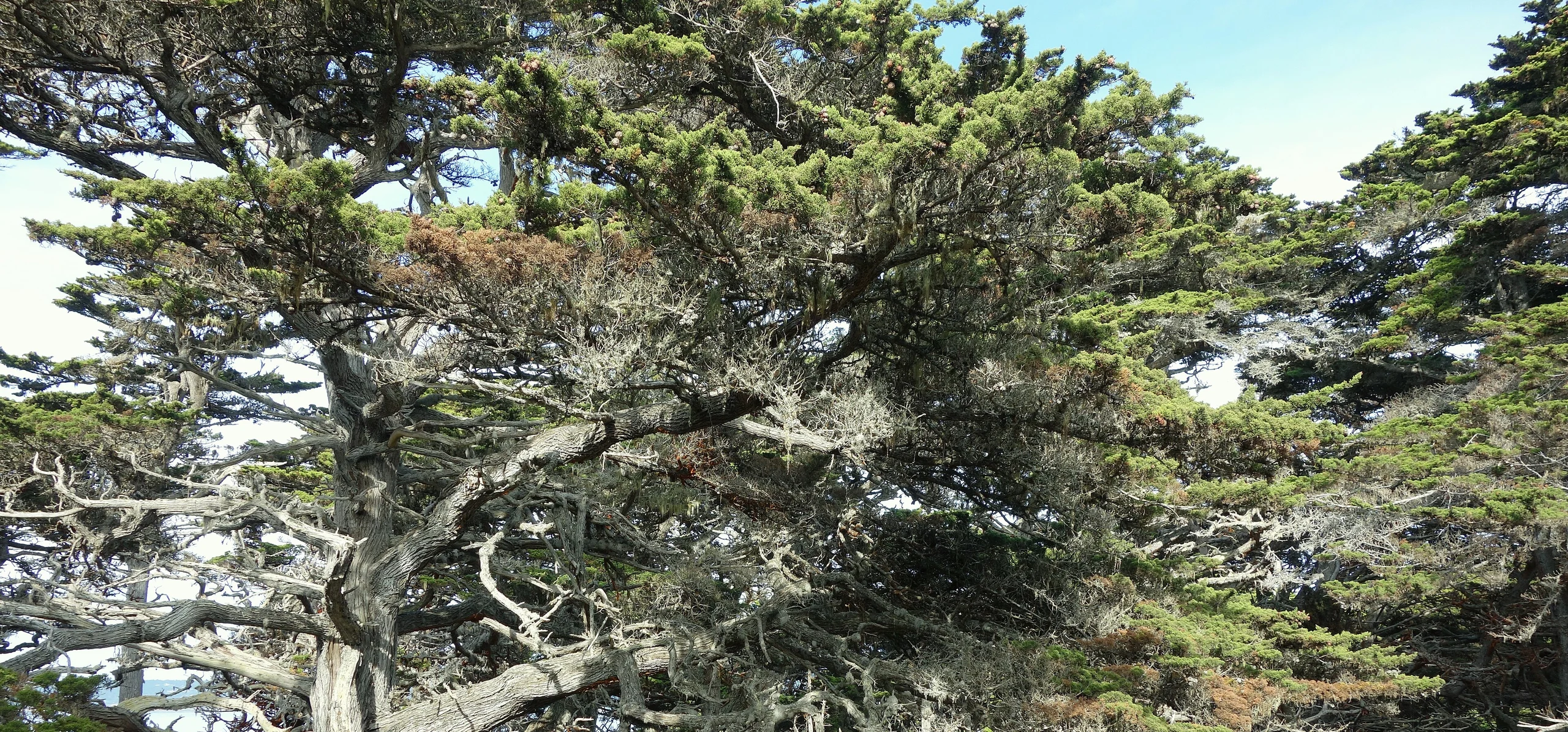
A potted 'Goldcrest' with lemon-scented, chartreuse foliage sitting on a windowsill is not really behaving like Cupressus macrocarpa at all: it is a golden cultivar of a tree that, left on an exposed coast, becomes a conifer over 12 metres tall with a gnarled, wind-sculpted crown. That mismatch between the small, tender pot plant sold at garden centres and the enormous, storm-battered wild tree explains most of the confusion around this species, from why the indoor specimen turns brown within a season to why the same species is planted as a coastal windbreak elsewhere. Monterey cypress is native to a strip of California coastline so narrow it survives today in only two groves, yet it has become one of the most widely planted conifers on earth, for hedging, for shelterbelts, and as one half of the ubiquitous Leyland cypress.
Why the Potted 'Goldcrest' Turns Brown Indoors
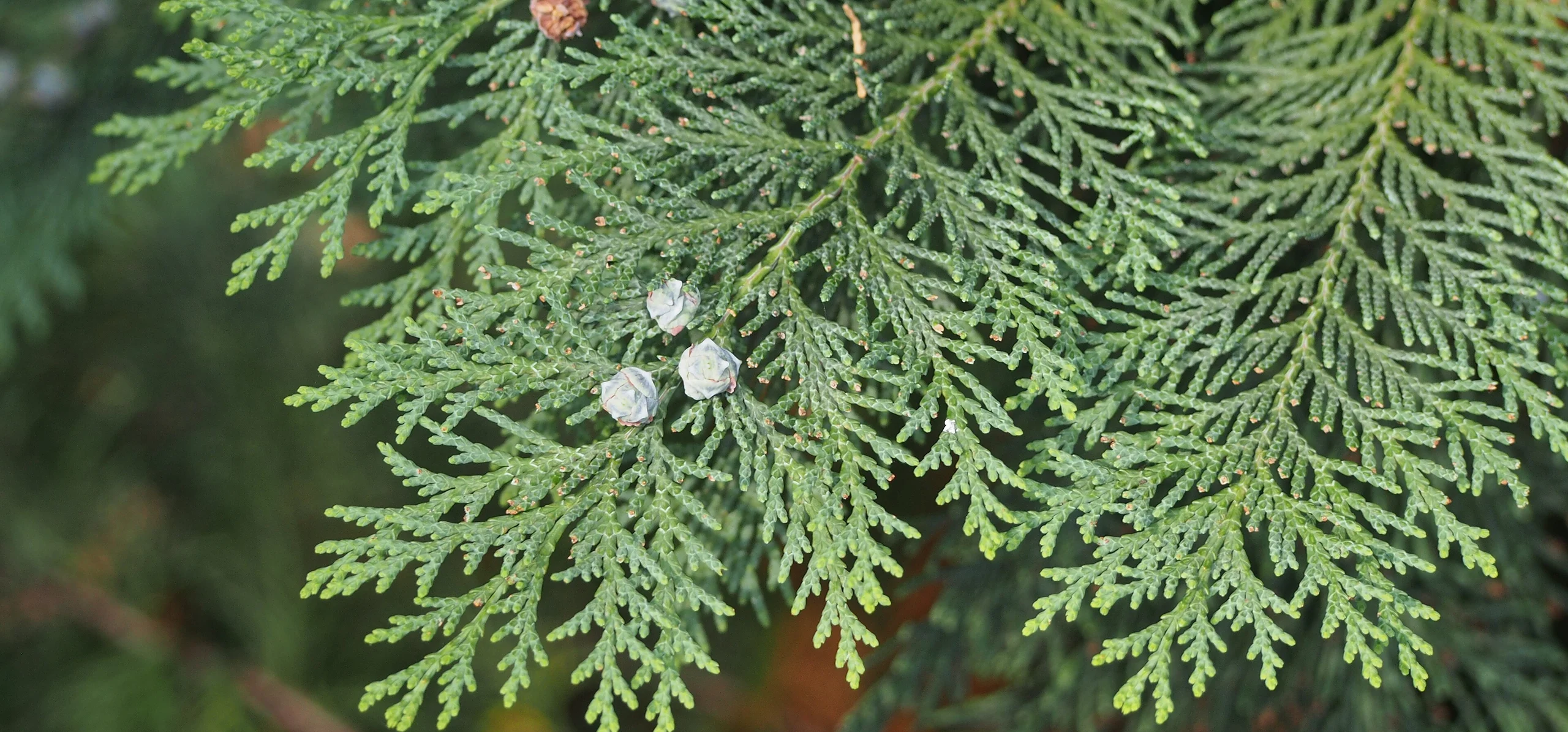
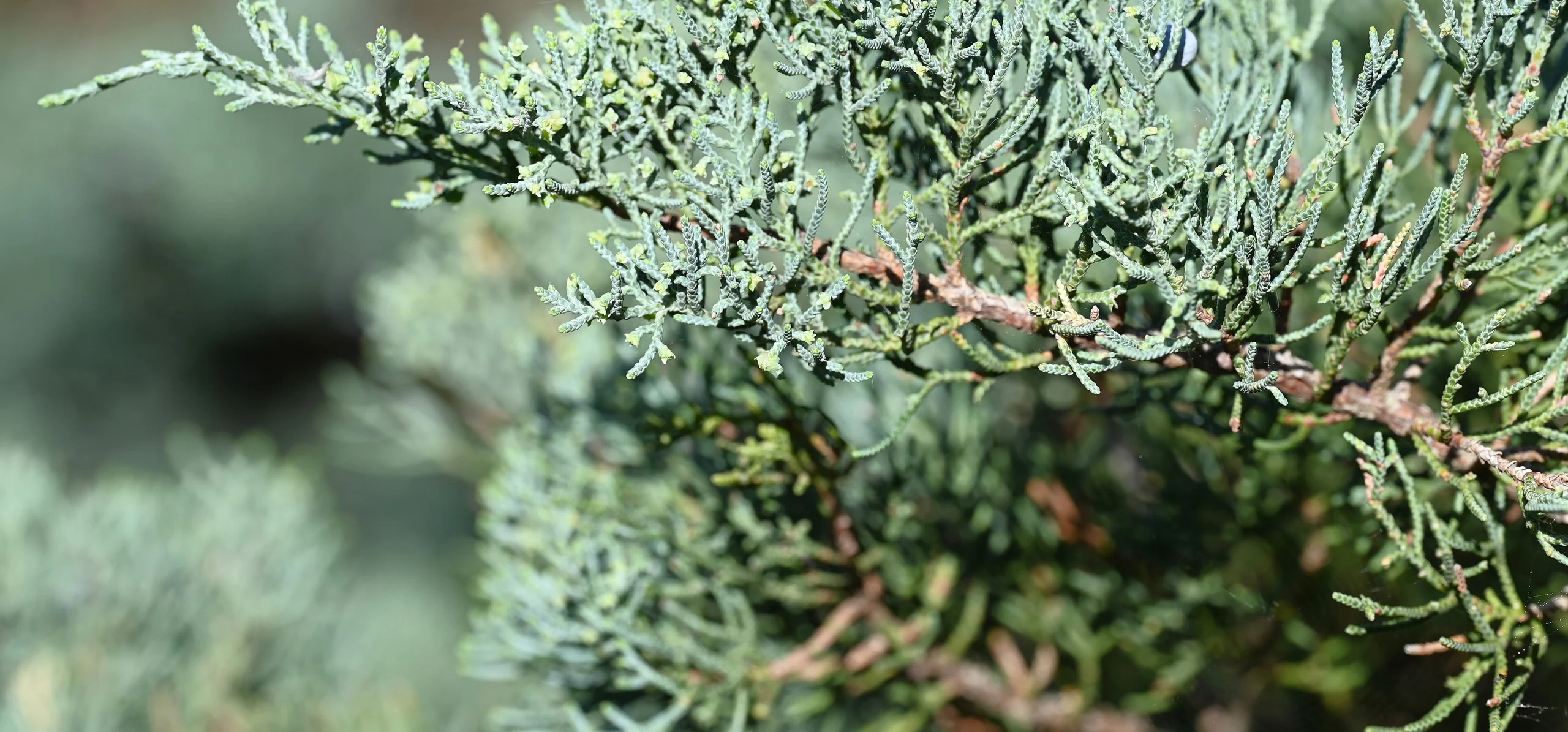
'Goldcrest' is sold as a small, immature plant with soft, needle-like golden-yellow foliage that gives off a distinct citrus scent when the sprays are rubbed between the fingers, which is exactly why it turns up as a mini Christmas tree and windowsill plant every winter. The RHS lists this cultivar's requirements as full sun and well-drained soil, the same as the species: a genuinely full-sun, outdoor conifer, not a houseplant. Kept indoors it gets a fraction of the light intensity it needs, sheds the fine inner foliage it cannot support in low light, and dries out unevenly at the tips, the browning many owners diagnose as disease when it is really a light and airflow problem. Give it the brightest, coolest spot for the display period, then move it outside into full sun as soon as frosts allow: Goldcrest is hardy in the garden to RHS rating H4, tolerating winter minimums down to about -10°C, and does not need protecting once acclimatised.
A Native Range Reduced to Two Groves
Plants of the World Online gives the native range simply as California, near Monterey. University of California extension arborist literature is more specific: the species survives in the wild in just two groves on the Monterey Peninsula, at Cypress Point near Pebble Beach and at Point Lobos near Carmel, both within reach of onshore Pacific spray. Everywhere else it grows, including the large planted and naturalized populations the Flora of North America notes along the California and Oregon coasts and in warm temperate regions worldwide, is outside that tiny wild range. GBIF's accepted name for the species remains Cupressus macrocarpa, though readers researching it further will also meet it as Hesperocyparis macrocarpa, the genus Plants of the World Online now uses for this and the other New World cypresses once lumped into Cupressus.


Real Size Outdoors and Coastal Wind Tolerance
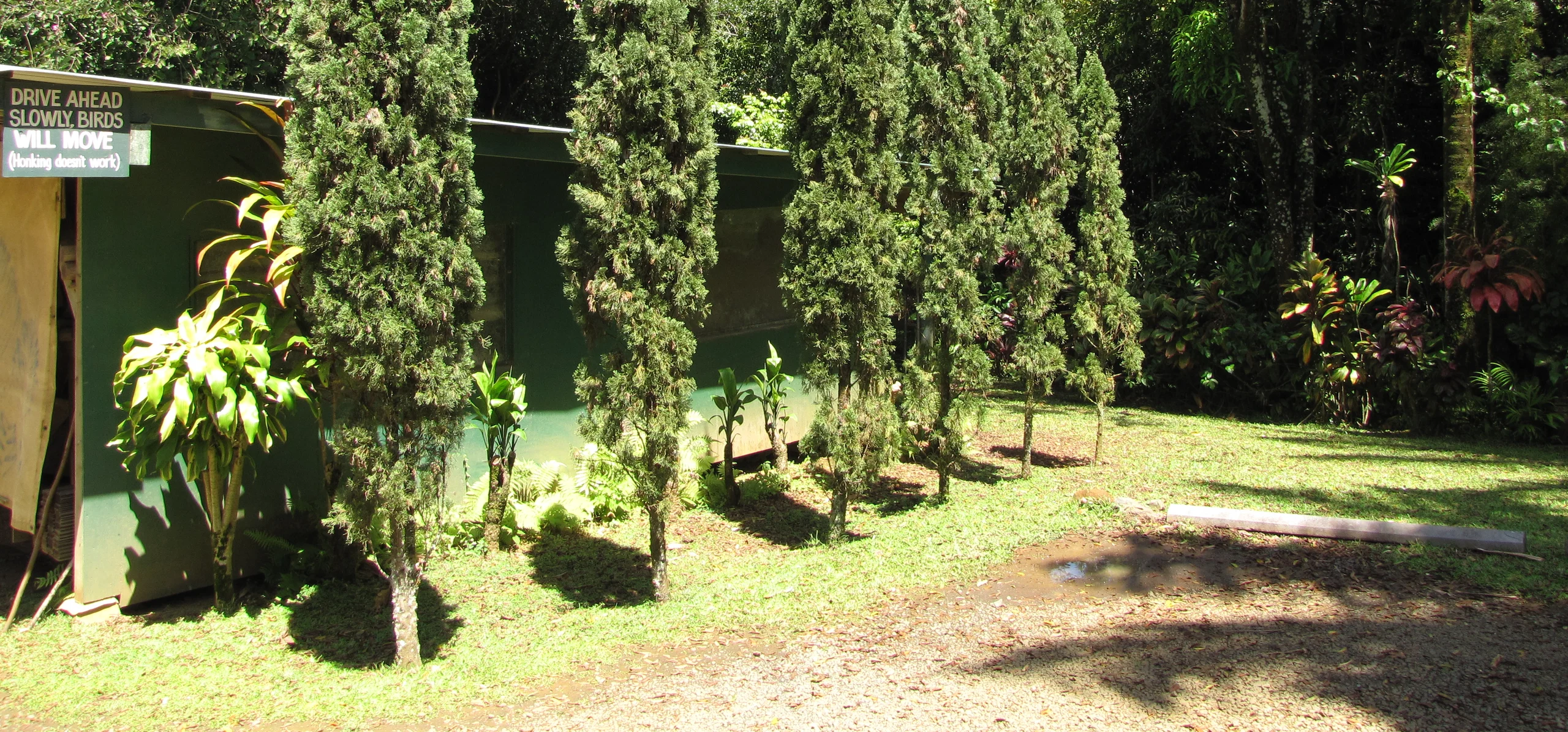
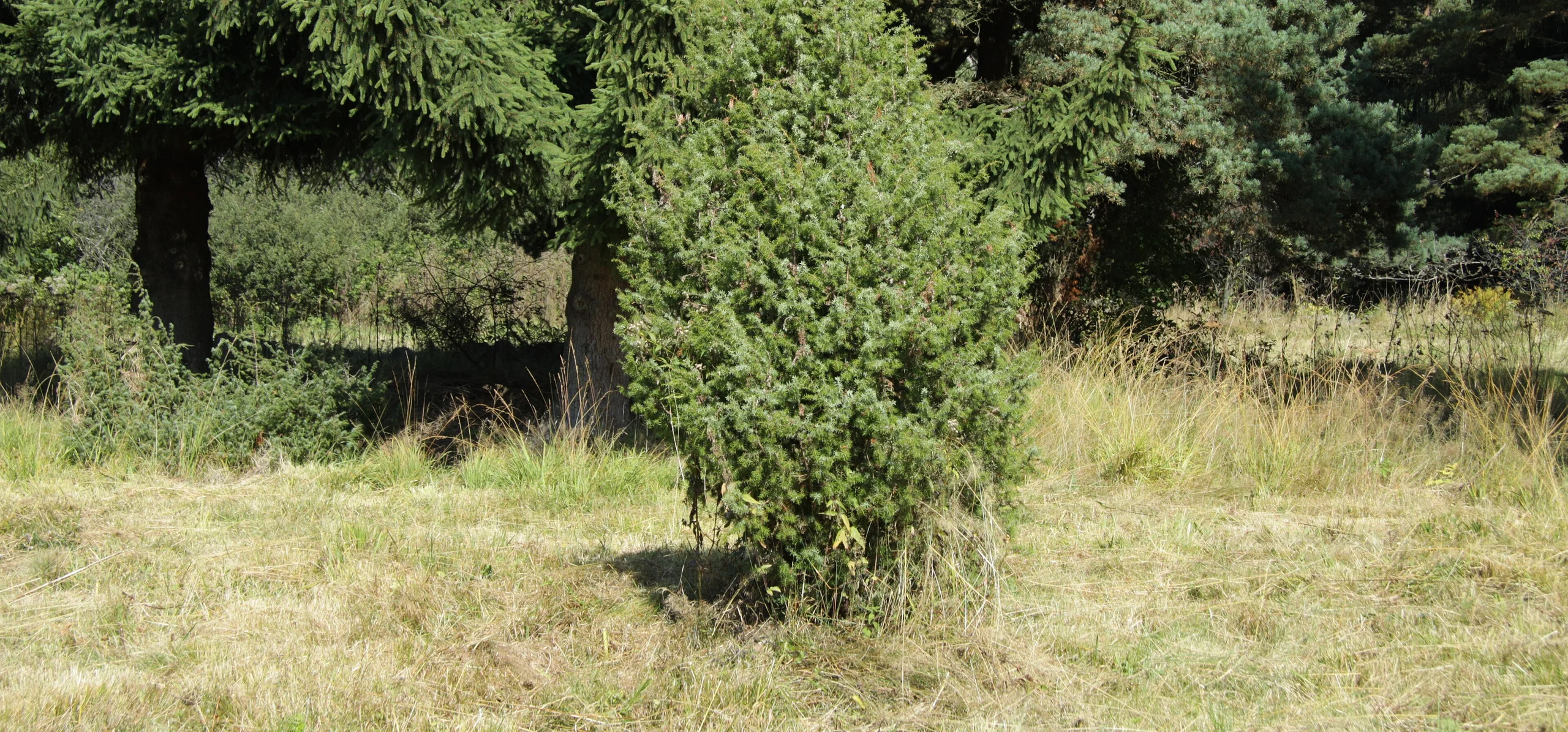
In cultivation the RHS rates Monterey cypress as reaching more than 12 metres, typically 3 to 5 metres in the first ten years and around 10 metres by twenty, eventually forming a broad, irregular crown rather than the tight column of the young tree. On the exposed headlands of its native groves, the Flora of North America describes a crown that is broadly spreading and fairly sparse, built from a few major limbs close to the ground, in contrast to the more upright habit the same species takes in sheltered gardens; the famous, flat-topped, wind-bent cypresses photographed on the Monterey coast are not stunted, they are growing exactly as this species does under constant onshore wind and salt spray. That tolerance is what gardeners actually buy the species for away from California: as a seaside windbreak or shelterbelt row it takes an exposure that would scorch or topple less resilient conifers, provided the roots have had a season or two to establish before the worst weather arrives.
Hedging and the Leyland Cypress Cross
Monterey cypress was hedged in coastal gardens long before it became known for a different reason: crossed with the Nootka, or Alaska, cypress, it produced the intergeneric hybrid now sold everywhere as Leyland cypress. Louisiana State University's horticulture department describes the cross plainly as an intergeneric hybrid of Cupressus macrocarpa and Chamaecyparis nootkatensis, and the pairing explains why Leylandii hedges grow so fast and so tall: it combines the rapid growth and branching habit of Monterey cypress with the cold hardiness of its Alaskan parent. Grown alone rather than as a hybrid parent, Monterey cypress makes a coarser, less uniformly dense hedge than Leylandii and is used less often for that purpose today, but its own clipped hedges and windbreak rows are still common on the coasts where it thrives.
Cypress Canker: The Disease Behind Most Losses
Seiridium canker, still often called cypress canker, is why so many garden and street specimens of Monterey cypress die branch by branch rather than living out their potential decades. The University of Arizona Cooperative Extension describes the fungus entering through cracks in the bark and producing toxins that cut off the upward flow of water and nutrients, showing up first as a branch that flags from green to yellow to reddish brown as the girdling canker beneath it kills the wood. Heat and drought stress make infection worse, part of why the disease is such a problem on this species away from its cool, foggy native coast, and there is no chemical cure once a tree is infected: the only response is to cut out infected branches well below the canker, disinfecting tools between cuts, and to remove badly affected trees before the fungus spreads to neighbours.
Pruning Rules: Never Cut Into Old, Bare Wood
Like almost all conifers apart from yew, Monterey cypress cannot resprout from bare wood that has already lost its green foliage: cut back past the last living needles on an old branch or an overgrown hedge face, and that stub simply stays bare rather than pushing new growth. A hedge or windbreak row has to be trimmed while still young and kept within its green zone every year after that, because a neglected specimen left to grow tall and thin at the base cannot later be cut back hard to recover density the way beech or hornbeam can. The RHS lists no routine pruning as necessary for a free-standing specimen, but any formative or hedge cutting should stay just inside the current foliage line, and dead or canker-affected wood should be removed back to clean, green tissue rather than left to spread.
Toxicity and Pet Safety
Monterey cypress does not appear, under either Cupressus macrocarpa or its common name, on the ASPCA's toxic or non-toxic plant lists, so no verified toxicity status exists for cats, dogs or horses for this particular species. It should not be assumed safe simply because it is unlisted, since pets that chew conifer foliage can still get mild stomach upset from the resins and oils common across the cypress family. Anyone with a browsing pet and easy access to a potted 'Goldcrest' is better off keeping the plant out of reach than relying on an absence of data.
Test your plant knowledge
Tap a card to flip it and reveal the answer.
The golden 'Goldcrest' cultivar rarely thrives as a permanent indoor houseplant. Tap to reveal ✓ True
Monterey cypress is native across a wide, continuous forest in California. Tap to reveal ✕ False
Cutting a neglected Monterey cypress hedge back into bare, leafless wood usually makes it resprout there. Tap to reveal ✕ False
Leyland cypress is an intergeneric hybrid of Monterey cypress and Nootka (Alaska) cypress. Tap to reveal ✓ True
Cypress canker (Seiridium) can be cured with a fungicide once a tree is infected. Tap to reveal ✕ False
Sources
References consulted for this guide
- GBIF Backbone Taxonomy: Cupressus macrocarpa Hartw. ex Gordongbif.org
- Plants of the World Online (Kew): Hesperocyparis macrocarpa (Hartw.) Bartelpowo.science.kew.org
- RHS: Cupressus macrocarpa 'Goldcrest'rhs.org.uk
- Flora of North America (efloras.org): Cupressus macrocarpaefloras.org
- UC ANR: Structural failure profile, Monterey cypressucanr.edu
- University of Arizona Cooperative Extension: Seiridium Canker of Cypress Trees in Arizonaextension.arizona.edu
- LSU AgCenter: x Cupressocyparis leylandiilsu.edu
- Reference entity : Wikipédiaen.wikipedia.org