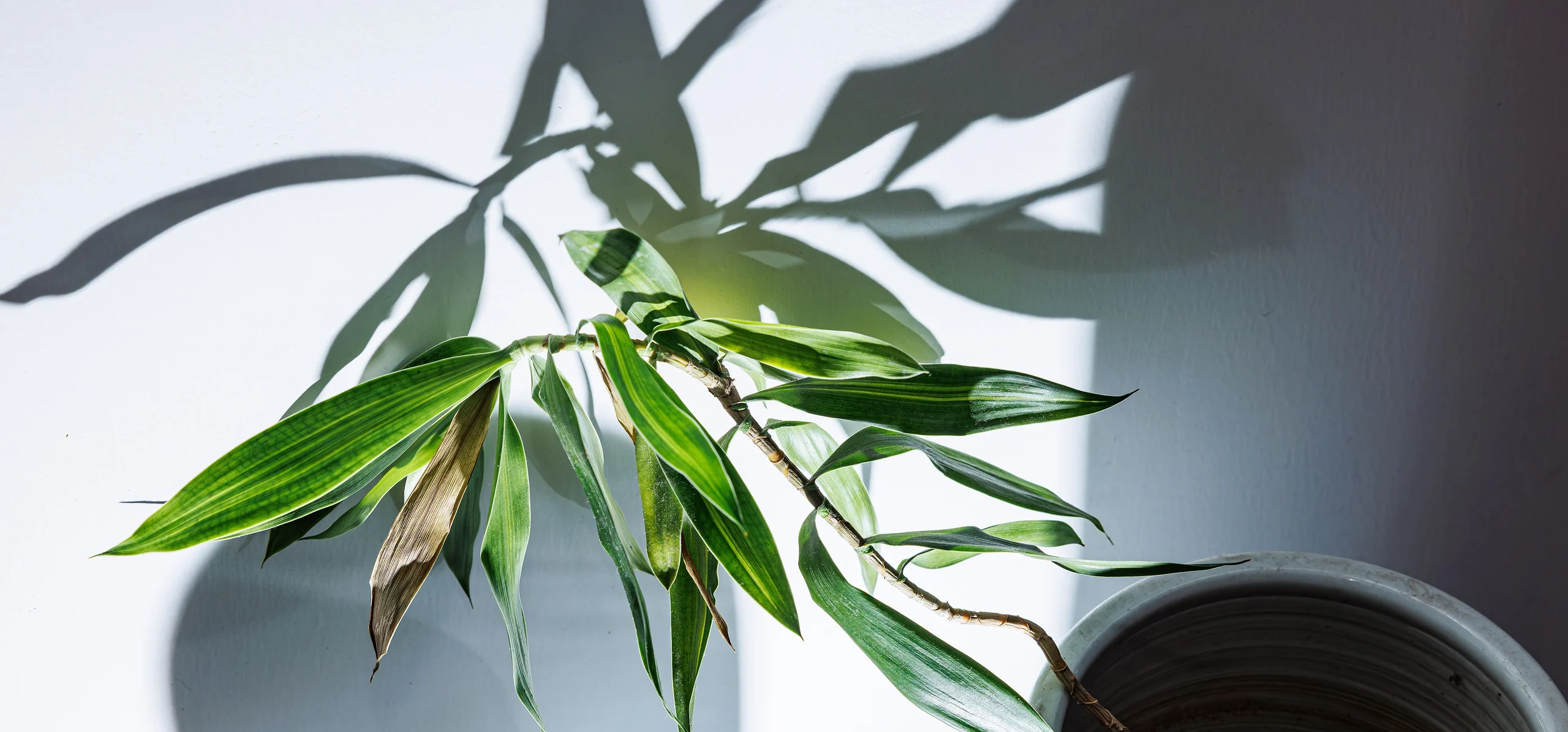
Lucky Bamboo
Dracaena sanderiana
Family · Asparagaceae
How to care for lucky bamboo (Dracaena sanderiana): light, watering, why stalks turn yellow, propagation from cuttings, and toxicity to pets.
Dracaena sanderiana
Plant profile
- WateringModerateWater every 7 days
- Light exposureIndirect light
- Hardiness zoneUSDA 10–12
Growth
- Family
- Asparagaceae
- Life cycle
- Perennial
- Growth speed
- 3/10
- Mature size
- Slow growing; stalks usually kept short by training
- Flowering
- Rarely flowers indoors
- Propagation
- Cutting
Soil & climate
- Soil types
- moist, well-drained potting mix, none needed for water culture
- Drought tolerance
- No
Light & Placement
- Origin
- West Central Tropical Africa to NE Angola
- Where to place it
- east- or north-facing windowsill
- a few feet back from a bright window
- dappled shade in frost-free, tropical climates
- glass vessel with pebbles for water culture
- container with drainage holes for soil
Safety
- Toxicity
- CatsToxic
- DogsToxic
- HumansToxic
Data fromGBIFPlants of the World Online (Kew)ASPCAMissouri Botanical GardenNC State Extension Gardener Plant ToolboClemson HGIC
Where it grows
World distribution
Lucky Bamboo is native to 6 countries: Angola, Cameroon, Central African Republic, Congo - Brazzaville, Congo - Kinshasa, and Gabon.GBIF records 517 documented identifications across 48 countries, with the largest concentrations in Congo - Kinshasa, Cameroon, and United States.
- Angola
- Cameroon
- Central African Republic
- Congo - Brazzaville
- Congo - Kinshasa
- Gabon
Yellow to orange dots: concentration of documented identifications per country. Green countries: sourced native range. Source: GBIFNative range from POWO (Kew).
Dracaena sanderiana is not a bamboo at all, and it does not belong to the grass family that gives us the real thing. It is a slow-growing shrub from Central Africa, sold everywhere as lucky bamboo because its jointed, cane-like stems look the part. Most arrive already trained into a spiral, a tower, or a simple straight stalk standing in a few centimetres of water, and the plant is genuinely forgiving of both that setup and a later switch to soil. The two things that actually kill it are stagnant, untreated tap water and too much direct sun, both of which show up first as yellowing along the stalk.
Not a bamboo: what it actually is
Lucky bamboo belongs to the genus Dracaena, in the asparagus family (Asparagaceae), and the accepted name for the species is Dracaena sanderiana. Kew's Plants of the World Online places its native range in west central tropical Africa through to north-east Angola, a warm, humid forest belt far from the bamboo groves of East Asia that the common name suggests. Older catalogues still sometimes list it as Dracaena poggei or Pleomele sanderiana, both now folded into this one species. The plant also goes by Belgian evergreen and ribbon plant, names that get closer to what it is: a relative of the corn plant and the snake plant, adapted to low, filtered light on a forest floor rather than to the open growth of true bamboo.
Water culture or soil: which suits it better
Lucky bamboo will grow in a plain glass of water for years, which is exactly why it is sold that way, but extension horticulturists note it actually does better long term potted in a moist, well-drained mix. Grown in water, the stem needs only enough liquid to cover the roots and about two centimetres of the cane itself, and pebbles or marbles in the base keep top-heavy stalks from tipping over. Grown in soil, water once the top couple of centimetres of mix have dried, and never let the pot sit in a saucer of standing water. A rooted stalk can also be moved from water into soil, though it needs a few weeks to adjust to taking up moisture through soil instead of straight through submerged roots.
Light and placement
Bright, indirect light suits it best, the kind found a step or two back from an east- or north-facing window. It tolerates considerably dimmer corners and is often used in offices for exactly that reason, but growth slows and the stems stretch and pale if it is kept in deep shade too long. What it does not tolerate is direct sun through glass: the leaves scorch and brown quickly, especially on a plant that has spent time in a dim spot and is moved into a sunny one without a transition period.


Watering and feeding
Change the water weekly, whether the plant is rooted in a vase or has just been potted up fresh, both to keep it oxygenated and to stop it turning cloudy. Use distilled water or rainwater rather than water straight from the tap: Dracaena as a genus is known to be sensitive to fluoride, which shows up as yellowing along the leaf tips and margins, and municipal water treated with chlorine causes a similar reaction over time. Feeding needs are light in both setups, a weak liquid houseplant fertiliser at around a quarter strength every other month for a plant in water, or a monthly feed through the growing season for one in soil. Skip feeding altogether over winter, when growth all but stops.
How the spirals and towers are made
The twisted and braided shapes sold as lucky bamboo are not a separate variety, they are ordinary young stems bent by growers using nothing more exotic than light. A cutting placed where light reaches it from one direction only curves toward that light as it grows; turned a little at a time over the following weeks, the curve becomes a spiral, and several curved canes lashed together while still pliable become a tower or a heart. Left in even light, the same stem simply grows straight. Feng shui tradition attaches meaning to how many stalks are arranged together, commonly three for happiness or five for wealth, though that is a cultural belief rather than anything botanical, and it has no bearing on how the plant is actually cared for.
Yellow stalks and other problems
A stalk that yellows from the base upward, especially one that has gone soft or slimy, is rotting, almost always because the water was not changed often enough or the soil stayed waterlogged; cut the affected section back to firm, white tissue and correct the growing conditions before it spreads to the rest of the cane. Yellowing that starts at the leaf tips and margins instead, with the stem itself staying firm, points to fluoride or chlorine in the water rather than rot. Leaves that turn crisp and brown, particularly on the side facing a window, usually mean too much direct sun. None of these are usually fatal on their own, but they are worth reading correctly before reaching for more water or more fertiliser, since both of the common fixes make rot worse.
Propagating from cuttings
New plants come from the top of the cane, not the base. Clip a healthy shoot with a couple of leaf nodes, strip the lower leaves so none sit below the waterline, and stand the cutting in a few centimetres of clean water out of direct sun. Roots usually start within two to three weeks, and the cutting can then either stay in water or be moved into a small pot of moist, well-drained mix once the roots are an inch or two long.
Pests and toxicity
Mealybugs and spider mites are the two pests to watch for, tucked into leaf axils and the undersides of leaves respectively; wipe them off with a cloth dipped in diluted alcohol, or rinse the plant well and repeat every few days until they are gone. The ASPCA lists Dracaena as toxic to both cats and dogs, the saponins in the sap causing drooling, vomiting and lethargy if chewed, so keep stalks and trimmings away from pets, and be aware the sap can also irritate human skin on contact. Outdoors, it only survives year-round in frost-free, tropical to warm-temperate climates, roughly USDA zones 10 to 12; anywhere colder, it stays a houseplant, or a container brought inside well before the first frost.
Test your plant knowledge
Tap a card to flip it and reveal the answer.
Lucky bamboo is a true species of bamboo. Tap to reveal ✕ False
Lucky bamboo generally does better potted in soil than kept permanently in water. Tap to reveal ✓ True
Ordinary tap water is fine for lucky bamboo with no preparation. Tap to reveal ✕ False
Lucky bamboo is toxic to cats and dogs. Tap to reveal ✓ True
The spiral shape is a natural growth habit of the plant. Tap to reveal ✕ False
Sources
References consulted for this guide
- GBIF - Dracaena sanderianagbif.org
- Plants of the World Online (Kew) - Dracaena sanderianapowo.science.kew.org
- ASPCA - Toxic and Non-toxic Plants: Dracaenaaspca.org
- Missouri Botanical Garden - Plant Finder: Dracaena sanderianamissouribotanicalgarden.org
- NC State Extension Gardener Plant Toolbox - Dracaena sanderianaplants.ces.ncsu.edu
- Clemson HGIC - How to Grow and Care for Lucky Bamboohgic.clemson.edu
- Clemson HGIC - Dracaena factsheet (fluoride sensitivity)hgic.clemson.edu
- Reference entity : Wikipédiaen.wikipedia.org