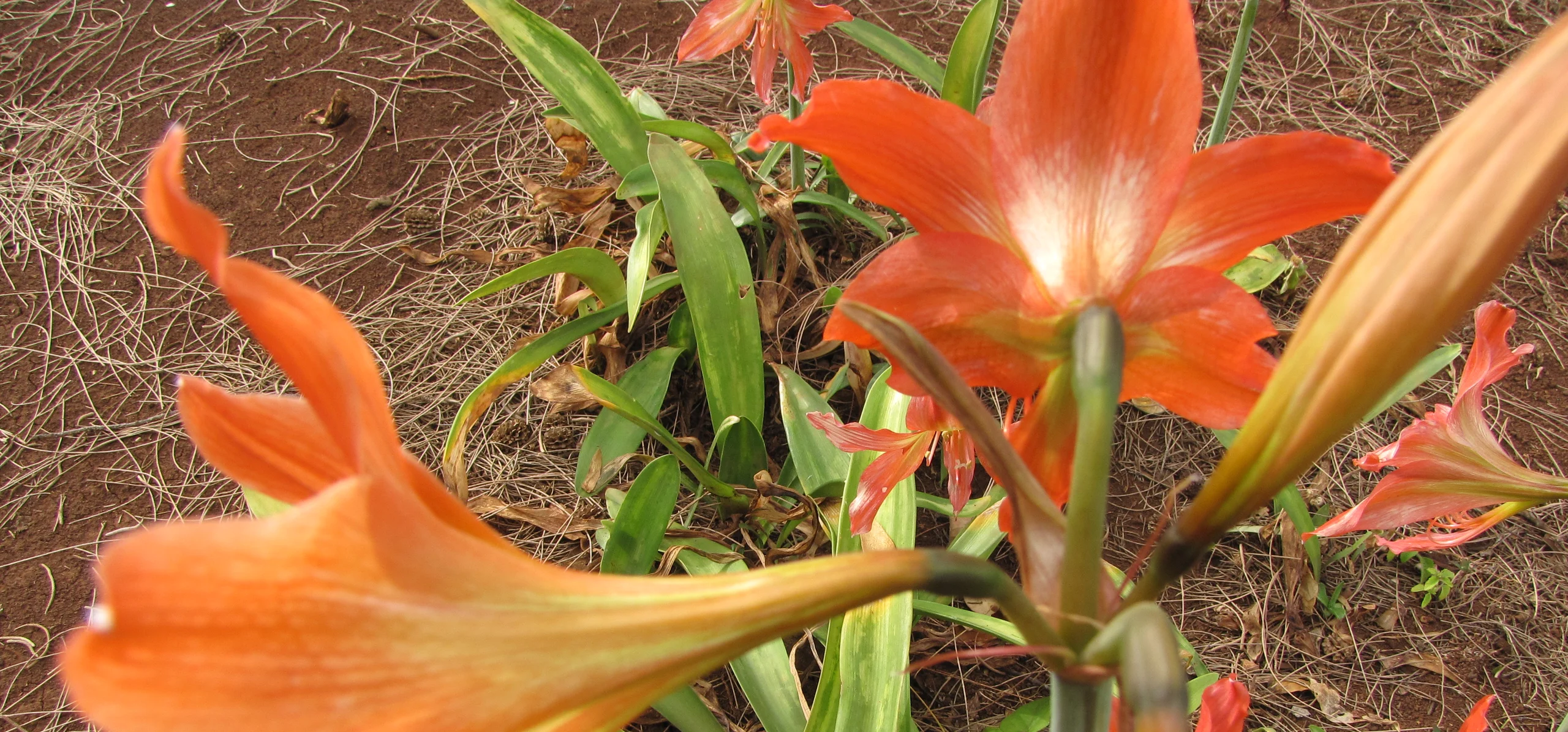
Striped Amaryllis
Hippeastrum striatum
Family · Amaryllidaceae
Hippeastrum striatum is the Brazilian species amaryllis behind many garden hybrids, not Amaryllis belladonna, and it needs a dry autumn rest to reflower.
Hippeastrum striatum
Plant profile
- WateringModerateWater every 10 days
- Light exposurePartial sun
Growth
- Family
- Amaryllidaceae
- Life cycle
- Perennial
- Growth speed
- 4/10
- Mature size
- 30–90 cm
- Flowering
- Orange-red, striped trumpet flowers on a leafless stalk, typically in spring
- Propagation
- Seed
- Offsets
DormancyDry, cool rest near 13°C (55°F) for 8 to 10 weeks in autumn, needed to trigger reflowering
Time to maturityOffsets reach flowering size in about 3 to 4 years (RHS); seed-raised bulbs take longer
Soil & climate
- Soil types
- Loose, well-drained potting mix, Garden soil amended with organic matter
- Drought tolerance
- Yes
Light & Placement
- Origin
- East and South Brazil (POWO)
- Where to place it
- Bright windowsill out of baking midday sun
- Light, dappled shade in hot climates; full sun can yellow the leaves
- Snug pot only slightly wider than the bulb
Safety
- Toxicity
- CatsToxic
- DogsToxic
Invasive speciesNaturalised outside cultivation on several Hawaiian islands (Smithsonian Flora of the Hawaiian Islands)
Data fromHippeastrum striatum (Lam.) H.E.Moore, GHippeastrum striatum (Lam.) H.E.Moore | Barbados Lily, Toxic and Non-Toxic PlantHippeastrum, RHS Growing GuideAmaryllis (EP060), UF/IFAS ExtensionHippeastrum striatum, Flora of the Hawai
Where it grows
World distribution
Striped Amaryllis is native to a single country: Brazil.GBIF records 529 documented identifications across 17 countries, with the largest concentrations in Brazil, United States, and Argentina.
- Brazil
Yellow to orange dots: concentration of documented identifications per country. Green countries: sourced native range. Source: GBIFNative range from POWO (Kew).
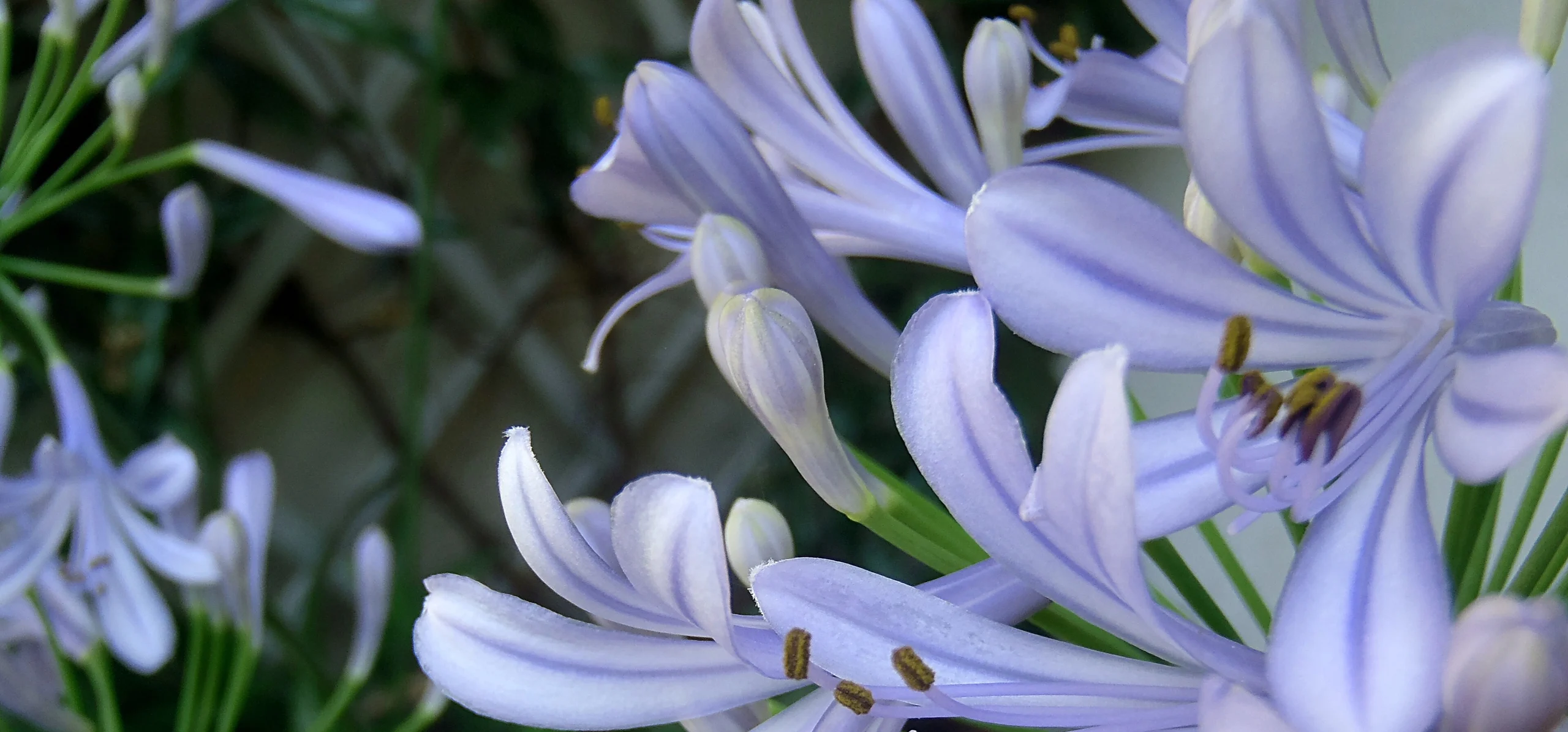
A bulb sold simply as amaryllis is very often a hybrid bred in part from Hippeastrum striatum, but the wild species is a distinct plant worth growing on its own terms: a Brazilian bulb that sends up a stout, leafless stalk in spring carrying open, funnel-shaped flowers in orange-red with a darker stripe running down the centre of each petal. It is not the same plant as Amaryllis belladonna, the South African bulb that the name Amaryllis strictly belongs to, which is one reason growers and botanists now keep the two apart under separate genus names. Pot a dormant bulb with its neck showing clear of the compost, give it a bright spot, and hold off on watering until growth actually appears, and a first flower stalk usually follows within a few weeks. The harder skill is making the bulb flower again the year after, which depends on giving it a proper dry rest once the leaves die back in autumn.
Hippeastrum, not Amaryllis: sorting out the name
The genus Amaryllis contains only two species, both native to South Africa, of which Amaryllis belladonna is the well known one. Nearly everything sold in shops as amaryllis bulbs, including the big striped trumpets forced for Christmas, actually belongs to Hippeastrum, a genus of roughly ninety species native to Central and South America. Hippeastrum striatum is one of the wild species behind that confusion: GBIF lists Amaryllis acuminata, Amaryllis crocata and several other old Amaryllis names as synonyms, a hangover from when botanists lumped the South American bulbs in with the South African ones. Plants of the World Online places its native range in east and south Brazil, in seasonally dry tropical habitat, which goes some way to explaining why the bulb copes so well with, and even needs, an annual dry spell.
Potting the bulb: depth, pot size, and the first watering
Set the bulb in a pot only a little wider than the bulb itself, since Hippeastrum flowers better with its roots somewhat cramped, and leave roughly the top third, the neck and shoulders, standing clear of the compost rather than burying it flush with the surface. A bulb planted too deep, or kept constantly damp at the neck, is far more prone to the fungal rot covered further down. After potting, water once to settle the compost, then hold back until you can actually see growth, whether a leaf tip or the flower stalk itself pushing through the neck; watering a bare, rootless bulb heavily at this stage is a common way to rot it before it has even started. Once growth is under way, water generously enough that the compost dries slightly between sessions but never bakes hard.
Light and feeding through the leafy season
Give the pot a bright spot, a windowsill with plenty of light but not baking midday sun through glass, and turn it every few days so the flower stalk grows straight rather than leaning hard toward the light. Outdoors in hot climates the same plant actually prefers a little shade: University of Florida Extension notes that amaryllis planted in full sun in the open garden tends to yellow, and does best in light, dappled shade such as under high tree canopy. Once the flowers fade, cut the spent stalk down to the neck of the bulb but leave the strappy leaves untouched, since it is that summer-long foliage that rebuilds the bulb for next year's flowers. Feed weekly with a balanced liquid fertiliser through this leafy stretch, stopping only when the dormant rest below begins.


The dry, cool rest that forces next year's flowers
Hippeastrum striatum will not reflower on autopilot the way many houseplants do; skip the rest and it usually just grows leaves again the following year. In early autumn, as the leaves begin to yellow on their own, stop watering and feeding and let the foliage die back completely. The RHS recommends then keeping the bulb cool, around 13°C (55°F), and essentially dry for eight to ten weeks, either left in its pot in a dim spare room or garage, or lifted and stored bare. Only once that rest has run its course should the bulb be moved back into warmth, light and water, at which point a new flower stalk, rather than more leaves, is the more likely first sign of growth.
Outdoors in frost-free gardens, from Florida to Hawaii
Where winters stay essentially frost-free, this species can live outdoors year-round as a garden bulb rather than a pot plant brought in for the cold months. University of Florida Extension describes amaryllis grown outdoors all year in Florida gardens, with foliage cut back by frost only in the state's northern counties. The species has gone further than cultivation in some places: the Smithsonian's Flora of the Hawaiian Islands records Hippeastrum striatum as naturalised on Kauai, Maui, Molokai, Lanai and Hawaii, escaped bulbs surviving well outside anyone's garden. Where real winter frost is normal, none of that applies, and the bulb has to come back into a pot for the coldest months.
Propagation by offsets
Left in the ground or a large pot for a few years, a Hippeastrum striatum bulb produces small offset bulbs at its base, and these are the fast, reliable way to get an identical new plant rather than gambling on seed. The RHS advises separating rooted offsets at repotting time and growing them on individually in free draining compost at a warm, steady temperature without forcing them into a dormant rest in their first year or two, since a young bulb needs to keep building size rather than flower early. Grown on this way, offsets typically reach flowering size within three to four years, sooner than seed raised bulbs, which take longer still and do not reliably come true to the parent plant's colour or striping.
Pests and disease: narcissus bulb fly, mealybugs, and red blotch
Bulbs left outdoors over summer are the ones most at risk from the narcissus bulb fly, whose adults resemble small, hairy bumblebees and lay eggs at the neck of the bulb; the resulting maggot tunnels down into the bulb itself, and an infested plant typically comes up the following year with only a few thin, grass-like leaves and no flower stalk at all. Mealybugs are the more common indoor problem, clustering as white, cottony patches where the leaf bases overlap; University of Florida Extension lists them among the routine pests of amaryllis, and a light infestation can usually be wiped off with a cotton swab dipped in rubbing alcohol before it spreads. The disease to watch for is red blotch, also called leaf scorch, caused by the fungus Stagonospora curtisii: reddish brown patches appear on the bulb, leaves or flower stalk, spreading fastest in cool, damp conditions with poor airflow. Planting the bulb with its neck exposed rather than buried, and keeping water off the foliage, are the main ways to keep the fungus from taking hold in the first place.
Toxicity to pets
The ASPCA lists this plant, under its common name Barbados lily, as toxic to both dogs and cats, with lycorine and related alkaloids as the toxic principle and the bulb carrying by far the highest concentration. Ingestion typically brings on vomiting, drooling and diarrhoea, and the ASPCA notes that eating a larger amount can escalate to tremors, low blood pressure and cardiac arrhythmias, so a dormant bulb left where a chewing dog or cat can reach it is worth moving out of range, particularly during the bare, root-exposed weeks right after potting or lifting.
Test your plant knowledge
Tap a card to flip it and reveal the answer.
Hippeastrum striatum is the same plant as Amaryllis belladonna. Tap to reveal ✕ False
The bulb should be planted with its neck standing clear of the compost, not buried flush with the surface. Tap to reveal ✓ True
This species needs a dry, cool rest of several weeks in autumn to flower reliably the following year. Tap to reveal ✓ True
In frost-free climates such as Florida, the bulb must still be lifted and stored indoors every winter. Tap to reveal ✕ False
The ASPCA lists this plant as toxic to dogs and cats. Tap to reveal ✓ True
Sources
References consulted for this guide
- Hippeastrum striatum (Lam.) H.E.Moore, GBIF Backbone Taxonomygbif.org
- Hippeastrum striatum (Lam.) H.E.Moore | Plants of the World Online, Kew Sciencepowo.science.kew.org
- Barbados Lily, Toxic and Non-Toxic Plants, ASPCA Animal Poison Controlaspca.org
- Hippeastrum, RHS Growing Guiderhs.org.uk
- Amaryllis (EP060), UF/IFAS Extensionask.ifas.ufl.edu
- Hippeastrum striatum, Flora of the Hawaiian Islands, Smithsonian Institutionnaturalhistory2.si.edu
- Reference entity : Wikipédiaen.wikipedia.org