German Chamomile
Matricaria chamomilla
Family · Asteraceae
German chamomile is a fast annual grown from seed and harvested for tea, told apart from Roman chamomile by a hollow flower disk and from mayweed by scent.
Matricaria chamomilla
Plant profile
- WateringLittleWater every 8 days
- Light exposurePartial sun
- Hardiness zoneUSDA 2–8
Growth
- Family
- Asteraceae
- Life cycle
- Annual
- Growth speed
- 7/10
- Mature size
- 33–76 cm
- Spread
- 30–36 cm
- Flowering
- Summer into fall, continuous if flower heads are picked regularly
- Propagation
- Seed
Soil & climate
- Soil types
- clay, loam, well-drained
- Drought tolerance
- Yes
Light & Placement
- Origin
- Macaronesia, North Africa, and temperate Eurasia to Indo-China
- Where to place it
- herb garden
- border front
- rock garden crevices
- cottage garden
- container with good drainage
Safety
- Toxicity
- HumansToxic
Invasive speciesNot documented as invasive; self-seeds readily within garden beds without record of spread into wild habitats.
Data fromGBIF: Matricaria chamomilla L.Plants of the World Online (Kew): MatricNC State Extension: Matricaria chamomillUC ANR Master Gardeners of Santa Clara CMontana State University Western Agricul
Where it grows
World distribution
German Chamomile is native to 45 countries: Afghanistan, Albania, Algeria, Austria, Belarus, Belgium, Bulgaria, and China….GBIF records 291,546 documented identifications across 107 countries, with the largest concentrations in France, United Kingdom, and Netherlands.
- Afghanistan
- Albania
- Algeria
- Austria
- Belarus
- Belgium
- Bulgaria
- China
- Croatia
- Cyprus
- Czechia
- Denmark
Show 33 more countriesShow fewer countries
- Egypt
- Finland
- France
- Georgia
- Germany
- Greece
- Hungary
- India
- Iran
- Iraq
- Italy
- Kazakhstan
- Kyrgyzstan
- Lebanon
- Mongolia
- Morocco
- Myanmar (Burma)
- Netherlands
- Norway
- Pakistan
- Palestinian Territories
- Portugal
- Romania
- Russia
- South Korea
- Spain
- Sweden
- Switzerland
- Tajikistan
- Türkiye
- Ukraine
- Uzbekistan
- Vietnam
Yellow to orange dots: concentration of documented identifications per country. Green countries: sourced native range. Source: GBIFNative range from POWO (Kew).
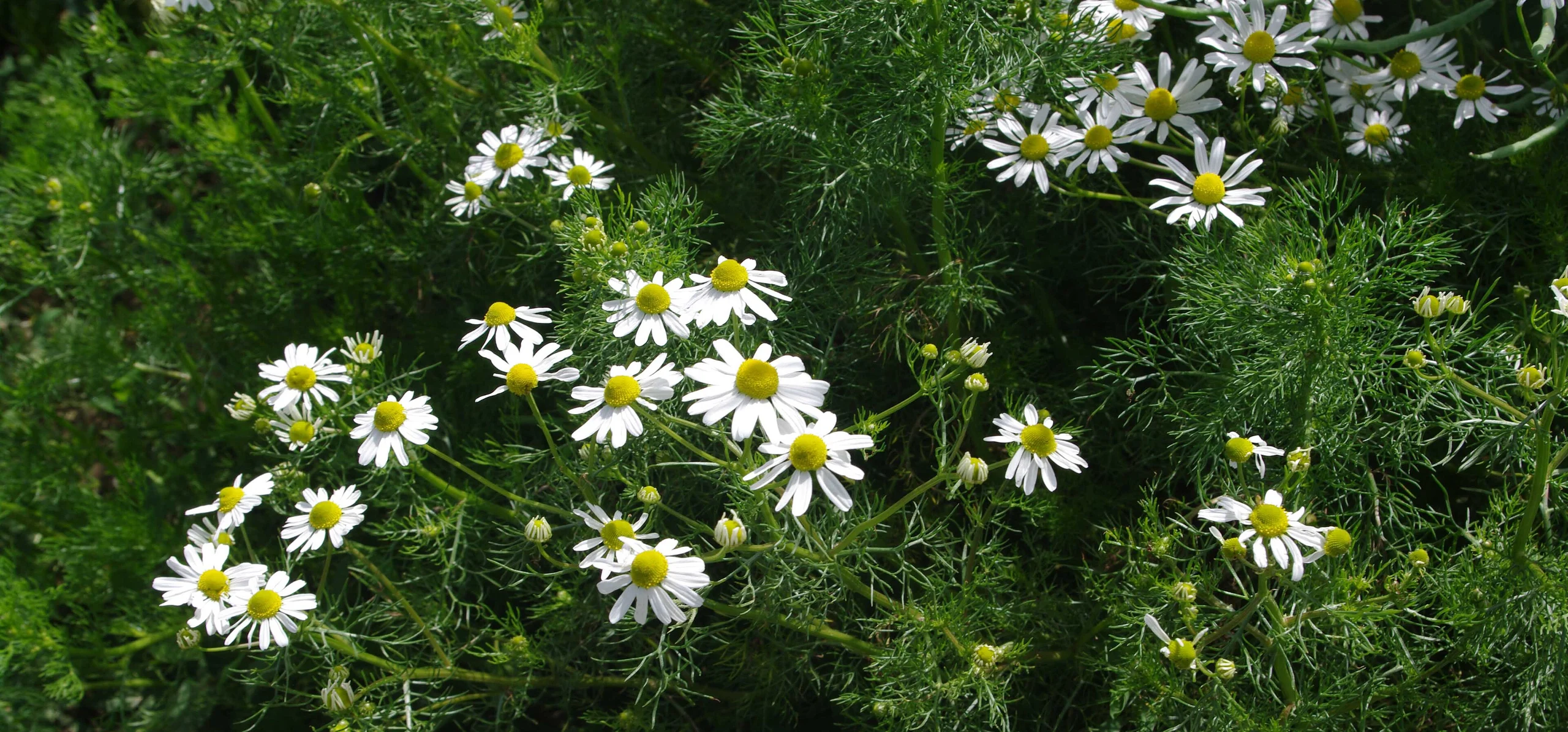
German chamomile (Matricaria chamomilla) is the annual daisy relative behind most chamomile tea, grown from seed rather than bought as a nursery plant and finished within a single season. It germinates fast, flowers by early summer, and keeps producing small white and yellow blooms into fall if the flower heads are picked rather than left to set seed. Two other plants get mistaken for it constantly: Roman chamomile, a low perennial with a similar flower, and mayweed, a foul smelling weed that looks close enough from a distance to fool a quick glance. Getting the identification right matters before any of it goes into a teacup.
Where It Comes From and How It Grows
Plants of the World Online lists Matricaria chamomilla as native to Macaronesia, North Africa, and temperate Eurasia through to Indo-China; NC State Extension summarizes that range more simply as Europe, India, and China. Wherever it started, it has naturalized as a roadside and field plant well beyond that range, and it grows the same way in a garden bed: an erect, mounding annual herb, 1 ft. 1 in. to 2 ft. 6 in. tall, with fern-like, feathery leaves cut into thin, linear segments 3 to 6 inches long. NC State Extension rates its growth rate as rapid and its maintenance as low, which matches how it behaves in practice: up from seed to full bloom within one growing season, needing almost no attention once established. The species has also been sold and studied under two older names, Matricaria recutita and Chamomilla recutita; all three refer to the same plant, so seed packets and reference books using either name are describing what grows here.
Sowing and Early Care
Direct-sow rather than transplant where possible: chamomile forms a shallow, fibrous root system that resents disturbance once it has had time to spread. Montana State University's Western Agricultural Research Center, which trialed the crop for commercial tea and oil production, plants the seed shallowly in early spring and notes that seedlings tolerate a light frost, so an early start is not the gamble it would be with a tender annual. UC ANR's Master Gardener program in Santa Clara County calls for sowing once soil temperature is reliably above 55 degrees, in full sun to part shade and soil on the alkaline side of neutral, with mature plants spreading to just 12 to 14 inches wide. Montana State's trial plots also found the crop prefers cooler growing conditions and needs irrigation especially while establishing; UC ANR separately notes that once plants are settled in, their water needs are low, so the heaviest watering duty comes early, not late in the season.
German Chamomile or Roman Chamomile
NC State Extension flags Matricaria chamomilla as a plant "often confused with" Chamaemelum nobile, the low, mat-forming perennial sold as Roman chamomile, and the confusion is understandable since both carry small white, yellow-centered daisy flowers with a strong apple-like scent. Growth habit is one clue: German chamomile stands upright to knee height and dies back completely at the end of the season, while Roman chamomile stays low and returns from the same crown the following year. The more reliable test does not depend on habit at all. Montana State's research notes and multiple university references agree that the flower's central receptacle is hollow in German chamomile and solid in Roman chamomile; split a head down the middle to check, and test several heads rather than one, since an occasional German chamomile flower comes up solid on its own.


Ruling Out Mayweed
A third plant gets mistaken for both of them: Anthemis cotula, commonly called stinking mayweed or stinking chamomile, which produces a very similar-looking flower on a similarly feathery plant and cannot always be told apart from German chamomile by sight alone. The difference is in the nose. Crush a few leaves: German chamomile releases the sweet, apple-like scent it is grown for, while mayweed gives off a sharp, unpleasant odor from glands on the foliage. That smell test matters most before harvest, since nobody wants a foul-smelling lookalike steeped into a pot of tea by mistake, and mayweed's sap is also more likely to irritate skin on contact than German chamomile's.
Harvesting and Drying the Flower Heads
Pick flower heads once the white rays have flattened out or just begun to fold back from the yellow disk, in the morning once dew has burned off and before the day's heat starts to volatilize the oils that carry the scent. Montana State's trial work found that hand-raking off just the flower heads, rather than clipping whole stems, produced the highest-quality tea-grade harvest, close to 1,500 lb of flowers per acre in their plots, while cutting stems lower down brought in more plant material of lower quality. At garden scale the same principle holds: take the flower, leave the stem standing. Picking every two or three days through the bloom period keeps the plant setting new buds instead of running to seed. Dry the heads carefully; Montana State's notes flag that poor drying discolors the flowers, so spread them in a single layer on a screen or tray out of direct sun with good airflow, and leave them until the rays go papery and rustle instead of bending. A warm, dry, shaded room works better than a sunny windowsill, which bleaches the disks and drives off the same oils the harvest was meant to capture.
Self-Seeding and Volunteers
Left uncut, spent flower heads set seed readily, and UC ANR lists self-seeding among the plant's habits in the garden. A bed that flowers and goes to seed even once tends to bring up volunteers the following spring without any deliberate resowing, often earlier and thicker than a fresh sowing would manage. That is convenient for a gardener who wants a permanent patch of chamomile with no yearly replanting, and inconvenient for one who does not: the seed is fine and travels on wind, water, and shoes, so volunteers turn up in nearby beds and paths. Deadheading spent flowers before they dry and shatter is the only reliable way to keep a patch contained to where it was sown.
Ragweed Allergy and Skin Sensitivity
Chamomile belongs to the Asteraceae family alongside ragweed, and NC State Extension lists German chamomile as having low-severity poison characteristics: contact with the flowers or leaves can cause skin irritation or oral swelling in people sensitive to that family, with desacetylmatricarin identified as the toxic principle involved. Anyone with a known ragweed allergy should handle the fresh plant with gloves rather than assume the dried tea is automatically fine, and test a small amount before brewing a full cup. NC State Extension does not flag any major insect pest or disease pressure on the plant beyond that sensitivity risk, which is part of why it stays low-maintenance from sowing through the last harvest of the season. It is also worth noting that German chamomile is not listed by name in the ASPCA's toxic and non-toxic plant database, which covers Roman chamomile (Anthemis nobilis) under several common names but has no separate entry for this species.
Test your plant knowledge
Tap a card to flip it and reveal the answer.
German chamomile is a perennial that regrows from the same roots every year. Tap to reveal ✕ False
The flower's central disk is hollow in German chamomile but solid in Roman chamomile. Tap to reveal ✓ True
Flower heads should be picked while the white rays are still pointing straight up, before they open. Tap to reveal ✕ False
A chamomile-like plant with an unpleasant smell when its leaves are crushed may be mayweed rather than German chamomile. Tap to reveal ✓ True
German chamomile is listed by name in the ASPCA's toxic and non-toxic plant database. Tap to reveal ✕ False
Sources
References consulted for this guide
- GBIF: Matricaria chamomilla L.gbif.org
- Plants of the World Online (Kew): Matricaria chamomilla L.powo.science.kew.org
- NC State Extension: Matricaria chamomillaplants.ces.ncsu.edu
- UC ANR Master Gardeners of Santa Clara County: Chamomileucanr.edu
- Montana State University Western Agricultural Research Center: German Chamomileagresearch.montana.edu
- Reference entity : Wikipédiaen.wikipedia.org