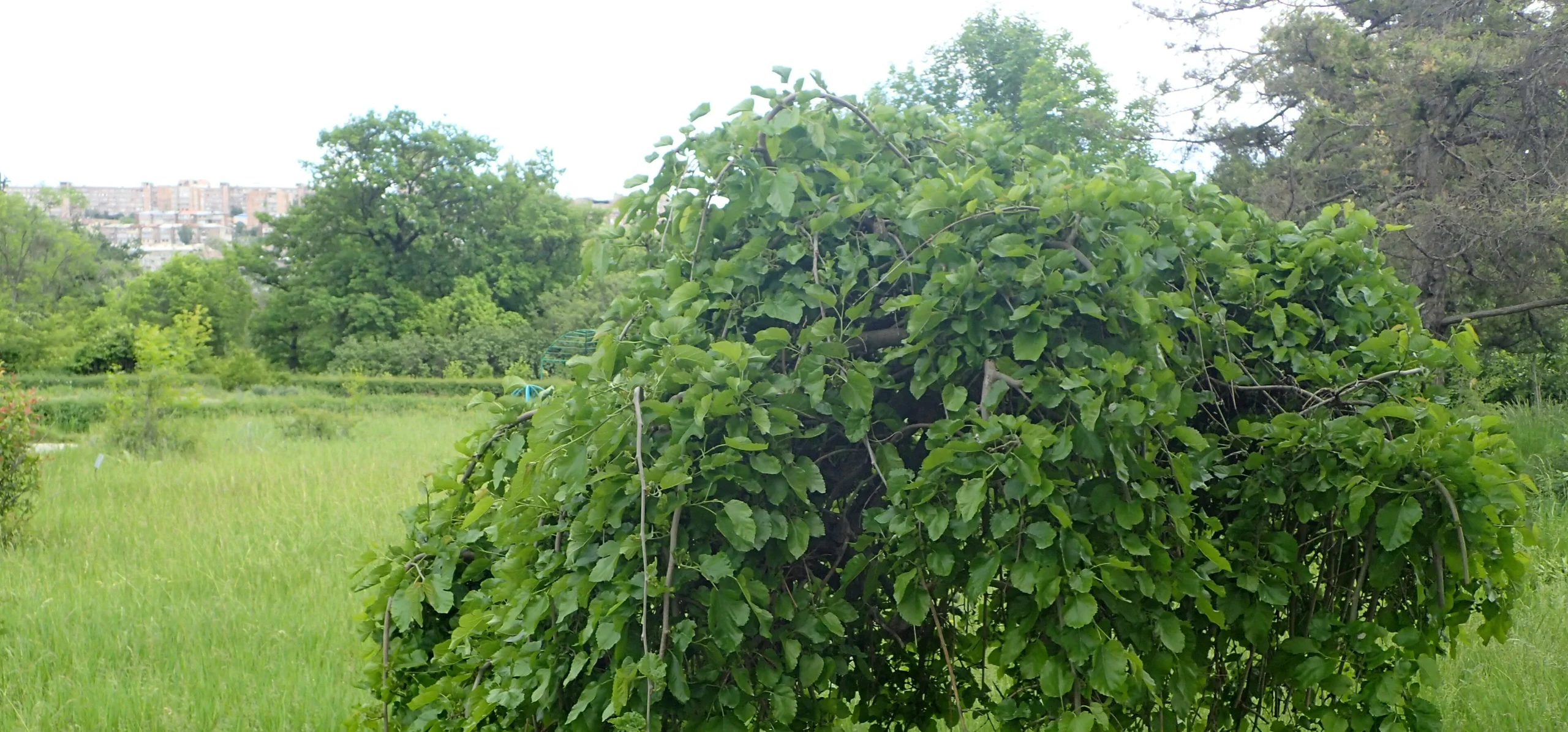
Black Mulberry
Morus nigra
Family · Moraceae
Black mulberry is slow to fruit, often eight years, then crops for generations. Covers siting, pruning without bleeding sap, watering and harvest.
Morus nigra
Plant profile
- WateringModerateWater every 10 days
- Light exposureFull sun
- Ideal temperature-20–-15 °C
Growth
- Family
- Moraceae
- Life cycle
- Perennial
- Growth speed
- 4/10
- Mature size
- 800–1200 cm
- Spread
- 800–900 cm
- Flowering
- Insignificant greenish flowers in spring; fruit ripens August to September
- Propagation
- Cutting
Dormancydeciduous, leafless from autumn leaf fall through winter
Time to maturityaround 8 years to first fruit on full-size trees; dwarf cultivars fruit sooner, some in their first year in a container
Soil & climate
- Soil types
- chalk, clay, loam, sand
- Drought tolerance
- Yes
Light & Placement
- Where to place it
- sunny lawn or orchard specimen
- warm, sheltered south or west-facing wall (fan-trained)
- large container at least 50cm wide and deep with peat-free, soil-based compost (dwarf cultivars only)
OriginWestern and southwestern Iran; long cultivated across the Mediterranean and Middle East
Safety
- Toxicity
- CatsSafe
- DogsSafe
- HorsesSafe
Data fromMorus nigra, GBIF Backbone TaxonomyPlants of the World Online (Kew): Morus RHS: Morus nigra (black mulberry)RHS: How to Grow MulberriesASPCA: Mulberry Tree toxicity to pets an
Where it grows
World distribution
Black Mulberry is native to a single country: Iran.GBIF records 6,911 documented identifications across 100 countries, with the largest concentrations in United Kingdom, Germany, and Spain.
- Iran
Yellow to orange dots: concentration of documented identifications per country. Green countries: sourced native range. Source: GBIFNative range from POWO (Kew).
Black mulberry, Morus nigra, is the mulberry gardeners plant for the fruit rather than the shade: a deep purplish red to almost black berry, up to 2cm long, with a sweet, tangy flavour closer to a fine blackberry than to the bland white mulberries sold as ornamental street trees. It is a slow starter. A full size tree can take around eight years to bear its first crop, but it then keeps fruiting for generations; some specimens in old English gardens are recorded well past a hundred years old. Buy it for a permanent spot: a mature black mulberry reaches 8 to 12 metres tall and roughly as wide, with a gnarled, often leaning trunk that looks ancient even in youth.
Origin and Telling It Apart from White Mulberry
Morus nigra is native to western and southwestern Iran, though it has been carried and planted across the Mediterranean, the Middle East and Central Asia for so long that its wild range is now hard to separate from naturalized populations. It is frequently confused with Morus alba, the white mulberry grown to feed silkworms: alba has smoother, glossier leaves and fruit that ripens pale pink to white or pale purple, while nigra has rougher, more deeply veined heart shaped leaves to about 12cm and fruit that turns from red through to near black at full ripeness. If a street tree nearby drops pale, bland berries that barely mark the pavement, it is almost certainly alba, not nigra.
Choosing a Tree: Full Size, Standard or Dwarf
A seed grown or grafted full size black mulberry will eventually dominate a lawn or orchard corner, so plant it only where 8 to 12 metres of eventual height and spread will not crowd a building or overhang a neighbour's garden. In smaller gardens, look for a half standard trained on a clear trunk, or a genuinely dwarf cultivar bred to fruit young and stay compact, some reaching only around 1.5 metres when grown in a container rather than hoping an ordinary seedling will behave. Wall training as a fan is the traditional solution in cooler climates: it captures reflected warmth against a south or west facing wall and keeps the eventual size manageable with routine pruning.
Planting: Site, Soil and Spacing
Give the tree a sunny, sheltered spot; mulberries dislike cold, drying wind, and a south, west or east facing aspect with some shelter suits them well. The species tolerates chalk, clay, loam and sand, and grows in acid, neutral or alkaline soil, but it performs best in deep, moisture retentive ground that still drains freely, since waterlogged roots are one of the few things that reliably set it back. Enrich poor soil with garden compost or well rotted manure at planting time, stake a young tree firmly since the canopy catches wind before the roots have anchored, and plant bare root or container grown specimens any time from autumn to spring. In a container, use a pot at least 50cm wide and deep filled with a peat free, soil based compost, and expect to repot every two or three years until the tree outgrows what you can lift.
Watering and Feeding
Water a newly planted mulberry regularly through its first two or three growing seasons, spring to autumn, while the root system finds its way into the surrounding soil. Once established in the ground, a black mulberry becomes genuinely self-sufficient and needs extra water only in prolonged drought or on very free draining soil; a tree mulched every spring with compost or manure rarely needs feeding at all. Container trees are the exception: keep the compost consistently moist through the growing season, water in the early morning or evening with rainwater where possible, and feed fortnightly with a balanced or high potassium liquid fertiliser, or apply a granular feed once in early spring.


Pruning Without the Bleeding Problem
Mulberry wood bleeds heavily if cut while the sap is moving, which rules out pruning in spring or summer. Do structural work only while the tree is dormant, between leaf fall in autumn and midwinter, and the cuts will callus over cleanly instead of weeping for weeks. On a young bush form, head the main stem back to around 70 to 90cm to set the branching height; standards need a taller clear trunk before the head is allowed to form. A wall trained fan is the one exception to the winter only rule: shorten the current season's side shoots to three or four leaves in late summer to keep the framework flat and encourage fruiting spurs, leaving the hard structural cuts for the dormant season as usual.
Harvest: The Long Wait and the Staining Fruit
Patience is the real skill here. A seedling or standard grown mulberry is slow to start fruiting, often around eight years, though grafted and dwarf cultivars can crop in half that time, or in their first year in a container for the most compact selections. Once cropping begins, fruit ripens unevenly from August into September rather than all at once, so a single tree keeps producing over several weeks. The berries bruise and stain the moment they are handled, which is why the traditional harvest method is to spread a sheet under the canopy and shake the branches, letting only the fully ripe fruit fall. For that reason, and because fallen fruit marks stone and paving a deep purple, site the tree away from a patio, path or parked car if you can.
Propagation by Hardwood Cuttings
Black mulberry roots readily from hardwood cuttings, traditionally called truncheons when cut long and thick, taken from vigorous current season's growth between mid autumn and late winter. Root them in peat free cuttings compost or simply push them into an outdoor nursery trench and leave them undisturbed for a season. It is a forgiving method and the standard way named cultivars are increased true to type, but remember that a cutting grown tree carries the same eight year wait for fruit as one grown from seed; there is no shortcut around the tree's own maturity clock.
Pests, Diseases and Pet Safety
Established black mulberries are generally healthy and shrug off most pest pressure; birds are the main competitor for the crop, though a mature tree usually produces more than enough fruit to share. The recurring problems are fungal: mulberry leaf spot mottles and drops foliage in wet seasons, coral spot causes orange pustules and dieback on damaged or stressed wood, and powdery mildew can coat leaves in a still, humid summer, none of them usually serious enough to threaten an established tree. For households with pets, mulberry is one of the easier fruit trees to have around: the ASPCA lists mulberry (Morus species) as non-toxic to dogs, cats and horses, so fallen fruit and foliage are not a poisoning concern the way they are with stone fruit pits.
Test your plant knowledge
Tap a card to flip it and reveal the answer.
Pruning a black mulberry in spring or summer can cause heavy sap bleeding. Tap to reveal ✓ True
A full-size black mulberry typically fruits in its first year after planting. Tap to reveal ✕ False
Black mulberry tolerates chalk, clay, loam and sandy soils as long as drainage is reasonable. Tap to reveal ✓ True
The ASPCA lists mulberry as toxic to dogs and cats. Tap to reveal ✕ False
Ripe mulberries fall over several weeks rather than all at once. Tap to reveal ✓ True
Sources
References consulted for this guide
- Morus nigra, GBIF Backbone Taxonomygbif.org
- Plants of the World Online (Kew): Morus nigrapowo.science.kew.org
- RHS: Morus nigra (black mulberry)rhs.org.uk
- RHS: How to Grow Mulberriesrhs.org.uk
- ASPCA: Mulberry Tree toxicity to pets and horsesaspca.org
- Reference entity : Wikipédiaen.wikipedia.org