Blushing Philodendron
Philodendron erubescens
Family · Araceae
Blushing philodendron care: the light it needs to keep new leaves red, how often to water, and how to train it up a moss pole indoors.
Philodendron erubescens
Plant profile
- WateringModerateWater every 8 days
- Light exposureIndirect light
- Ideal temperature18–29 °C
- Hardiness zoneUSDA 10–12
Growth
- Family
- Araceae
- Life cycle
- Perennial
- Growth speed
- 6/10
- Mature size
- 60–400 cm
- Spread
- 30–100 cm
- Flowering
- Rare indoors
- Propagation
- Cutting
DormancySlows in autumn and winter
Time to maturityMature over 5 to 10 years
Soil & climate
- Soil pH
- pH 5.5–7
- Soil types
- Loam-based mix, rich in organic matter, Aroid mix with orchid bark and perlite
- Drought tolerance
- No
Light & Placement
- Origin
- Colombia
- Where to place it
- East or south window
- Bright bathroom or humid room
- Sheltered, frost-free greenhouse
- Pot with a moss pole
Safety
- Toxicity
- HumansToxic
Data fromPhilodendron erubescens, GBIF Backbone TPhilodendron erubescens K.Koch & AugustiPhilodendron erubescens (Blushing PhilodPhilodendron erubescens | blushing philo
Where it grows
World distribution
Blushing Philodendron is native to a single country: Colombia.GBIF records 618 documented identifications across 44 countries, with the largest concentrations in United States, Brazil, and Colombia.
- Colombia
Yellow to orange dots: concentration of documented identifications per country. Green countries: sourced native range. Source: GBIFNative range from POWO (Kew).
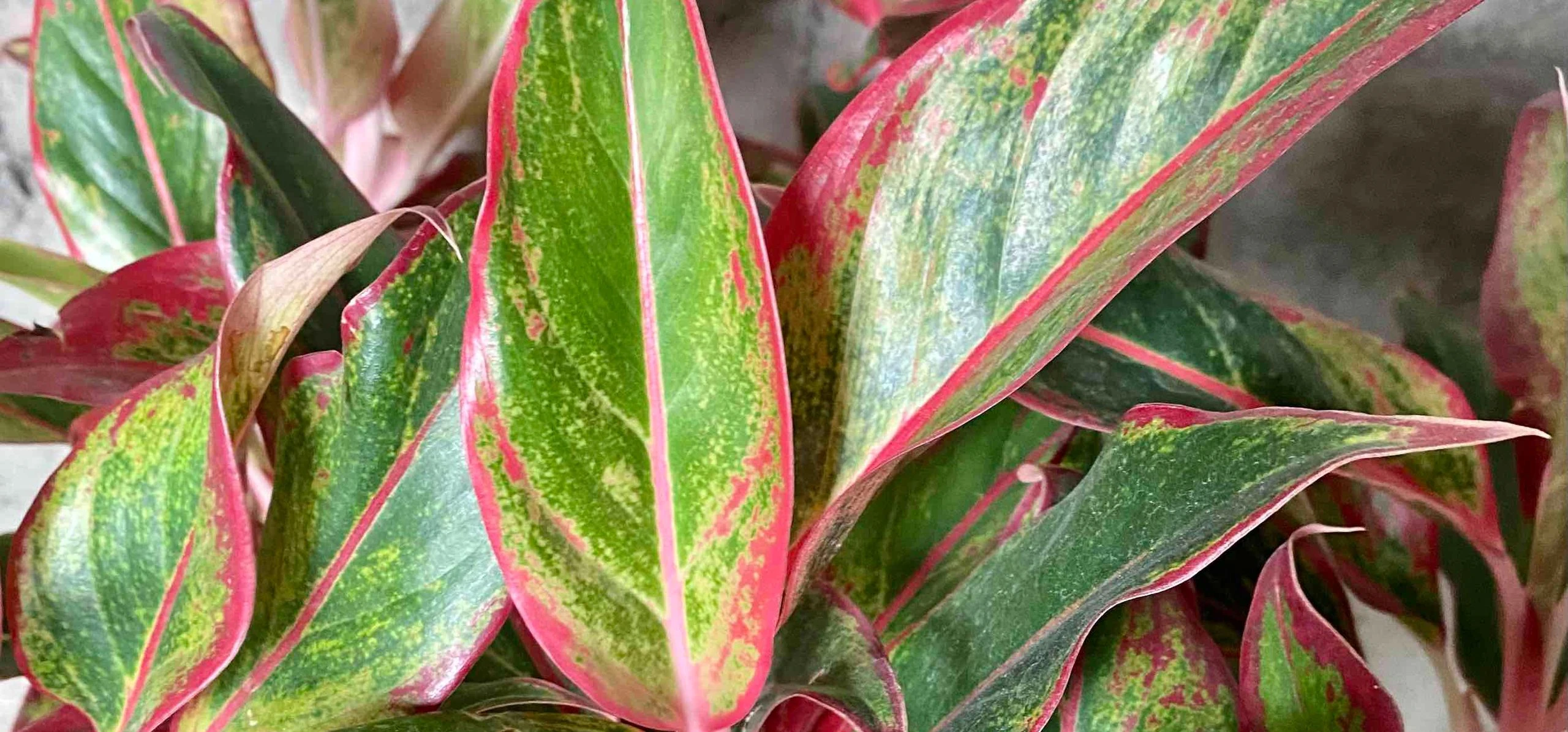
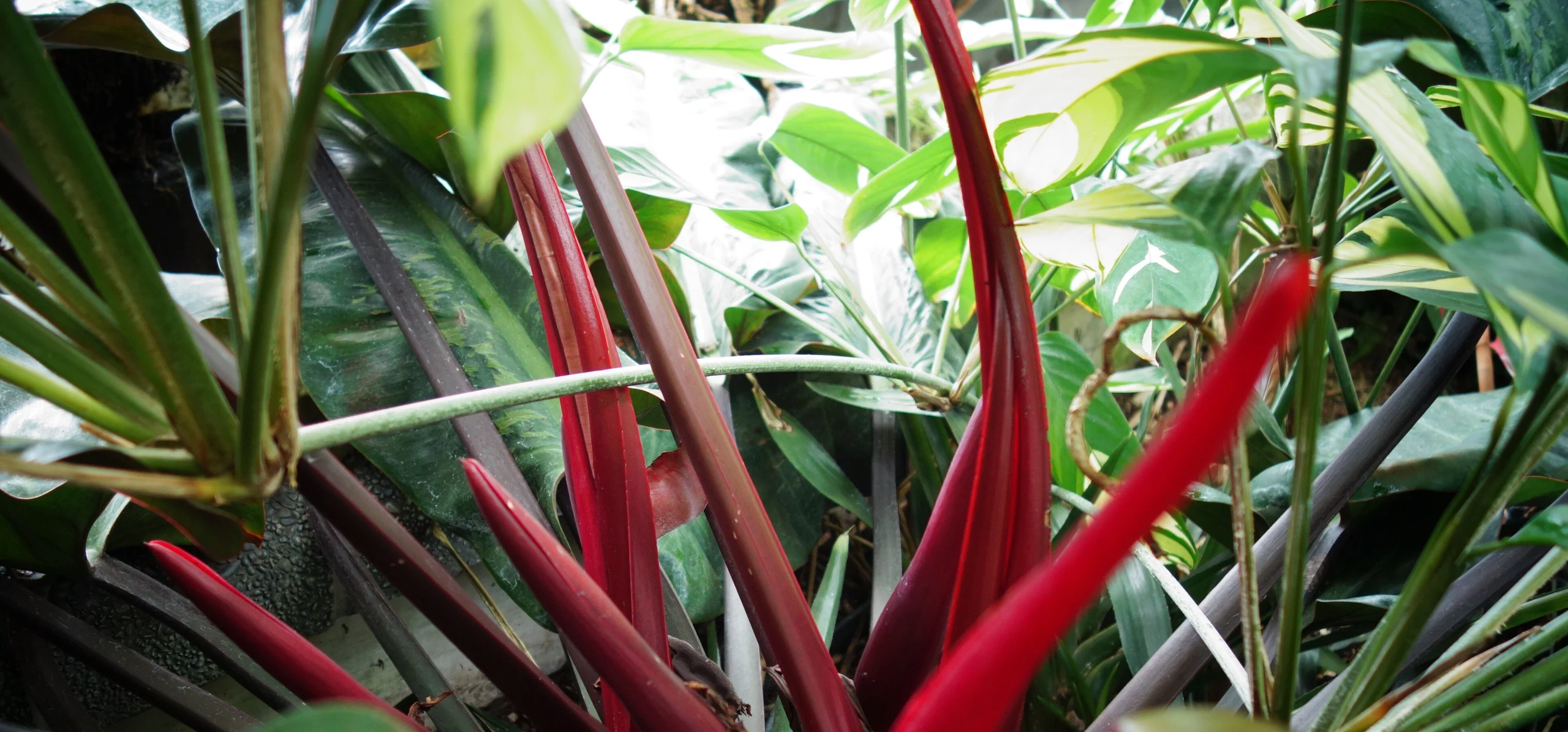
Philodendron erubescens earns its name from the Latin erubescens, to blush, and the trait shows before you even read the tag: every new leaf pushes out wrapped in a papery red-pink sheath, a cataphyll, that splits open to reveal a leaf with a coppery or wine-red underside. It is a climbing aroid from the rainforests of Colombia, related to the far more common heartleaf philodendron but considerably more particular about light and support. Give it something to climb and enough brightness to keep the red pigment showing and it becomes one of the more dramatic vining houseplants; starve it of light and the new growth comes out plain green instead. Most cultivars sold in shops, including Red Emerald and Burgundy, are selections of this species rather than separate plants.
Light and why the new leaves stay red
Blushing philodendron wants bright, filtered light, the kind you get a step back from an east or south facing window behind a sheer curtain. Direct midday sun scorches the thin new leaves within a day, leaving pale, crisped patches, while a spot that is too dim pushes the plant into all-green growth: the coppery flush on new foliage only develops with enough light to trigger the pigments underneath it. If a plant that used to blush starts producing plain green leaves, that is the first sign to move it closer to a window rather than a feeding problem. A few hours of gentle morning sun deepens the red without burning it, which is why an east-facing sill often outperforms a south-facing one indoors.
Watering and soil
The species wants soil that is moist but never soggy, which in practice means watering once the top few centimetres have dried and always letting the pot drain fully. Use a loam-based mix heavy in organic matter, cut with orchid bark and perlite so air reaches the roots; both the RHS and North Carolina State Extension describe the plant's native soil as rich and well-draining, on the acid to neutral side. Water less through autumn and winter as growth slows, and mist the foliage or stand the pot on a pebble tray, since the plant comes from wet tropical forest and dry indoor air shows up first as brown, crisping leaf edges.


Humidity and temperature
Keep the plant between roughly 18 and 29 degrees Celsius, 65 to 85 degrees Fahrenheit; anything colder and growth stalls, and in most temperate climates this philodendron only survives outdoors in USDA zones 10 to 12, so everywhere else it is a year-round houseplant or a greenhouse specimen. It comes from humid rainforest, so it is happiest above average household humidity: a bathroom, a kitchen, or a spot near a humidifier keeps the leaves glossy, while dry heated air in winter is the most common reason for browning tips.
Training it up a support
Left unsupported this is a sprawling vine; given a moss pole or bark totem it climbs and produces noticeably larger leaves, since its aerial roots can grip the damp pole and draw moisture from it rather than the dry air. Tie new growth loosely to the support every few nodes until the aerial roots take hold on their own, and keep the pole misted so those roots stay active. In a greenhouse or a sheltered, frost-free spot it can climb two and a half to four metres over five to ten years according to the RHS; grown as a houseplant it is usually kept far shorter with regular pruning.
Feeding and pruning
Feed with a balanced liquid fertiliser at the label rate roughly once a month through spring and summer, and stop over autumn and winter when growth slows. Trim leggy stems back to just above a node in spring; the plant branches from the cut, which keeps it fuller than letting a single vine run on indefinitely. Save any healthy stem sections you remove rather than composting them, since they root readily.
Propagation from stem cuttings
Stem cuttings are the reliable way to multiply this philodendron. Cut a section with at least one node and one leaf, let the cut callous for an hour, then set it in water or a damp mix of perlite and sphagnum. Roots usually appear within two to four weeks in a warm, bright spot out of direct sun; pot the cutting once the roots are a couple of centimetres long. A cutting taken with an aerial root already attached tends to establish fastest, since that root can start absorbing moisture straight away.
Pests, common mistakes and toxicity
Spider mites and mealybugs are the most frequent problems, especially on plants kept too dry; fine webbing at the leaf joints or cottony white clumps at the stem are the tell, and both respond to a thorough wipe-down followed by insecticidal soap. The most common mistake is not the watering can but the window: growers blame yellow leaves on overwatering when the real issue is too little light for the plant to use the water it is given, so check light levels before cutting back on watering. Like other philodendrons, the sap contains calcium oxalate crystals that irritate the mouth and skin, rated a low-severity toxicity by North Carolina State Extension; the species is not named on the ASPCA's toxic or non-toxic plant lists, so treat it like any other philodendron and keep it out of reach of pets and children who chew on leaves.
Test your plant knowledge
Tap a card to flip it and reveal the answer.
Direct midday sun keeps the new leaves at their brightest red. Tap to reveal ✕ False
Given a moss pole to climb, the plant produces larger leaves. Tap to reveal ✓ True
The sap contains calcium oxalate crystals that can irritate skin and the mouth. Tap to reveal ✓ True
Stem cuttings root fastest when taken in the middle of winter. Tap to reveal ✕ False
Watering less and stopping fertiliser in autumn and winter matches the plant's natural slowdown. Tap to reveal ✓ True
Sources
References consulted for this guide
- Philodendron erubescens, GBIF Backbone Taxonomygbif.org
- Philodendron erubescens K.Koch & Augustin, Plants of the World Online (Kew)powo.science.kew.org
- Philodendron erubescens (Blushing Philodendron, Red-Leaf Philodendron), NC State Extension Gardener Plant Toolboxplants.ces.ncsu.edu
- Philodendron erubescens | blushing philodendron, RHSrhs.org.uk
- Reference entity : Wikipédiaen.wikipedia.org