Eggplant
Solanum melongena
Family · Solanaceae
Eggplant needs warm soil, a stake before the fruit gets heavy, and bee or hand pollination for a reliable set; here is the sowing-to-harvest timing that works.
Solanum melongena
Plant profile
- WateringHighWater every 4 days
- Light exposureFull sun
- Ideal temperature10–35 °C
- Hardiness zoneUSDA 9–12
Growth
- Family
- Solanaceae
- Life cycle
- Perennial
- Growth speed
- 6/10
- Mature size
- 61–122 cm
- Spread
- 30–91 cm
- Flowering
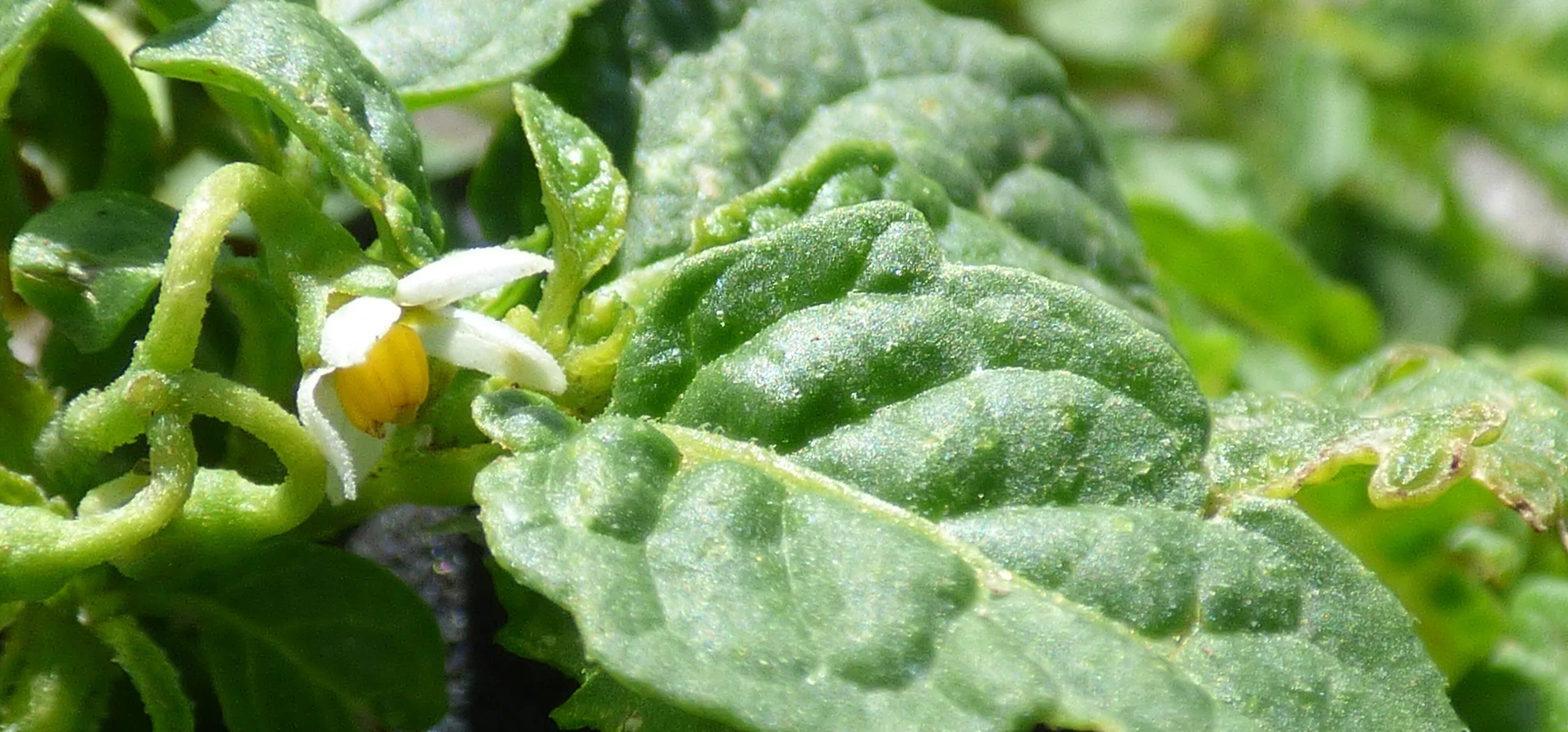
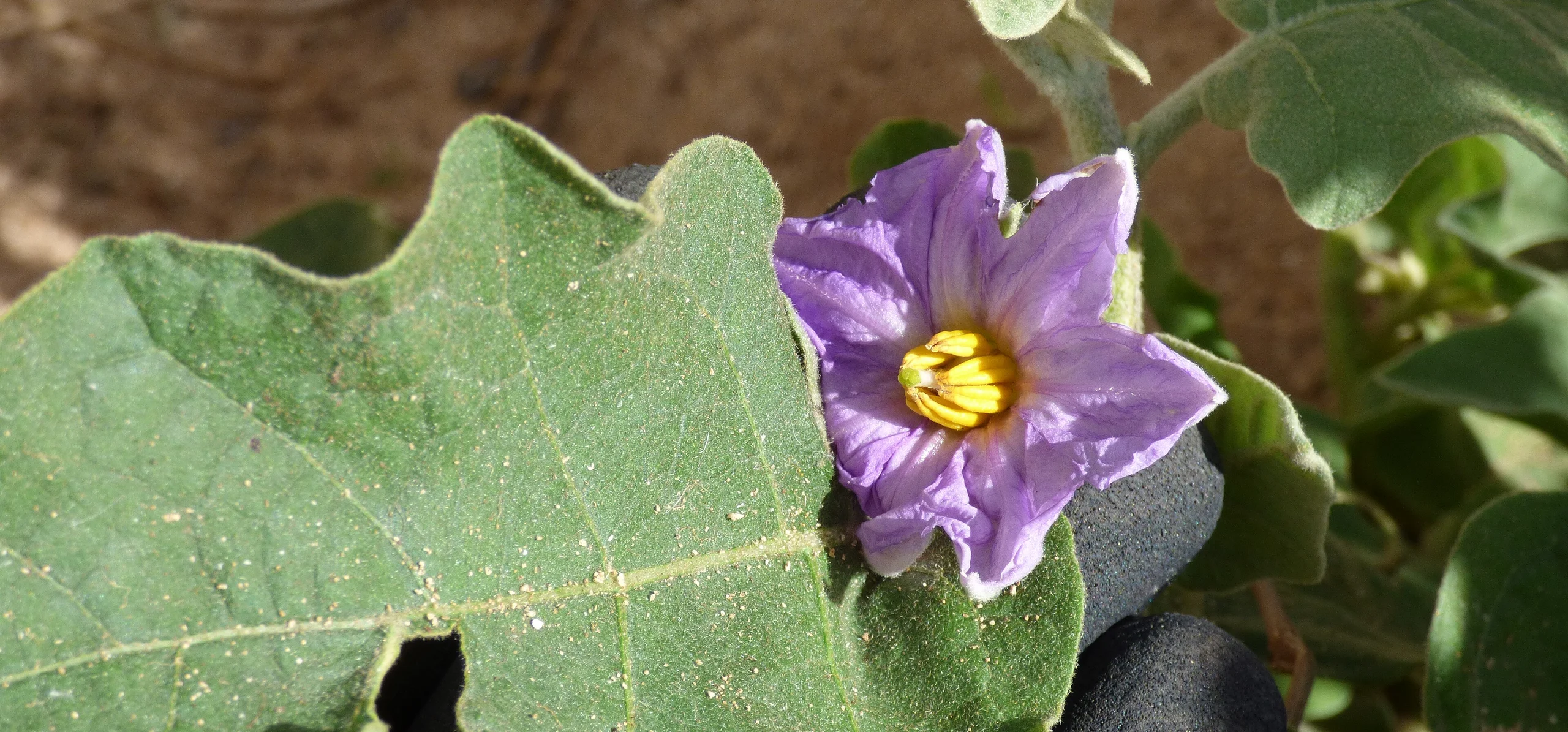
- Star-shaped purple flowers through summer
- Propagation
- Seed
DormancyNot frost-hardy; killed by frost, usually regrown from seed each year outside zones 9-12
Time to maturity100-150 days from seed (55-80 days from transplant) to first harvest
Soil & climate
- Soil pH
- pH 5.5–6.8
- Soil types
- well-drained, fertile, sandy loam
- Saline soil
- Not tolerated
- Drought tolerance
- No
Light & Placement
- Origin
- Tropical & subtropical Asia, W. Indian Ocean
- Where to place it
- open vegetable bed
- raised bed
- sunny patio in a large pot
- 12+ inch container with drainage, staked
Safety
- Toxicity
- HumansToxic
Invasive speciesNot invasive; a cultivated warm-season crop that does not persist or spread outside beds.
Data fromGBIF: Solanum melongena L.Plants of the World Online (Kew): SolanuNC State Extension Gardener Plant ToolboUniversity of Maryland Extension: GrowinSouth Dakota State University Extension:
Where it grows
World distribution
Eggplant is native to 16 countries: Bangladesh, Bhutan, China, India, Indonesia, Laos, Madagascar, and Malaysia….GBIF records 24,516 documented identifications across 170 countries, with the largest concentrations in India, Thailand, and Türkiye.
- Bangladesh
- Bhutan
- China
- India
- Indonesia
- Laos
- Madagascar
- Malaysia
- Mauritius
- Myanmar (Burma)
- Pakistan
- Philippines
Show 4 more countriesShow fewer countries
- Réunion
- Sri Lanka
- Thailand
- Vietnam
Yellow to orange dots: concentration of documented identifications per country. Green countries: sourced native range. Source: GBIFNative range from POWO (Kew).
Eggplant (Solanum melongena) is a warm-season fruiting crop that behaves nothing like the quick vegetables planted next to it: from seed to first ripe fruit typically runs 100 to 150 days, and the plant all but stops growing whenever nights turn cool. If you started a transplant indoors or bought one at a nursery, the two decisions that shape the whole season, when you sowed and how warm the soil was when you set it out, are already behind you. What is left is straightforward once the plant is actually growing instead of sulking in the cold: staking it before the fruit gets heavy, keeping flea beetles off the young leaves, and knowing exactly when to cut a fruit rather than leave it too long.
Starting Seeds Indoors and Timing the Transplant
Sow seed six to eight weeks before the planned outdoor planting date, according to South Dakota State University Extension, in a container of at least two inches so the young taproot has room before it moves outside. Eggplant germinates best in soil around 85°F (29°C) and will not germinate at all below 60°F (15.5°C), so a seedling heat mat under the tray is worth more than a sunny windowsill this early in the season. Do not rush the move outdoors: SDSU Extension recommends waiting until night temperatures hold consistently above 60°F (15.5°C) and the soil itself has warmed, since University of Maryland Extension notes that cold temperatures stop both root and top growth outright. A plant set out too early just sits, pale and stalled, until the weather catches up, so a transplant that goes in two weeks late into warm soil will usually overtake one planted early into cold ground.
A Full-Sun, Heat-Retaining Spot
Give eggplant full sun, at least six hours of direct light a day according to North Carolina State Extension, in soil that is well-drained, fertile and on the acidic side, pH 5.5 to 6.8. Growth is fastest with daytime temperatures between 70°F and 85°F (21-29°C) and nights that do not drop far below 60-65°F (15.5-18°C); once daytime highs push into the mid-90s°F (around 35°C), fruit set slows even though the plant itself keeps growing. A south-facing bed against a wall, or dark mulch to warm the root zone early in the season, both push soil temperature up faster than open ground, which matters more for eggplant than for almost any other garden vegetable.

Spacing and Staking the Plant
Space plants 18 to 24 inches apart within the row and 30 to 36 inches between rows, a figure University of Maryland Extension, Illinois Extension and SDSU Extension all give consistently. Put a stake or a tomato cage in the ground at planting time rather than after the fact, since disturbing the roots to stake a mature plant can check its growth; University of Maryland Extension also recommends pinching the growing tip once the plant reaches about 12 inches tall to encourage branching. A well-fed eggplant carries several heavy fruit at once on a comparatively brittle, woody stem, and an unstaked plant is prone to lodging, toppling sideways under its own crop right when the fruit is nearly ready.
Feeding and Watering Through Fruit Set
Eggplant has a high nutrient requirement, per University of Maryland Extension, higher than most other fruiting vegetables sharing the same bed. Work fertilizer into the soil before planting, then side-dress once the first fruits have formed rather than earlier, when extra nitrogen mostly produces leafy growth at the expense of flowers. Keep the soil evenly moist through flowering and fruit development; letting the plant dry out during this stretch is the most common cause of small, tough or bitter fruit, and there is no fixing a fruit that has already grown that way, only watering more consistently for the next one.
Pollination and Fruit Set
Each eggplant flower carries both male and female parts inside the same star-shaped bloom, but that structure alone does not guarantee fruit. SDSU Extension notes that bees are needed to pollinate the flowers for a good fruit set, since the pollen sits inside a cone of anthers that has to be shaken loose, by a bee's wingbeat, by wind, or by hand with a cotton swab or electric toothbrush if pollinators are scarce. This is also why floating row covers, useful early in the season to keep flea beetles off young leaves, need to come off once the first flowers open: SDSU Extension is explicit that covers should be removed at flowering so bees can reach the blooms.
Flea Beetles and Verticillium Wilt
Flea beetles are the eggplant grower's most consistent early-season pest, chewing many small round holes into the leaves; SDSU Extension and University of Maryland Extension both note the damage is worst on young transplants, which can be checked or killed outright by heavy feeding before the plant is established. Floating row covers left on until flowering, trap crops planted nearby, and simply delaying the transplant until the first generation of beetles has passed are all cultural options before reaching for an insecticide. Verticillium wilt is the more serious threat: a soilborne fungus that causes yellowing, wilting and inward curling of the leaves, and SDSU Extension states plainly that there is no home treatment once it appears, only removal of the plant and, going forward, keeping eggplant and its Solanaceae relatives, tomato, pepper, potato, out of that bed for several years.
The Harvest Test
Cut fruit with pruners or a sharp knife rather than pulling it from the plant, at around two-thirds of the variety's full size, per University of Maryland Extension; waiting for a fruit to reach its absolute maximum size trades size for quality. The reliable test is the skin itself: press a thumbnail gently into a glossy fruit, and if the dent springs back the fruit is ready, per Illinois Extension. If the indentation stays, or the skin has gone dull or taken on a bronze cast, per SDSU Extension, the fruit is past its best, seedier and more bitter than one cut a few days earlier. Check plants every two to three days once fruiting starts, since a missed eggplant does not hold at peak quality the way a summer squash does.
Green Parts Are Toxic
Only the fruit and seeds of eggplant are meant to be eaten. North Carolina State Extension is explicit that the rest of the plant, leaves, flowers, stems and roots, is poisonous, containing solanine-type alkaloids that can cause throat burning, nausea, vomiting and irregular heart rhythm if eaten. The ASPCA does not carry a dedicated entry for eggplant itself, but it lists close relatives in the same nightshade family, including the tomato plant, as toxic to pets for the same reason, so it is worth keeping pulled foliage and pruned stems out of reach of a curious cat or dog rather than assuming eggplant is the exception in its own family.
Test your plant knowledge
Tap a card to flip it and reveal the answer.
Eggplant seeds germinate best in soil around 85°F (29°C) and will not germinate below 60°F. Tap to reveal ✓ True
Because each eggplant flower has both male and female parts, insect visits make no real difference to fruit set. Tap to reveal ✕ False
Verticillium wilt can be cured with a fungicide once the leaves start yellowing and curling. Tap to reveal ✕ False
The best time to harvest eggplant is once the fruit reaches its full mature size and the skin looks dull. Tap to reveal ✕ False
Eggplant leaves, stems and flowers contain toxic alkaloids and should not be eaten. Tap to reveal ✓ True
Sources
References consulted for this guide
- GBIF: Solanum melongena L.gbif.org
- Plants of the World Online (Kew): Solanum melongena L.powo.science.kew.org
- NC State Extension Gardener Plant Toolbox: Solanum melongenaplants.ces.ncsu.edu
- University of Maryland Extension: Growing Eggplant in a Home Gardenextension.umd.edu
- South Dakota State University Extension: Eggplant, How to Grow Itextension.sdstate.edu
- Reference entity : Wikipédiaen.wikipedia.org