Chrysanthemum
Chrysanthemum morifolium
Family · Asteraceae
Chrysanthemum morifolium needs short autumn days to bud and regular pinching to stay bushy. Covers why pot mums die, overwintering, cuttings and white rust.
Chrysanthemum morifolium
Plant profile
- WateringModerateWater every 4 days
- Light exposureFull sun
- Hardiness zoneUSDA 5–9
Growth
- Family
- Asteraceae
- Life cycle
- Perennial
- Growth speed
- 6/10
- Mature size
- 30–90 cm
- Spread
- 30–60 cm
- Flowering
- Autumn, triggered by shortening day length
- Propagation
- Cutting
- Division
Dormancytop growth dies back after flowering; hardy types resprout from the crown, florist types are usually discarded
Time to maturityone growing season from a rooted cutting to a flowering-size clump
Soil & climate
- Soil types
- loam
- Drought tolerance
- No
Light & Placement
- Origin
- Garden hybrid, southeastern China
- Where to place it
- bright, cool spot away from heating vents for a gift pot mum kept indoors while in bloom
- full-sun border
- fall container display
- cutting garden
- nursery pot as sold for a florist gift mum
- large free-draining container for a hardy garden mum left outdoors year-round
Safety
- Toxicity
- CatsToxic
- DogsToxic
- HorsesToxic
Invasive speciesnot documented as invasive; sold and discarded in very large numbers as a seasonal ornamental
Data fromChrysanthemum x morifolium Ramat. ex HemPOWO: Chrysanthemum x morifolium Ramat.RHS: How to grow chrysanthemums, growingClemson HGIC: Chrysanthemum Diseases andASPCA: Chrysanthemum toxicity to pets
Where it grows
World distribution
Chrysanthemum is native to a single country: China.GBIF records 2,005 documented identifications across 63 countries, with the largest concentrations in Japan, China, and United States.
- China
Yellow to orange dots: concentration of documented identifications per country. Green countries: sourced native range. Source: GBIFNative range from POWO (Kew).
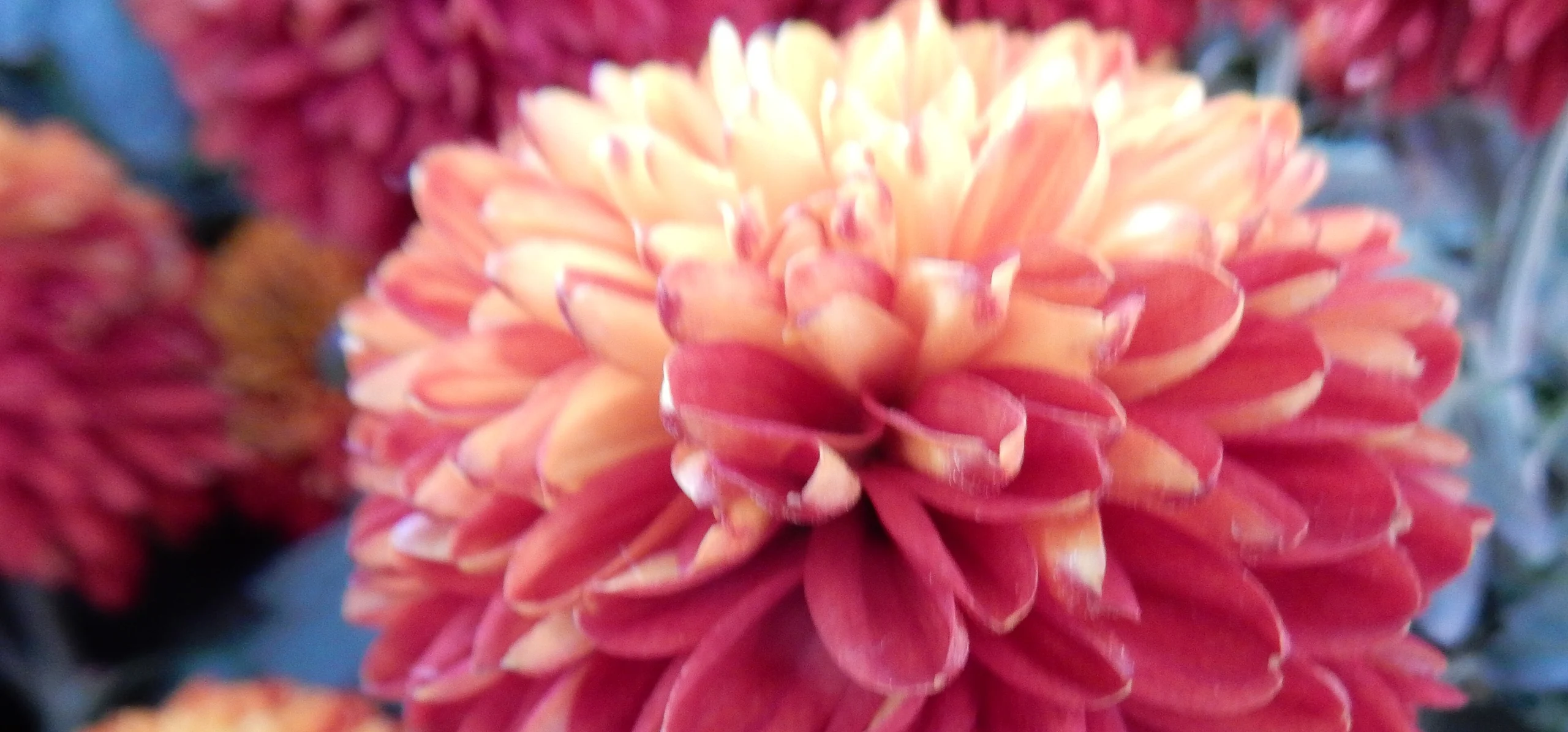
The plant sold as Chrysanthemum x morifolium shows up in two completely different forms every autumn: a tight, foil-wrapped ball of color on a supermarket shelf, and a woody-based garden perennial that has been building roots since spring. Both are the same species, a garden hybrid with no wild population of its own, but they behave nothing alike once the weather turns cold. Understanding which one you actually have, and why it flowers only when the nights get long, explains most of the mum-growing questions that come up in autumn.
Origin, Classification and the Trade Name
GBIF's backbone taxonomy lists the accepted name as Chrysanthemum x morifolium Ramat. ex Hemsl., with the plain canonical form Chrysanthemum morifolium used in classification records, in the daisy family Asteraceae, order Asterales. It is a garden hybrid rather than a species found in the wild: Plants of the World Online places its origin in southeastern China, where centuries of selection from several wild Chrysanthemum species produced the parent of every florist and garden mum grown today. The multiplication sign in the trade name signals that hybrid origin, and older tags sometimes use the synonym Dendranthema x morifolium, a genus name that has since been folded back into Chrysanthemum.
Garden Mums vs the Pot Mum You Bought This Autumn
A florist or garden-center pot mum bought already in bud in September or October has been grown on a forcing schedule for exactly that moment: full bloom, minimal foliage, and a root ball sized for a plastic pot, not a border. Planting that same pot straight into the ground in late autumn rarely works, because there is no season of warm soil left for it to push new roots before the ground freezes, and a plant that cannot anchor itself dies over winter regardless of mulch. A true hardy garden mum is a different purchase: a smaller, less floriferous plant sold in spring, meant to go into the ground while the soil is still warming so it has a full growing season to build the root system and underground shoots that carry it through winter. If you want mums that return, buy them in spring, not in the pumpkin display next to the apple cider.


Short-Day Flowering: Why It Blooms in Fall
Chrysanthemum morifolium is a short-day plant, meaning flower buds form once nights grow long enough, roughly from midsummer onward in most temperate gardens, well before any drop in temperature. Commercial growers exploit this directly, using blackout cloth or supplemental lighting to push potted mums into bloom on demand for any month of the year, which is why a garden-center mum in July is not natural timing, it is a forced crop. In the open garden the plant simply follows the calendar, setting buds as days shorten in late summer and opening them through autumn until frost cuts the display short.
Pinching for a Bushy, Free-Flowering Plant
Left alone, a chrysanthemum grows into a few tall, floppy stems topped with a handful of flowers. Pinching out the soft tip of each shoot once it reaches about 15 cm, then pinching the resulting side shoots again as they extend, forces the plant to branch low and produce far more flowering stems. The RHS recommends stopping this by around midsummer: pinch later than that and you remove the shoot tips just as they are trying to set the flower buds that short days have triggered, which delays or thins out the autumn display instead of improving it.
Sun, Soil and Watering
Give it full sun, with a little afternoon shade tolerated in hot summer climates, and a fertile, humus-rich soil that drains freely but does not dry out for long between waterings. Soggy, waterlogged ground is as much a problem as drought, since it rots the crown and roots the plant depends on to survive winter. Water containers whenever the top few centimetres of compost dry out, more often in hot weather when a pot-bound mum can wilt within a day, and taper off once flowering finishes so the plant is not sitting wet going into cold, wet weeks.
Overwintering Hardy Garden Mums
Leave the frost-killed top growth in place over winter rather than cutting it back; the dead stems trap insulating snow and leaf litter around the crown. Add a loose mulch, such as shredded bark, straw or evergreen boughs, once the ground has started to cool, and pull it back in spring once hard frosts have passed so new growth is not smothered. Where winters regularly fall well below what the plant tolerates in the ground, lifting the clumps before the first frost and overwintering them in trays of barely moist compost in a frost-free space is the more reliable option, the same technique used for other tender perennials that cannot take a hard freeze outdoors.
Propagation from Cuttings and Division
Named cultivars do not come true from seed, so cuttings and division are the two propagation methods that matter. In late winter or early spring, take basal cuttings around 6 cm long from the new shoots pushing up from an overwintered clump, strip the lower leaves so three or four remain at the top, and root them in a free-draining cutting mix. Established clumps also benefit from being lifted and divided every couple of years in spring, discarding the older, woodier centre and replanting the vigorous younger sections around the outside, which keeps the plant flowering well instead of thinning out.
White Rust, Aphids and Toxicity to Pets
Chrysanthemum white rust, caused by the fungus Puccinia horiana, is serious enough that Clemson's Home and Garden Information Center lists it alongside the milder brown rust Puccinia chrysanthemi among the diseases to watch for, and in the United States an outbreak is treated as a regulated, quarantine-significant event rather than routine fungicide business, triggering destruction of infected plants and tracing of the stock they came from. Look for pale, buff-colored pustules on the underside of the leaf opposite a corresponding spot on top, and remove and destroy affected foliage promptly rather than composting it. The chrysanthemum aphid, Macrosiphoniella sanborni, is the more everyday pest, clustering on young shoots and flower buds, distorting growth and excreting sticky honeydew that invites sooty mold; a strong jet of water or an insecticidal soap usually keeps a light infestation in check. On the safety side, the ASPCA lists chrysanthemum as toxic to cats, dogs and horses, with sesquiterpene lactones and pyrethrin-like compounds able to cause vomiting, diarrhea, drooling, loss of coordination and skin irritation from contact with the sap, so keep pets from chewing on either the cut flowers or the garden plant.
Test your plant knowledge
Tap a card to flip it and reveal the answer.
Chrysanthemum morifolium sets flower buds because of shortening day length, not falling temperature. Tap to reveal ✓ True
A florist pot mum bought in a decorative foil wrap in October will reliably come back next year if planted in the garden. Tap to reveal ✕ False
Pinching out the growing tips should continue right up until the flower buds open in autumn. Tap to reveal ✕ False
White rust (Puccinia horiana) is treated as a regulated, quarantine-significant disease in the United States. Tap to reveal ✓ True
Chrysanthemum flowers and foliage are listed as non-toxic to cats and dogs. Tap to reveal ✕ False
Sources
References consulted for this guide
- Chrysanthemum x morifolium Ramat. ex Hemsl., GBIF Backbone Taxonomygbif.org
- POWO: Chrysanthemum x morifolium Ramat.powo.science.kew.org
- RHS: How to grow chrysanthemums, growing guiderhs.org.uk
- Clemson HGIC: Chrysanthemum Diseases and Insect Pests in South Carolinahgic.clemson.edu
- ASPCA: Chrysanthemum toxicity to petsaspca.org
- Reference entity : Wikipédiaen.wikipedia.org