Lettuce
Lactuca sativa
Family · Asteraceae
Lettuce seed stalls above 25°C, so sow little and often, thin to the right spacing for the type, and keep roots evenly moist to avoid bitterness and tipburn.
Lactuca sativa
Plant profile
- WateringHighWater every 2 days
- Light exposurePartial sun
- Ideal temperature7–24 °C
Growth
- Family
- Asteraceae
- Life cycle
- Annual
- Growth speed
- 8/10
- Mature size
- 15–30 cm
- Spread
- 15–30 cm
- Flowering
- Bolts to a flowering stem within weeks once heat or day length triggers it
- Propagation
- Seed
Dormancynone in the plant; the seed itself has heat-induced thermodormancy above roughly 25-35°C (77-95°F)
Time to maturitycut-and-come-again leaf ready in about 4-6 weeks; hearting types 55-80 days depending on variety
Soil & climate
- Soil pH
- pH 6–6.5
- Soil types
- loam, sand
- Drought tolerance
- No
Light & Placement
- Origin
- Western Asia (a cultigen, not known wild)
- Where to place it
- bright windowsill in a wide, shallow tray for cut-and-come-again baby leaves
- vegetable bed or raised bed in full sun
- shaded corner or under 30-50% shade cloth in midsummer
- cold frame or unheated greenhouse for autumn and winter sowings
- wide, shallow container or window box at least 15-20cm deep for cut-and-come-again leaves
- growbag or large pot for hearting types, spaced per variety
Safety
- Toxicity
- HumansSafe
Invasive speciesa cultigen not known to occur or persist in the wild; not listed as invasive
Data fromLactuca sativa L., GBIF Backbone TaxonomLactuca sativa L., Plants of the World ORHS: How to grow lettucesClemson Cooperative Extension, Home & Ga
Where it grows
World distribution
Lettuce is native to a single country: Iraq.GBIF records 41,425 documented identifications across 150 countries, with the largest concentrations in Netherlands, France, and Spain.
- Iraq
Yellow to orange dots: concentration of documented identifications per country. Green countries: sourced native range. Source: GBIFNative range from POWO (Kew).
A Cool-Season Crop With a Seed That Refuses to Sprout in Heat
Lettuce (Lactuca sativa) germinates best between about 15 and 27°C (60 to 80°F), and above that range the seed increasingly goes into thermodormancy rather than rotting or dying, a self-protective trick that stops seedlings emerging into a summer that would kill them before they mature. Push the soil past roughly 35°C (95°F) and raw seed will not germinate at all, which is why a July sowing on a hot windowsill or a sun-baked bed so often produces nothing while a shaded corner of the same garden comes up within a week. The plant itself grows best noticeably cooler again, around 13 to 18°C (55 to 65°F), and once daytime temperatures push past about 24°C (75°F) for any length of time, it shifts from making leaf to pushing up a flowering stem, a change that cannot be reversed once it starts.
Succession Sowing Every Two to Three Weeks
Because any one sowing only stays in good eating condition for a few weeks before it either matures or bolts, the working method is a short row or a fresh tray every two to three weeks rather than one large planting. Sow thinly, about 1cm (½in) deep, and keep the new batch coming through spring; each planting overlaps the last, so there is always something at cutting size rather than one glut followed by a gap. In summer, shift new sowings to a shaded nursery bed or a cool windowsill for the first few days after sowing, since it is the moment of germination, not the mature plant, that is most sensitive to heat-induced dormancy.
Cut-and-Come-Again Leaves Versus Hearting Types
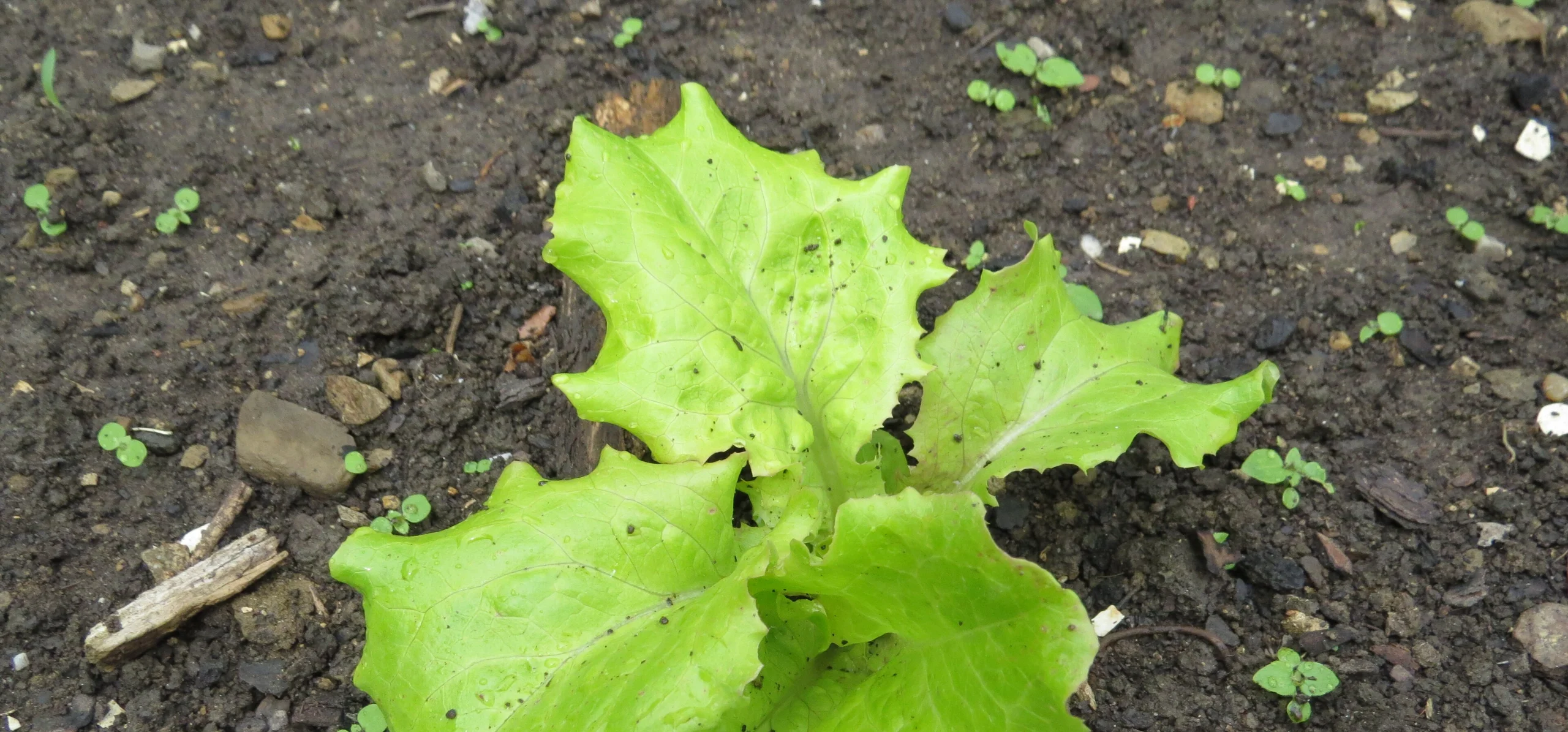
Loose-leaf lettuce forms a dense rosette rather than a heart, and it is the type best suited to cut-and-come-again harvesting: snip the outer leaves at about 10cm (4in) with scissors, leave the centre intact, and the plant regrows a fresh flush within a week or two, often good for three or four cuts before it runs out of energy. Butterhead lettuce forms a soft, loosely folded heart with a buttery texture and matures relatively quickly. Cos, also called romaine, grows upright with a firm, crisp midrib and tolerates heat a little better than most types. Crisphead, the iceberg style, forms the tightest, most tightly wrapped heart of the four and is bred to hold that structure without bolting for longer than most, which makes it a reasonable choice for a warm midsummer sowing where the others would bolt first.


Thinning and Spacing for the Type You Are Growing
A row sown thinly still comes up too dense to mature properly, and thinning is what decides whether the plants ahead of you form hearts or just leaf. Pull or snip surplus seedlings as soon as the first true leaves appear, then thin again over the following weeks until loose-leaf types stand about 10 to 15cm (4 to 6in) apart and hearting types, butterhead, cos or crisphead, stand a full 25 to 30cm (10 to 12in) apart with a similar gap between rows. Crowded hearting lettuce rarely recovers once it is left too long; the plants stretch for light, form loose, undersized hearts, and bolt sooner than well-spaced ones.
Watering: the Difference Between Sweet and Bitter Leaves
Lettuce roots sit mostly in the top 15cm (6in) of soil, and that shallow system dries out fast, especially once the leaf canopy is big enough to shade its own root zone from a light shower. Keep the soil evenly moist rather than letting it swing between soaked and dry: a plant that is stressed by drought responds by building up more of the bitter compounds in its sap, and if a dry spell is then followed by heavy watering or rain, the sudden rush of water into leaves that were growing slowly often shows up a day or two later as tipburn, a papery brown scorch along the edges of the youngest inner leaves. Watering in the morning rather than the evening lets the foliage dry before nightfall, which matters for two separate reasons covered below.
Slugs, Lettuce Aphids, and Downy Mildew
A damp evening is exactly when slugs and snails do the most damage to lettuce, and seedlings can be stripped to nothing overnight, which is the main reason morning watering is worth the habit even before disease is considered. Aphids, including the lettuce aphid that breeds down inside the folded heart of butterhead and cos types where no spray reaches it, are the other constant pressure; many modern varieties carry Nr-gene resistance bred in since the early 1980s, though aphid populations able to get around that resistance have been spreading since 2007, so resistant seed is a good starting point rather than a guarantee. Downy mildew shows first as pale yellow blotches on the upper leaf surface with a fuzzy white or grey growth on the underside directly beneath, favoured by the same still, humid, poorly drained conditions that evening watering creates, and is best managed by morning watering, wider spacing for airflow, and pulling affected leaves promptly rather than by any treatment after the fact.
Shade Cloth in Summer, Row Cover Through Autumn and Winter
Once daytime temperatures are reliably pushing lettuce toward bolting, a 30 to 50 percent shade cloth stretched above, not touching, the bed buys several extra weeks of usable leaf: nearer 30 percent in a mild summer climate, up to 50 percent where midsummer heat is severe. At the other end of the season, sow a cold-hardy variety in autumn under cloches, a cold frame, or an unheated greenhouse, and many will keep producing slowly right through a mild winter, since it is prolonged hard frost rather than short cold nights that damages exposed leaf. Both strategies are really the same trick in opposite directions: keep the plant inside the narrow temperature band where it makes leaf instead of flowering or stalling.
Saving Your Own Seed
Lettuce is naturally self-pollinating: each tiny floret carries both male and female parts and fertilises itself before it even opens, so seed saved from an isolated planting comes true to type with little risk of unwanted crossing. To save seed, a plant has to be allowed to do the one thing you spend the rest of the season delaying, bolt fully and flower, since the small dandelion-like flower heads only set seed after that stalk has run its course. Wait until the spent flower heads turn to white fluff, not unlike a dandelion clock, then cut or shake the heads into a paper bag, dry them somewhere airy for a week or two, and rub the fluff away to free the seed. Save from a plant that bolted late rather than one of the first to go, since bolting habit is itself heritable and early bolters will pass that tendency on.
Test your plant knowledge
Tap a card to flip it and reveal the answer.
Lettuce seed germinates poorly, or not at all, once soil temperatures climb well above 25°C (77°F). Tap to reveal ✓ True
Lettuce is best sown once at the start of the season for a single large harvest. Tap to reveal ✕ False
Loose-leaf lettuce can be harvested repeatedly by cutting the outer leaves and leaving the centre to regrow. Tap to reveal ✓ True
Letting the soil dry out between waterings improves the flavour of lettuce leaves. Tap to reveal ✕ False
Cold-hardy lettuce varieties can be sown under cover in autumn for a harvest through a mild winter. Tap to reveal ✓ True
Sources
References consulted for this guide
- Lactuca sativa L., GBIF Backbone Taxonomygbif.org
- Lactuca sativa L., Plants of the World Online, Kew Sciencepowo.science.kew.org
- RHS: How to grow lettucesrhs.org.uk
- Clemson Cooperative Extension, Home & Garden Information Center: Lettucehgic.clemson.edu
- Reference entity : Wikipédiaen.wikipedia.org