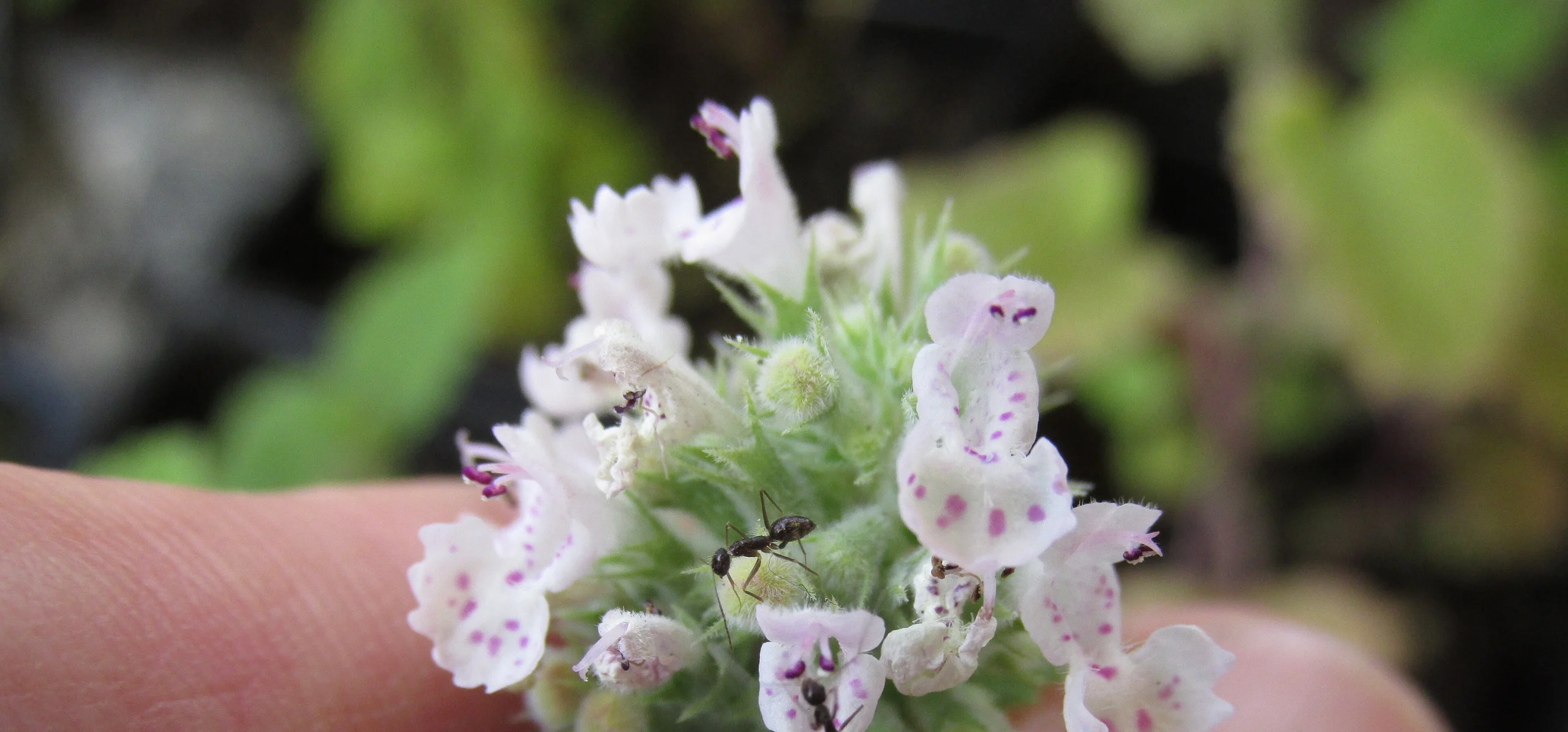
Catnip
Nepeta cataria
Family · Lamiaceae
Nepeta cataria self-seeds hard, reblooms after shearing, and owes its pull on cats to nepetalactone, the compound the ASPCA lists as its toxic principle.
Nepeta cataria
Plant profile
- WateringLittleWater every 7 days
- Light exposurePartial sun
- Hardiness zoneUSDA 3–9
Growth
- Family
- Lamiaceae
- Life cycle
- Perennial
- Growth speed
- 7/10
- Mature size
- 45–90 cm
- Spread
- 45–90 cm
- Flowering
- Late spring through fall; reblooms if sheared after the first flush
- Propagation
- Seed
- Division
Soil & climate
- Soil types
- clay, loam, sand, well-drained
- Drought tolerance
- Yes
Light & Placement
- Origin
- South Europe to Japan (Central Honshu) and Northwest Morocco
- Where to place it
- herb garden
- border edge
- fenced bed away from cats
- container with drainage to limit spread
Safety
- Toxicity
- CatsToxic
Invasive speciesNot documented as invasive, but self-seeds freely and can turn weedy in beds; NC State Extension suggests container growing to limit spread.
Data fromGBIF: Nepeta cataria L.Plants of the World Online (Kew): NepetaASPCA: Toxic and Non-Toxic Plants, CatniNC State Extension Gardener Plant ToolboWisconsin Horticulture Extension: Catnip
Where it grows
World distribution
Catnip is native to 32 countries: Afghanistan, Albania, Belarus, Bulgaria, China, Croatia, Estonia, and France….GBIF records 46,457 documented identifications across 78 countries, with the largest concentrations in United States, United Kingdom, and Canada.
- Afghanistan
- Albania
- Belarus
- Bulgaria
- China
- Croatia
- Estonia
- France
- Georgia
- Greece
- India
- Iran
Show 20 more countriesShow fewer countries
- Iraq
- Italy
- Japan
- Kazakhstan
- Kyrgyzstan
- Lebanon
- Morocco
- Nepal
- Pakistan
- Portugal
- Romania
- Russia
- South Korea
- Spain
- Switzerland
- Tajikistan
- Türkiye
- Turkmenistan
- Ukraine
- Uzbekistan
Yellow to orange dots: concentration of documented identifications per country. Green countries: sourced native range. Source: GBIFNative range from POWO (Kew).
Catnip (Nepeta cataria) is the plant cats rub, chew and roll in, and the compound behind that behavior, nepetalactone, is also why gardeners grow it: crush a leaf and the smell is unmistakably minty with a musky edge, a cousin to the culinary mints in the same family. It is a tough, sprawling perennial rather than a delicate ornamental, usually started from a seed packet or a division rather than bought already in bloom, and it will seed itself into nearby beds if the flowers are left to finish. Gardeners with cats often plant it in a container or a fenced corner, since a cat that finds a patch in open ground will flatten it within days. The ornamental catmints sold at nurseries under names like Nepeta faassenii are close relatives bred for the border rather than the cat bowl, and confusing the two is the most common mix-up around this plant.
Origin and Growth Habit
Nepeta cataria's native range runs from southern Europe east to Japan's Central Honshu, with an outlying population in northwest Morocco, and it has since naturalized widely, turning up along roadsides, railway edges and waste ground far from its origin. It belongs to the mint family, Lamiaceae, growing as a clumping, erect to sprawling perennial hardy from USDA zone 3a to 9b. Left to itself it grows fast, reaching up to three feet tall and roughly as wide under good conditions, with square, downy stems and grey-green, scalloped leaves that smell sharply minty when brushed. NC State Extension rates it low-maintenance rather than demanding, which is part of why it turns up as an uninvited garden guest as often as a planted one.
Starting Catnip from Seed
Wisconsin Horticulture Extension notes that catnip is readily propagated by seed, started indoors a few weeks before the last frost, or by dividing an already established plant. Sow shallow, keep the mix evenly moist, and expect germination to be uneven, since fresh seed comes up more reliably than seed that has sat in a packet for a year or two. Harden seedlings off before setting them outside, and give each transplant room to form its own clump rather than crowding its neighbours, since crowded plants stretch for light and flop over. Division is faster: lift an established clump in spring, split it into rooted sections, and replant right away; it re-establishes sooner than anything grown from seed that same season.
Site, Soil and Light
Give catnip full sun for the densest growth and heaviest flowering, though NC State Extension notes it tolerates two to six hours of shade a day and does better with some afternoon shade where summer heat and humidity run high together, conditions the plant is only partly at ease in. It is unfussy about soil, growing in clay, loam, sand or shallow rocky ground as long as drainage is decent, and Wisconsin Horticulture Extension adds that it thrives in poor soil and shrugs off real drought once established. Good drainage matters more than soil richness here: a rich, constantly damp bed pushes soft, floppy growth, while a lean, well-drained spot keeps the plant compact and its foliage more aromatic.


Cutting Back to Keep It Tidy
Catnip left to its own devices sprawls and flops once the flower spikes get heavy, so most growers cut the whole plant back hard once new growth resumes in spring, taking it down to a few inches to force a denser, bushier flush rather than the tall, leggy growth of an unpruned plant. NC State Extension recommends shearing the flower spikes back once the first flush fades, which pushes a second round of bloom through summer instead of letting the plant set seed and quit early. A second light shearing in mid-summer, once that rebloom starts to fade, keeps the clump compact through fall and delays the seed set that turns one plant into a dozen.
Self-Seeding: Living With a Spreader
Catnip sets seed readily once its flowers are allowed to finish, and NC State Extension flags it as a plant that can turn weedy in a garden bed, which is why the same source suggests container growing where space or spread matters. A single unshorn plant left to bloom through a season will drop seed into the surrounding soil, and volunteers show up the following spring in paths, gravel and neighbouring beds well beyond where the original was planted. Deadheading or the mid-season shearing described above is the main lever for control: cut the flower spikes before they go to seed and the plant stays roughly where it was put, at the cost of a shorter bloom window.
Nepetalactone and Why Cats React
The compound responsible for catnip's pull on cats is nepetalactone, an oil in the leaves and stems that the ASPCA lists as the plant's toxic principle. Wisconsin Horticulture Extension notes that most cats enjoy rubbing or chewing on catnip leaves, and that response, sniffing, licking, rolling and rubbing against the foliage, is what gives the plant its common name and its main use stuffed into scratching posts and cat toys. Not every cat reacts to it, and the same leaf that draws one cat across the garden can leave another completely indifferent. It is worth remembering the other side of that appeal: the ASPCA notes that eaten in quantity, catnip can cause vomiting and diarrhea, and leaves some cats sedated and others stimulated, so a plant a cat can reach without limit is worth watching rather than assumed harmless just because cats seek it out.
Catnip vs. Ornamental Catmint (Nepeta faassenii)
Garden centres sell a different Nepeta under the name catmint, usually Nepeta faassenii or Nepeta racemosa, and mixing it up with true catnip is the most common confusion around this plant. Wisconsin Horticulture Extension describes the tradeoff plainly: these ornamental catmints make much better garden plants, with showier flowers and better-behaved habits, but their leaves are less enticing to cats than true catnip's. In practice that means a Nepeta faassenii planted for a tidy, long-blooming border rarely turns into the flattened, well-loved patch that Nepeta cataria becomes once a neighbourhood cat finds it, so a gardener who wants a good-looking perennial and an indifferent cat should plant the ornamental instead. Anyone shopping by common name alone should check the tag for the Latin name, since catmint and catnip get used loosely and inconsistently by different growers and nurseries.
Drying Catnip Leaves for Cats
To dry catnip for cat toys or treats, cut whole stems in the morning once any dew has dried off, choosing healthy growth rather than leaves that are already yellowing. Bundle a few stems and hang them upside down somewhere dark, dry and well ventilated rather than in direct sun, which fades the leaves and lets the aromatic oils evaporate faster than they should. Once the stems snap cleanly instead of bending, strip the dry leaves off, discard the coarse stems, and seal the leaves in an airtight container out of the light; stored that way, dried catnip keeps its appeal far longer than a fresh-cut sprig, which wilts within a day. Because the ASPCA lists catnip as toxic to cats in quantity, offer dried leaves sparingly, and treat repeated vomiting or unusual lethargy as a reason to call a vet rather than wait it out.
Test your plant knowledge
Tap a card to flip it and reveal the answer.
Nepeta cataria is a short-lived annual that must be resown every year. Tap to reveal ✕ False
NC State Extension recommends shearing catnip's flower spikes after the first flush to push a second round of bloom. Tap to reveal ✓ True
Ornamental catmint (Nepeta faassenii) is generally just as enticing to cats as true catnip. Tap to reveal ✕ False
The ASPCA lists catnip as toxic to cats, with nepetalactone as the toxic principle. Tap to reveal ✓ True
Catnip needs consistently rich, moist soil and struggles in poor or dry ground. Tap to reveal ✕ False
Sources
References consulted for this guide
- GBIF: Nepeta cataria L.gbif.org
- Plants of the World Online (Kew): Nepeta cataria L.powo.science.kew.org
- ASPCA: Toxic and Non-Toxic Plants, Catnipaspca.org
- NC State Extension Gardener Plant Toolbox: Nepeta catariaplants.ces.ncsu.edu
- Wisconsin Horticulture Extension: Catnip, Nepeta catariahort.extension.wisc.edu
- Reference entity : Wikipédiaen.wikipedia.org