Faassen's Catmint
Nepeta faassenii
Family · Lamiaceae
Nepeta × faassenii is a sterile hybrid that blooms for months in lean, dry soil, sprawls in rich ground, and reblooms after a hard midsummer shear.
Nepeta faassenii
Plant profile
- WateringLittleWater every 10 days
- Light exposureFull sun
- Hardiness zoneUSDA 5–9
Growth
- Family
- Lamiaceae
- Life cycle
- Perennial
- Growth speed
- 7/10
- Mature size
- 45–60 cm
- Spread
- 45–90 cm
- Flowering
- Late spring through autumn; reblooms after a midsummer shear
- Propagation
- Division
- Cutting
DormancyDies back in winter
Time to maturity2 to 5 years
Soil & climate
- Soil types
- clay, loam, sand, chalk, well-drained
- Drought tolerance
- Yes
Light & Placement
- Origin
- Garden hybrid (Nepeta racemosa x Nepeta nepetella); no wild native range
- Where to place it
- sunny border edge
- rock garden
- path edge
- container with drainage; part shade in hot climates
Safety
- Toxicity
- Not separately listed by the ASPCA; true catnip is the toxic entry
- Pet safe
- Yes
Invasive speciesSterile hybrid; does not self-seed (NC State Extension).
Data fromGBIF: Nepeta ×faassenii Bergmans ex SteaPlants of the World Online (Kew): NepetaRHS: Nepeta × faassenii (garden catmint)NC State Extension Gardener Plant ToolboASPCA: Toxic and Non-Toxic Plants, Catni
Where it grows
World distribution
GBIF records 1,717 documented identifications across 34 countries, with the largest concentrations in Sweden, Germany, and Switzerland.
Yellow to orange dots: concentration of documented identifications per country. Green countries: sourced native range. Source: GBIF.
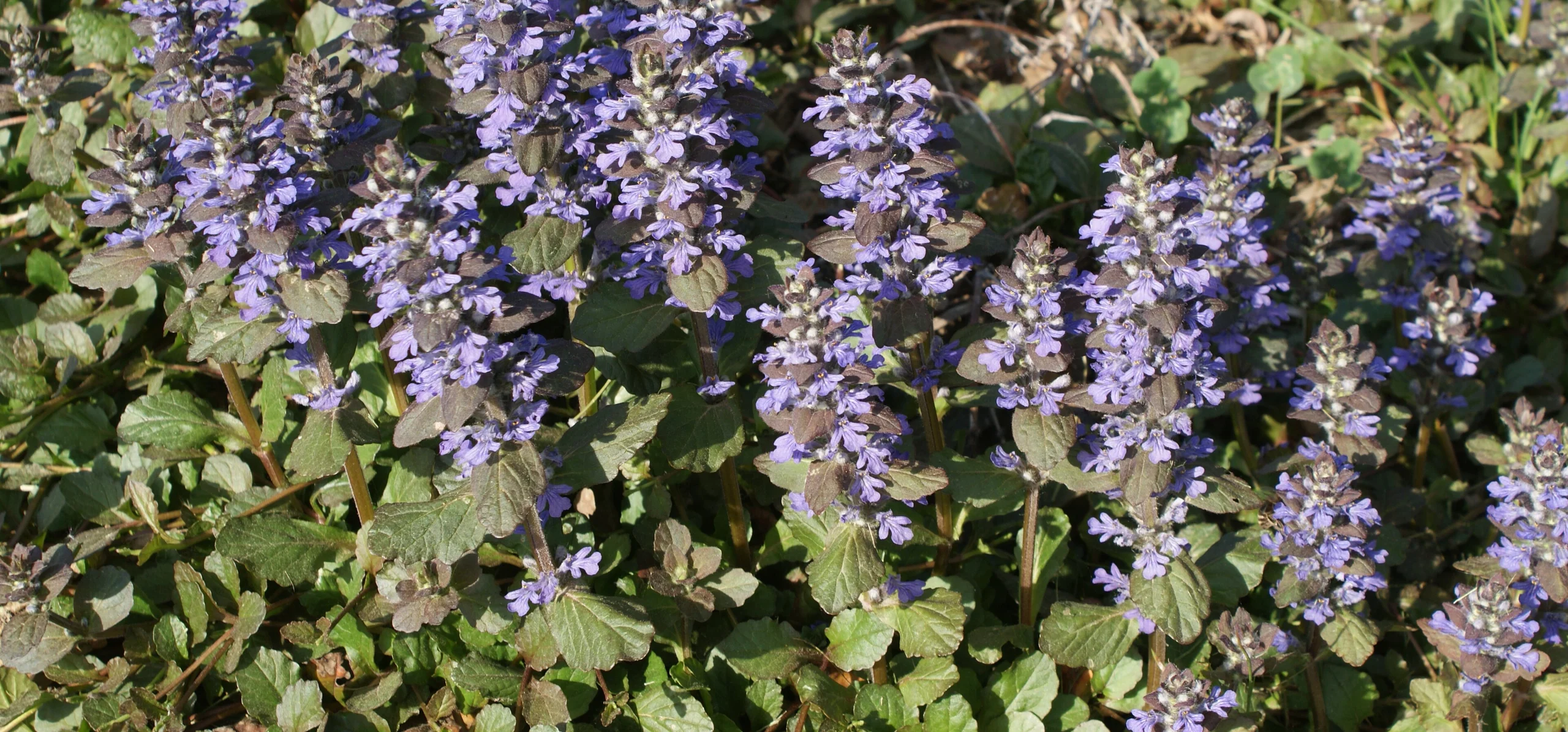
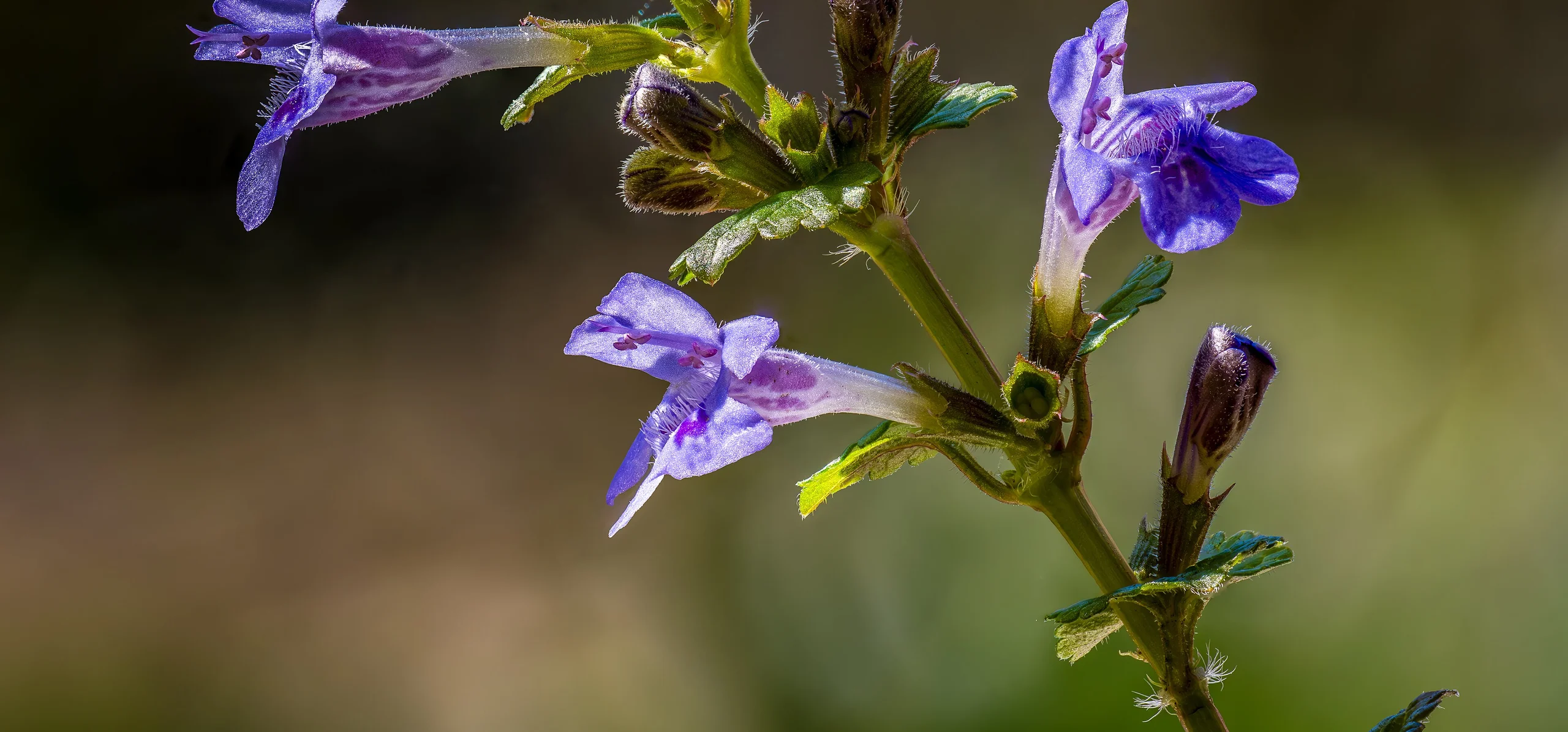
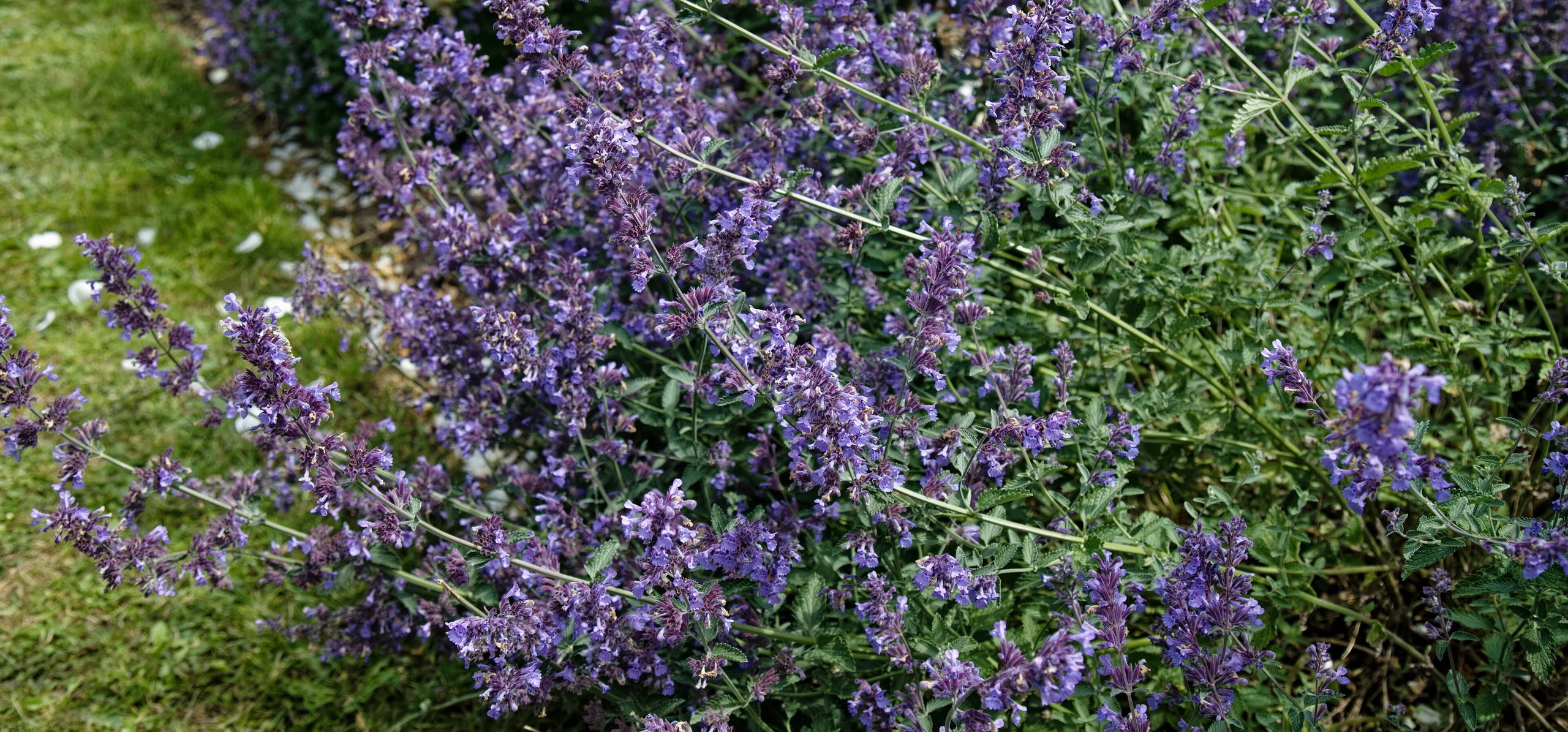
Nepeta × faassenii is the catmint sold at nearly every garden centre under cultivar names like 'Six Hills Giant', 'Walker's Low' and 'Cat's Pajamas', a sterile hybrid of Nepeta racemosa and Nepeta nepetella raised in cultivation rather than found growing wild. It earns its spot at the front of a border by flowering for months rather than weeks, holding a low mound of aromatic grey-green leaves topped with spikes of small violet-blue flowers from late spring into autumn. Full sun and lean, dry soil keep the mound tight and upright; the same plant in rich, damp ground turns soft and sprawls open within a season. It is not true catnip, and most cats give it an interested sniff rather than the flattened, rolling frenzy that Nepeta cataria provokes.
A Sterile Garden Hybrid, Not a Wild Species
GBIF records the accepted name as Nepeta ×faassenii Bergmans ex Stearn, in the mint family Lamiaceae, and lists it as a cross between Nepeta racemosa and Nepeta nepetella rather than a species found in any wild population. Plants of the World Online treats it the same way: it carries no native range, because it originated in cultivation, not in the wild. That garden origin explains the plant's most useful trait for a border: the flowers are largely sterile, so unlike true catnip it does not scatter seedlings through nearby beds and paths. Nurseries sell it almost entirely under cultivar names rather than as the plain hybrid: 'Six Hills Giant' is the oldest and largest, sprawling to nearly a metre wide on long stems that often need staking; 'Walker's Low' is more compact and upright despite its name (it is not actually a low grower); 'Cat's Pajamas' is smaller again, a tidy mound around a foot tall bred for the front of a bed or a container. All three take the same care described here.
Full Sun and Lean Soil: Why Rich, Wet Ground Makes It Flop
RHS guidance puts this catmint in full sun to partial shade, in any well-drained soil from chalk to clay to sand, tolerant of acid, neutral or alkaline ground. NC State Extension is more specific about drainage: clay, loam, sand or shallow rocky soil all work, as long as water does not sit around the roots, and an established plant shrugs off real drought. What it does not take well is richness. Feed it, plant it in fertile ground, or water it on a schedule meant for a thirsty perennial, and the stems grow soft, long and top-heavy, flopping open into a loose, gappy mat by midsummer instead of holding the tight mound shown on the plant tag. The fix is to plant it lean: skip the compost at planting time, pick a spot with sharp drainage, and let dry spells go unwatered once the roots are established. A slightly stressed plant is a compact plant here.
The Mid-Summer Shear for a Second Flush of Bloom
RHS advice is to trim the whole plant back hard once the first flush of flowers fades, which keeps growth compact and pushes a second round of bloom instead of letting spent spikes sit through summer. In practice that means shearing the entire mound down by roughly half with hedge shears or garden scissors as soon as the flowers look thin and tired, rather than snipping individual stems one at a time. New growth comes fast from the base, and a second, usually lighter, flush follows within a few weeks, carrying colour into early autumn instead of stopping in July. Skip the shear and the plant will not die, but it sits scruffy and spent for the rest of the season, with what few seed heads it sets (given the sterility) collapsing over tired foliage. Some gardeners shear twice, once after the first flush and again lightly in early autumn, to keep the mound dense going into winter.


Dividing an Established Clump in Spring
Because the flowers are sterile, division is the main way to make more plants true to the parent, and RHS lists it as the standard method, done in spring or autumn, alongside softwood cuttings taken in early summer for gardeners who want new plants without disturbing the original clump. Spring division is the more reliable of the two: lift the whole clump as new growth resumes, before the flower spikes form, and split it into sections with a spade or by hand, keeping a fist-sized piece of root and a few shoots per division. Replant immediately at the same depth, water in well, and expect the new pieces to establish and flower that same season. A clump left undivided for several years tends to die out in the centre while the outer growth keeps spreading outward, a sign it is time to lift, divide and discard the woody middle rather than wait for it to recover on its own.
Pests, Mildew and Why It Shrugs Off Deer and Rabbits
RHS flags leafhoppers and powdery mildew as the main problems, the mildew more likely on crowded plants with poor air movement or during a wet, humid summer; thinning congested clumps and avoiding overhead watering late in the day both help. NC State Extension notes that the strongly aromatic foliage deters deer, and the same oils that put deer off make this one of the more reliably rabbit-resistant perennials for a border, unlike hostas or tender annuals planted nearby. That resistance is not absolute: a very hungry deer in a hard winter will browse almost anything, but catmint is rarely a first choice, and gardeners in deer country often plant a band of it along a bed's edge to make the more palatable plants behind it less obvious.
Bees on the Spikes, Cats on the Foliage (Just Not as Much)
The long bloom season makes this catmint one of the more reliable nectar plants in a sunny border, and bees, bumblebees especially, work the flower spikes steadily from the first flush through the rebloom that follows shearing. Cats respond to the foliage too, since it shares the compound nepetalactone with true catnip, but in a far lower concentration. Most cats give crushed leaves an interested sniff rather than the full rolling, chewing response that a patch of true catnip triggers. Gardeners who want a border plant that a resident cat will not flatten within days, the way it often does with catnip, generally get their wish with this hybrid: it survives being brushed against and occasionally nibbled instead of being sought out and destroyed.
Catmint vs. Catnip: What the ASPCA Actually Lists
The ASPCA's toxic plant database carries an entry titled "Catnip (Catswort, Catmint)" marked toxic to cats, but the scientific name given is Nepeta cataria, true catnip, not this garden hybrid. Nepeta × faassenii has no separate entry on the ASPCA list, so there is no official toxicity call specific to it; treat that as an open question rather than an assumption of safety, since it shares the same genus and general chemistry as the plant the ASPCA does flag. In practice, a border planted with this catmint is a lower-risk choice around cats than true catnip simply because it is far less enticing to eat in quantity, but a cat that chews on any Nepeta in volume is worth watching for the vomiting and digestive upset the ASPCA describes for the genus's toxic member.
Test your plant knowledge
Tap a card to flip it and reveal the answer.
Nepeta × faassenii is a sterile hybrid that does not self-seed the way true catnip does. Tap to reveal ✓ True
Rich, consistently moist soil produces the tightest, most compact mound of this catmint. Tap to reveal ✕ False
RHS advice is to shear the plant back hard after the first flush of flowers to encourage a second bloom. Tap to reveal ✓ True
The ASPCA lists Nepeta × faassenii by name as toxic to cats. Tap to reveal ✕ False
Deer and rabbits generally avoid catmint because of its strongly aromatic foliage. Tap to reveal ✓ True
Sources
References consulted for this guide
- GBIF: Nepeta ×faassenii Bergmans ex Stearngbif.org
- Plants of the World Online (Kew): Nepeta × faassenii Bergmans ex Stearnpowo.science.kew.org
- RHS: Nepeta × faassenii (garden catmint)rhs.org.uk
- NC State Extension Gardener Plant Toolbox: Nepeta x faassenii (Blue Catmint)plants.ces.ncsu.edu
- ASPCA: Toxic and Non-Toxic Plants, Catnip (Catswort, Catmint)aspca.org
- Reference entity : Wikidatawikidata.org