Shiso
Perilla frutescens
Family · Lamiaceae
Shiso (Perilla frutescens) wants full sun to partial shade, evenly moist soil and regular pinching. Covers varieties, self-seeding and toxicity to livestock.
Perilla frutescens
Plant profile
- WateringModerateWater every 4 days
- Light exposurePartial sun
- Hardiness zoneUSDA 10–11
Growth
- Family
- Lamiaceae
- Life cycle
- Annual
- Growth speed
- 8/10
- Mature size
- 30–91 cm
- Spread
- 9–46 cm
- Flowering
- Summer into fall
- Propagation
- Seed
DormancyNone; overwinters only as seed, killed by the first frost outside USDA zones 10a-11b
Time to maturityOne growing season
Soil & climate
- Soil types
- loam, rich organic soil, occasionally wet ground
- Drought tolerance
- Yes
Light & Placement
- Origin
- S. Russian Far East to Pakistan
- Where to place it
- Herb bed
- Vegetable garden edge
- Large container on a sunny patio
- Wide, free-draining container
Safety
- Toxicity
- Not evaluated by the ASPCA for pets; documented as toxic to cattle and horses
- Pet safe
- No
Invasive speciesClassified as invasive in Virginia, West Virginia, Tennessee and Kentucky, and flagged by the North Carolina Invasive Plant Council; self-sows readily and has naturalized across the eastern and central United States.
Data fromGBIF: Perilla frutescens (L.) BrittonPOWO (Kew): Perilla frutescens (L.) BritNorth Carolina State Extension Gardener Missouri Botanical Garden Plant Finder:
Where it grows
World distribution
Shiso is native to 14 countries: Bangladesh, Bhutan, China, India, Indonesia, Japan, Laos, and Myanmar (Burma)….GBIF records 29,183 documented identifications across 53 countries, with the largest concentrations in United States, Japan, and China.
- Bangladesh
- Bhutan
- China
- India
- Indonesia
- Japan
- Laos
- Myanmar (Burma)
- Nepal
- Russia
- South Korea
- Taiwan
- Thailand
- Vietnam
Yellow to orange dots: concentration of documented identifications per country. Green countries: sourced native range. Source: GBIFNative range from POWO (Kew).
A single perilla plant, sold as shiso, beefsteak plant or kkaennip depending on the nursery, grows fast into a bushy, aromatic annual with wrinkled, serrated leaves that smell of mint, anise and citrus at once. It thrives on heat and shrugs off dry spells once its roots are established, which is why it turns up equally as an easy patio herb and, in the warmer parts of the eastern United States, as a garden escapee that reseeds itself without any help. Leaf color, green or deep purple-red, and flavor, mild or sharply spicy-anise, both depend on which variety ended up in your pot, so the first job is working out which one you actually have.
Choosing a Variety: Green, Purple and Ornamental Shiso
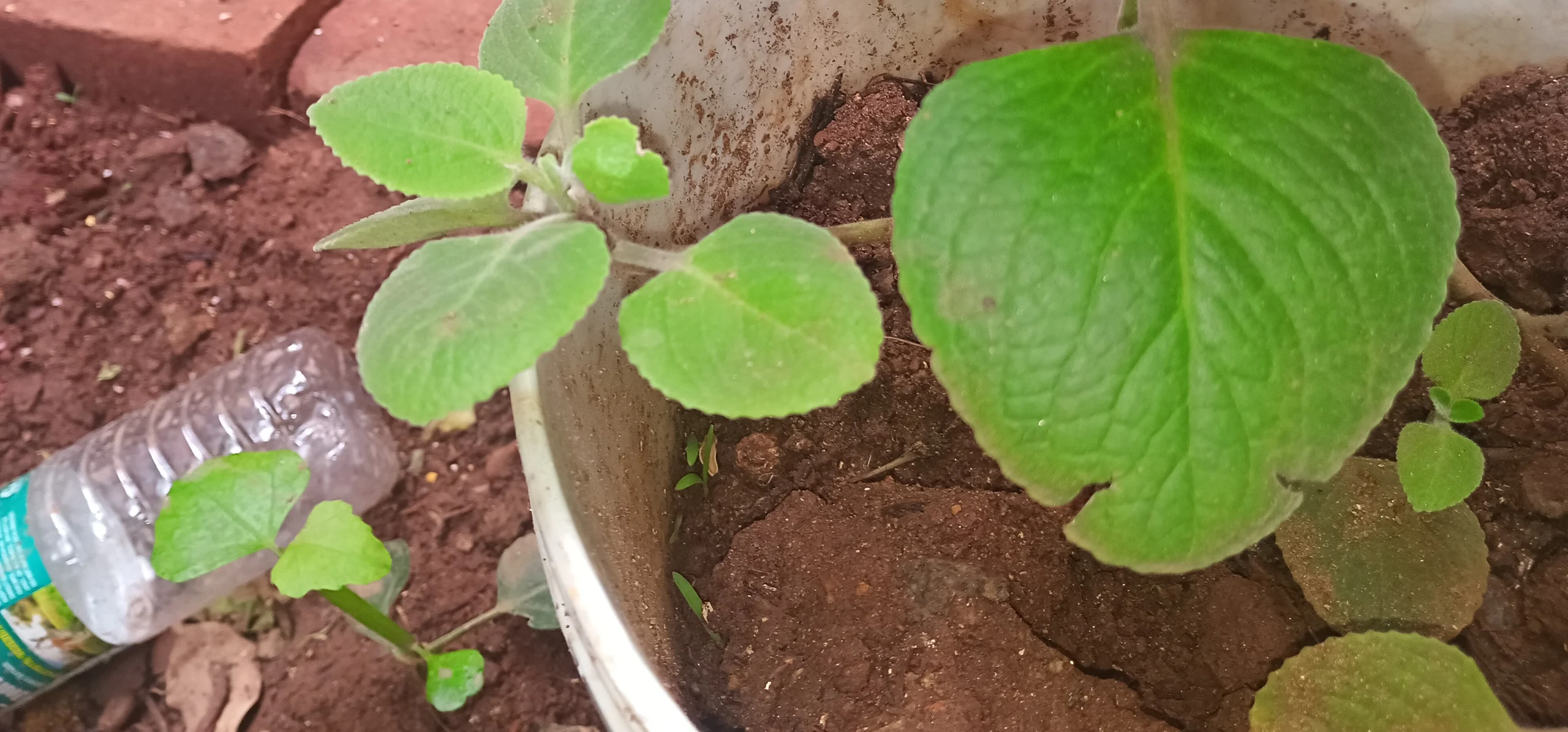
Three broad types show up under the same botanical name. Green shiso (close to Perilla frutescens f. viridis) has flat, mild leaves and is the type used fresh in Japanese cooking, as a garnish for sashimi or fried whole in tempura. Purple or red shiso (var. crispa, sometimes ruffled at the edges) carries the anthocyanins that dye pickled plums and pickled ginger their characteristic red, and has a stronger, more peppery flavor. Korean kitchens usually grow a flatter-leaved green cultivar known as kkaennip, used raw as a wrap and pickled in soy sauce.
- Green shiso: mild, used fresh, common in Japanese dishes
- Purple or red shiso: stronger flavor, used for color and pickling
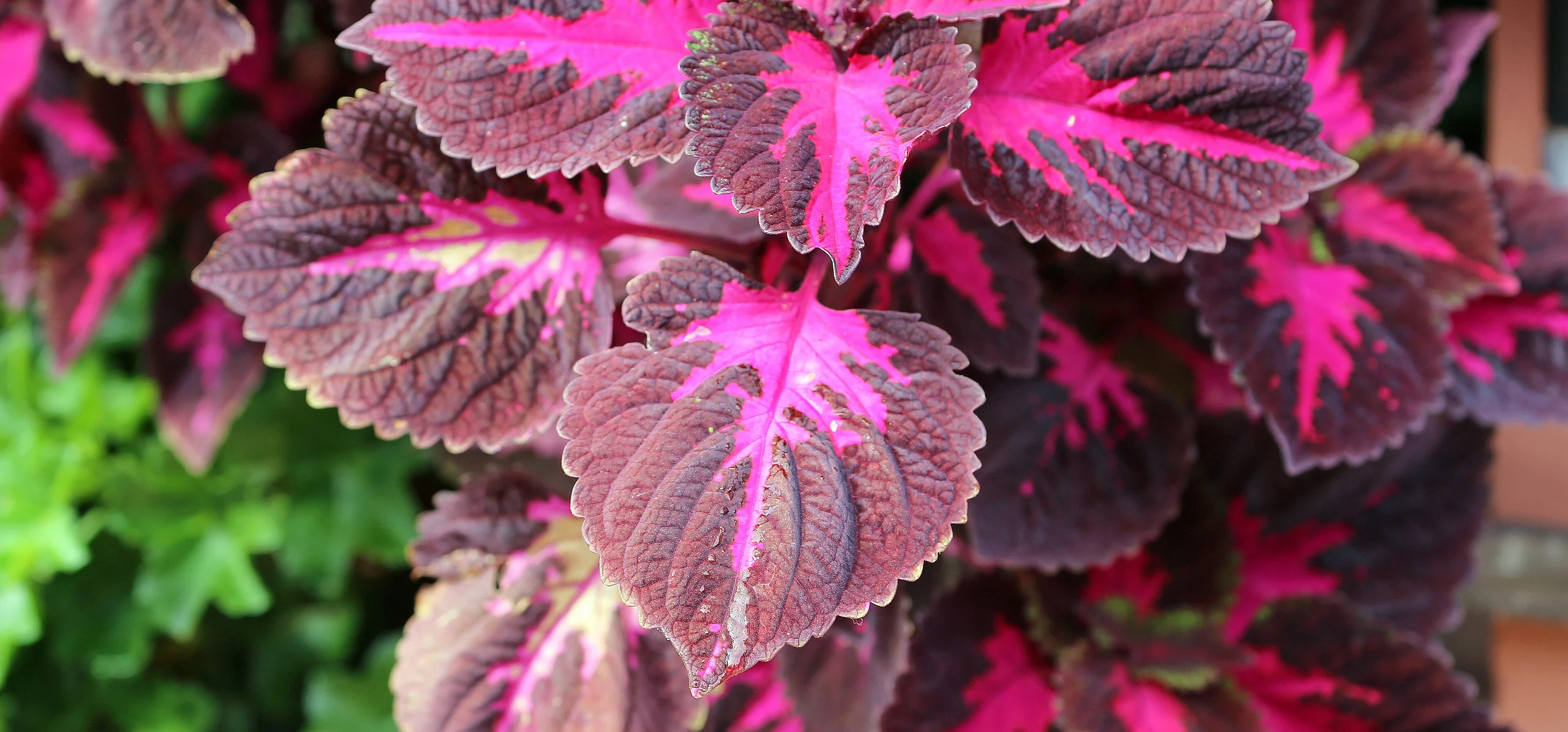
- Ornamental cultivars (sold under trade names such as 'Magilla'): grown for variegated foliage rather than the kitchen
Garden centres selling ornamental perilla for foliage color are offering the same species bred for looks rather than eating, check the plant tag or ask before assuming a bedding-plant perilla is the culinary type.
Origin, Life Cycle and What You're Growing
Plants of the World Online lists the native range of Perilla frutescens as S. Russian Far East to Pakistan, with a native distribution running through the Himalayas, China, Japan, Korea and mainland Southeast Asia. It belongs to Lamiaceae, the mint family, alongside basil, mint and lavender, and shares their square stems and opposite leaf pairs. North Carolina State Extension classifies it as an annual with a rapid growth rate, reaching roughly 30 to 91 cm (1 to 3 ft) tall and occasionally taller, with a narrower 9 to 46 cm spread; it is hardy as a short-lived perennial only in USDA zones 10a to 11b, and is killed by the first frost everywhere else. That same fast, seed-driven life cycle explains why it has escaped cultivation and naturalized across the eastern and central United States, and is classified as invasive in Virginia, West Virginia, Tennessee and Kentucky.
Light and Siting
Give it full sun, six or more hours of direct light, for the deepest leaf color and the strongest flavor. It also tolerates partial shade, two to six hours of direct sun, which is useful in hot summer climates where afternoon shade prevents leaf scorch and slows premature flowering. An herb bed, the sunny edge of a vegetable garden, or a large container on a bright patio all suit it; where summer sun is intense, morning sun paired with afternoon shade keeps the leaves tender rather than tough and bitter.


Soil, Watering and Feeding
Perilla wants moist, loose, humus-rich soil with good drainage, though Missouri Botanical Garden notes it also tolerates ground that is occasionally wet. North Carolina State Extension describes its water need as medium while it establishes, with excellent resistance to heat and drought once it is rooted in. In containers, use a rich, free-draining mix and check the pot daily in summer heat, containers dry out far faster than open garden soil. A light, balanced feed once a month during the growing season supports its rapid leafy growth; ease off on nitrogen-heavy feeding late in the season, since it only pushes soft new growth that the first frost will kill anyway.
Pinching, Flowering and Self-Seeding
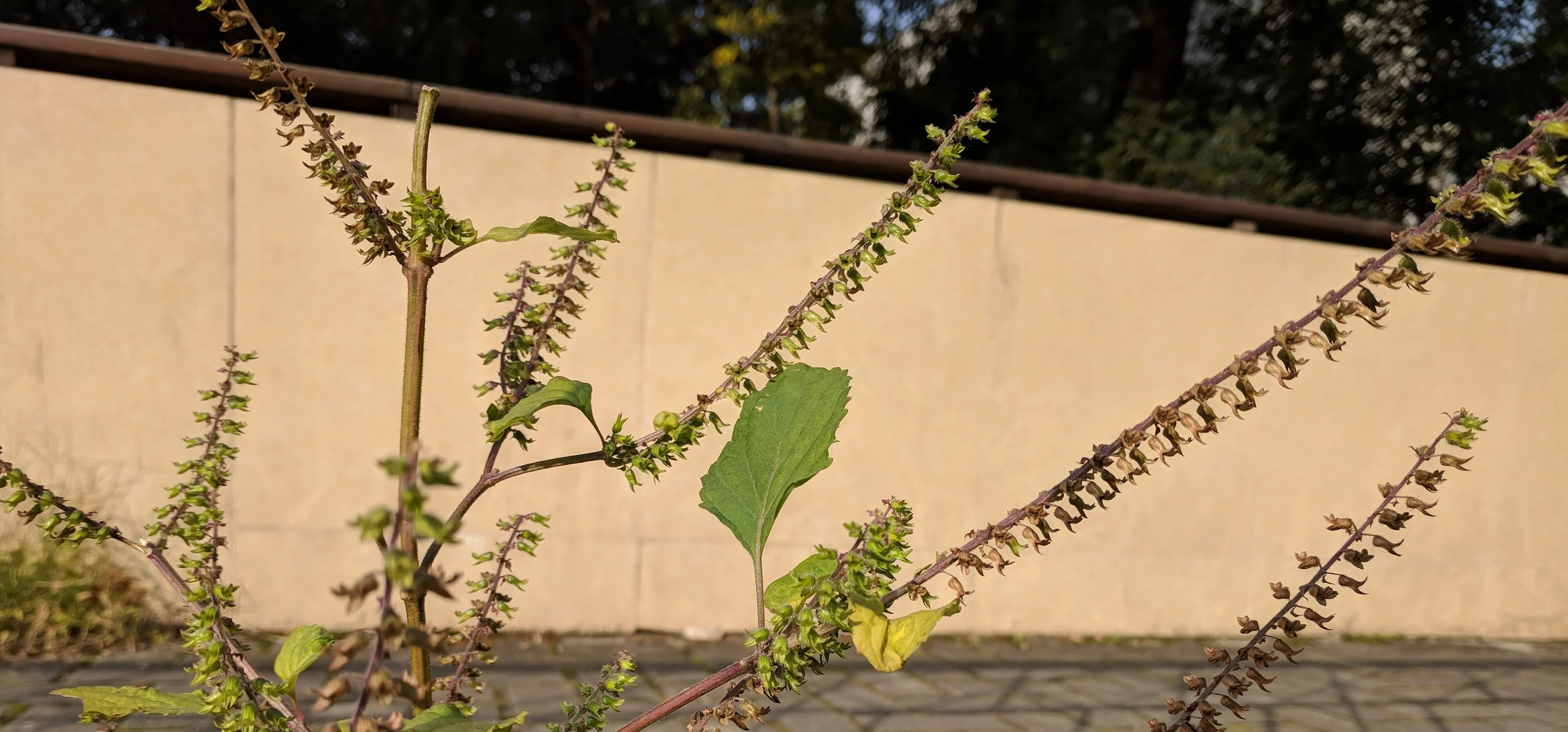
Pinch back the growing tips, especially once hot, humid weather sets in, to keep plants bushy and compact rather than tall and rangy, a technique North Carolina State Extension recommends directly. Pinching also delays flowering and keeps leaf production going longer, the same trade-off gardeners make with basil, its relative in the mint family. Left unpinched, perilla flowers on small spikes from summer into fall and sets seed that drops and germinates on its own the following spring, no replanting required. That self-seeding habit is exactly what let it escape gardens and naturalize through the eastern and central United States, so in states where it is flagged as invasive, cut off spent flower spikes before seed ripens if you do not want volunteers coming up throughout the bed next year.
Harvesting and Using the Leaves
Pick individual leaves or whole stem tips as you need them, the youngest leaves near the growing tip are the most tender and aromatic. Harvesting this way doubles as the pinching described above, so a habit of picking often in the kitchen also keeps the plant compact in the garden. Depending on the variety, leaves go fresh into Japanese dishes as a garnish or tempura, into Korean cooking as a pickled wrap for grilled meat, or into Chinese and Vietnamese herb plates; the ripe seed, rich in omega-3 fatty acids, is pressed into perilla oil in parts of East Asia.
Pests, Disease and Toxicity Notes
North Carolina State Extension lists no serious insect or disease problems for this species, a rare piece of good news among garden herbs. The ASPCA has not evaluated Perilla frutescens for cats or dogs, so treat its safety around pets as unconfirmed rather than assume it is safe. The real, documented risk is to grazing livestock: agricultural extension sources report that perilla ketone, concentrated in the flowering tops and seed heads, causes acute respiratory distress in cattle and horses that graze on it. That matters most where the plant has naturalized near pasture, less so for a pot on a kitchen windowsill.
Test your plant knowledge
Tap a card to flip it and reveal the answer.
Perilla frutescens is killed by the first frost outside the warmest US zones. Tap to reveal ✓ True
This plant needs deep shade to grow well. Tap to reveal ✕ False
Pinching back the growing tips in hot, humid weather keeps the plant bushier. Tap to reveal ✓ True
Because it only spreads from seed, perilla stays confined to where it was planted. Tap to reveal ✕ False
The ASPCA has confirmed perilla is safe for cats and dogs to eat. Tap to reveal ✕ False
Sources
References consulted for this guide
- GBIF: Perilla frutescens (L.) Brittongbif.org
- POWO (Kew): Perilla frutescens (L.) Brittonpowo.science.kew.org
- North Carolina State Extension Gardener Plant Toolbox: Perilla frutescensplants.ces.ncsu.edu
- Missouri Botanical Garden Plant Finder: Perilla frutescensmissouribotanicalgarden.org
- Reference entity : Wikipédiaen.wikipedia.org