
Which Plants to Put in a Bathroom: Humidity, Light and Limits
Many plants enjoy the humidity of a bathroom, provided it has a window: Boston fern, calathea, moth orchid, pothos, peace lily. Without a window, no plant lasts long, except under a grow light. Shower steam helps, but light is what decides the choice.
What a bathroom really offers
A bathroom has higher humidity than the rest of the home, especially after a shower. That is an advantage for plants from humid tropical forests, whose thin leaves cope badly with the dry air of heating. On the other hand, this humidity is irregular: short peaks, then a drier room, sometimes cool at night.
Light is the real limiting factor. Many bathrooms have a small window, or none at all, and light of middling quality. The question to ask is therefore not “does this plant like humidity?” but “does it get enough daylight?”. A plant that loves humidity but lacks light grows leggy, whatever the steam.
Bathroom with a window: the plants that thrive
For humidity
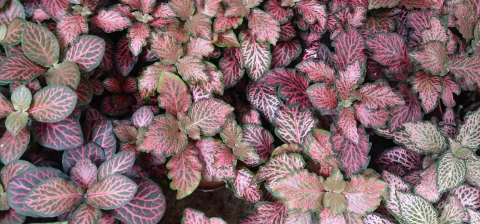
The Boston fern (Nephrolepis exaltata) is the classic bathroom plant: it loves humid air and dries out in heated air, but needs decent light. The bird’s nest fern (Asplenium nidus) is more tolerant and also appreciates partial shade. The calathea orbifolia (Calathea orbifolia) has large decorative leaves that benefit from humidity, but it is sensitive to temperature swings and hard water. The nerve plant (Fittonia albivenis) is a small understorey plant that collapses when it lacks water, with a clear rebound after watering.
For flowers and foliage
The moth orchid (Phalaenopsis amabilis) thrives in warmth and humidity provided it gets bright but indirect light, which a bathroom window filtered by a sheer curtain or frosted glass often provides. The peace lily (Spathiphyllum wallisii) tolerates partial shade and also enjoys humidity. The golden pothos (Epipremnum aureum) grows hanging and copes with medium light.
The safe bets
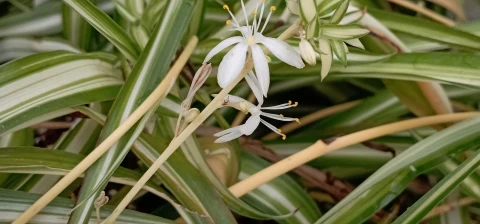
The spider plant (Chlorophytum comosum), tolerant and easy to keep, suits a bright bathroom. The snake plant (Dracaena trifasciata) and the ZZ plant (Zamioculcas zamiifolia) do not need humidity, but they put up with low light and infrequent watering. They therefore do well in a dimly lit room with a window, as long as you do not water them just because the air is humid.
Bathroom with no window
Let’s be direct: a windowless bathroom is not viable for a plant. No species photosynthesises without light, and the light from a ceiling bulb switched on a few minutes a day is not enough. The plant may survive for a while on its reserves, then it yellows, drops its leaves and eventually dies.
There are two honest solutions.
- Grow lighting, meaning a lamp designed for plant growth, switched on for several hours a day and placed within reach of the plant. This calls for a safe installation because of the humidity, and a regular lighting period.
- Rotation: the plant spends a fortnight or so in the bathroom, then goes back near a window. Handy for a fern or a calathea that you want to show off without condemning it.
If neither suits you, a plant-free decor is more sensible than a plant that wastes away.
Care in a humid environment
Humid air does not excuse you from watching your watering. The soil dries more slowly, so check it before watering: an overly wet pot rots the roots. Ventilate after every shower to prevent mould on the soil and leaves, and so the air does not stagnate. Keep plants out of the direct spray, away from the heated towel rail, which dries out leaves, and away from cleaning products and hairspray.
Also check the temperature: a bathroom that drops very low at night suits tropical plants poorly, as they do not like going below 15 °C.
How to place plants in the room
A shelf near the window, the edge of a vanity unit or a windowsill are the best spots. Hanging plants, pothos or spider plant, free up the floor and make the most of high light. Avoid the corner of the bathtub where water splashes constantly, the top of a radiator and places where the door bangs against the leaves.
For a very small room, a single well-placed plant is better than three poorly lit ones. A fern in a hanging pot in front of the window or an orchid on the sill is enough to change the look of the room.
The right approach to water and limescale
Shower water is not suitable for watering, because it contains soap and hygiene products. Water with tap water left to stand or, for calatheas and ferns that are sensitive to limescale, with rainwater or low-mineral water. Wipe the leaves from time to time to remove dust and deposits, which helps the plant capture the available light.
If the bathroom is very humid all the time, avoid plants prone to rot, such as succulents and cacti: saturated air weakens them, even with a window.
When the bathroom is cold
Many bathrooms are heated less than the rest of the home, especially at night. Yet tropical plants, ferns, calatheas and orchids do not like sudden swings or temperatures that are too low. If the room is permanently cool, go for less cold-sensitive species, such as the spider plant or pothos, and move the most delicate ones to a mild room during periods of intense cold.
Finally, avoid draughts from an open window in winter, which chill the foliage and cause brown spots. Air the room, then close the window again, rather than leaving it ajar all day.
Pets and children
The pothos, peace lily and snake plant are toxic to cats and dogs according to the ASPCA, and the ZZ plant is described as harmful and irritating. Put them up high. The Boston fern, calathea, moth orchid, nerve plant and spider plant are listed as non-toxic to cats and dogs. The bird’s nest fern has no dedicated entry: better to keep it out of reach.
Every plant mentioned has its own page with its precise light and watering needs. The Plantalya app lets you identify a plant and set watering reminders.
Plants mentioned in this article
-
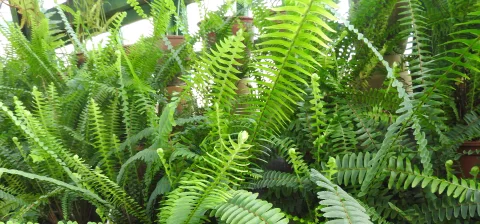 Boston Fern Nephrolepis exaltata Care guide
 -
 Bird's Nest Fern Asplenium nidus Care guide
 -
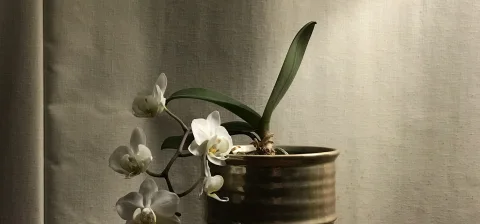 Moth Orchid Phalaenopsis amabilis Care guide
 -
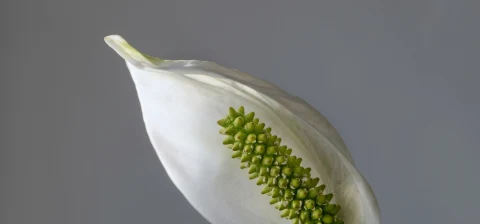 Peace Lily Spathiphyllum wallisii Care guide
 -
 Pothos Epipremnum aureum Care guide
 -
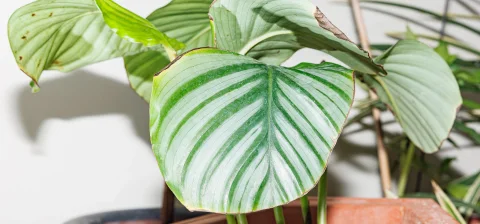 Calathea Orbifolia Goeppertia orbifolia Care guide
 -
 Nerve Plant Fittonia albivenis Care guide
 -
 Spider Plant Chlorophytum comosum Care guide
 -
 Snake Plant Dracaena trifasciata Care guide
 -
 ZZ Plant Zamioculcas zamiifolia Care guide
Frequently asked questions
Can you put a plant in a bathroom with no window?
Not for the long term, because no plant lives without light. You need a grow light switched on for several hours a day, or you can alternate the plant between the bathroom and a bright room.
Is shower steam good for plants?
It raises the humidity of the air, which benefits ferns and calatheas, but it is irregular: brief, then a dry and sometimes cold room. It does not replace proper watering.
Which plant is easiest in a bathroom?
The spider plant, pothos and peace lily do well in a bathroom with a window. Plants that hate excess humidity, such as cacti and succulents, are best avoided.
Should you water more often in a humid bathroom?
Not necessarily. Humid air makes the soil dry more slowly: always check the moisture of the substrate before watering.