
Do Houseplants Purify the Air? What's True and What's Exaggerated
No: in an ordinary home, a few plants do not purify the air in any measurable way. The idea comes from a real study, but its conditions have nothing to do with a house where you open the windows, cook and slam doors. Plants are worth keeping for other reasons, and that is what this article separates out: what is established, what has been extrapolated, and what you can expect from them.
Where the idea comes from: the 1989 NASA study
In 1989, NASA researchers placed plants in small, sealed, airtight chambers, then injected volatile organic compounds such as benzene or formaldehyde. In those chambers, the concentration of these compounds fell over time. The result is accurate. Yet for decades it was repeated as if a plant in a living room had the same effect.
The problem lies in the set-up. A small sealed chamber does not renew its air: everything injected into it stays there, and the plant, along with the microorganisms in its soil, works on a tiny volume. A real room constantly loses and renews its air through windows, gaps and vents. At that rate, what a few leaves can remove is negligible next to what ventilation carries away.
What recent scientific reviews conclude
Several literature reviews published since have gone back over the studies on the subject, including those carried out in more realistic conditions. Their conclusion converges: to get a measurable effect on the pollutants in the air of a ventilated home, you would need an unrealistic density of plants, out of all proportion with a livable interior. Measurements taken in real rooms show no notable improvement in air quality due to houseplants.
That does not mean plants capture nothing. They do absorb certain molecules, and the microorganisms in the soil contribute too. But the scale has nothing to do with what the “air-purifying plants” lists in circulation promise.
What works: ventilating
If your goal is healthier air, the proven method needs no plant at all. Open the windows wide for a few minutes, once or twice a day, even in winter. Run the bathroom and kitchen extractor fans. Limit pollution sources at the root: cleaning products and scented candles, smoke, new paint and furniture that give off volatile compounds. Good air exchange does more than any amount of foliage.
What plants really bring
Keeping plants does not have to be justified by air cleaning. They have more modest but real effects, or at least more plausible ones:
- They make a room nicer to look at and to live in, which many people find calming. Studies on psychological wellbeing are more nuanced than the marketing promises, but the appeal of greenery is widely shared.
- They release water vapour, so the air is slightly more humid in their immediate vicinity. The effect is local and weak.
- They give rhythm to daily routines: watering, spotting a new leaf, turning the pot.
That is reason enough, as long as you do not ask them to do what they do not do.
Easy-going plants, if you want some anyway
If you like the idea of a plant in every room, you may as well choose species that survive a beginner. All of those below appear among the plants often cited in these lists, but choose them for their toughness, not for their effect on the air.
The most tolerant
The snake plant (Dracaena trifasciata) puts up with forgotten watering and low light. The pothos (Epipremnum aureum) grows almost anywhere and trails beautifully from a shelf. The spider plant (Chlorophytum comosum) makes babies that are easy to propagate. The heartleaf philodendron (Philodendron hederaceum) has the same qualities. The rubber plant (Ficus elastica) needs a bright room but stays simple.
Those that like more care
The peace lily (Spathiphyllum wallisii) shows by its drooping leaves that it is thirsty, which helps you learn. The dragon tree (Dracaena marginata) gives height. The kentia palm (Howea forsteriana) is a slow, long-lived indoor palm. The Boston fern (Nephrolepis exaltata) enjoys ambient humidity and dries out quickly in heated air. The English ivy (Hedera helix) prefers a cool room.
Pets: watch out for toxicity
Several of these plants are toxic to cats and dogs, according to the ASPCA entries reproduced on the site: the snake plant, pothos, peace lily, dragon tree, ivy and philodendron. The spider plant, kentia palm and Boston fern are listed as non-toxic to cats and dogs. If a pet nibbles your plants, this criterion comes before any “air-cleaning” reputation. For the rubber plant, the page does not point to a dedicated ASPCA entry but flags caution.
Why the myth persists
The line “a plant cleans the air” is appealing: simple, reassuring, easy to sell. It rests on a real fact, that some plants and their soil absorb volatile compounds, and it ignores the question of scale. A result obtained in a laboratory box was transposed to a living room without anyone checking whether the change of scale held up.
When a source promises that a plant “eliminates” a given molecule, ask yourself under what conditions that was measured, and in what volume of air. If the answer is a sealed chamber, the result does not carry over to your home. The figures that accompany these promises are often extrapolations, and we do not repeat any of them here.
Making a reasonable choice
Choose first according to the light you have, then according to the time you want to spend on care, and finally according to whether pets or children are around. These three criteria decide whether a plant succeeds, whereas an air-cleaning reputation changes nothing. A well-placed plant that grows without trouble will give you more than a supposedly “purifying” plant wilting in a dark corner.
And if your concern is real, for example after renovation work, new furniture or a persistent smell, the right approach is to identify the source and ventilate, or even have the air measured by a professional, rather than adding pots.
Every plant mentioned here has its own detailed page on the site, with light, watering, soil and repotting. The Plantalya app lets you identify a plant from a photo and sends watering reminders, which prevents the most common mistake: watering too often.
Plants mentioned in this article
-
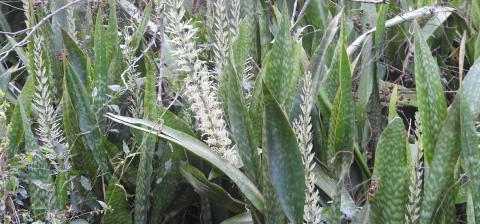 Snake Plant Dracaena trifasciata Care guide
 -
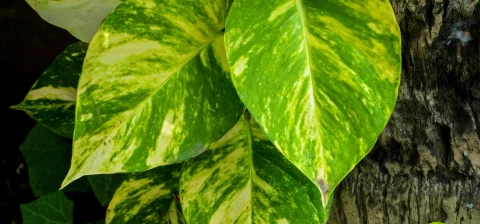 Pothos Epipremnum aureum Care guide
 -
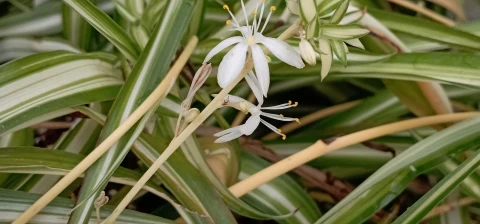 Spider Plant Chlorophytum comosum Care guide
 -
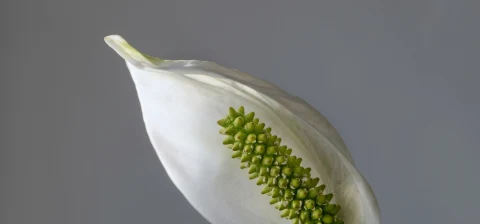 Peace Lily Spathiphyllum wallisii Care guide
 -
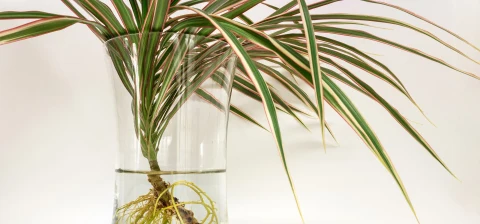 Dragon Tree Dracaena marginata Care guide
 -
 Kentia Palm Howea forsteriana Care guide
 -
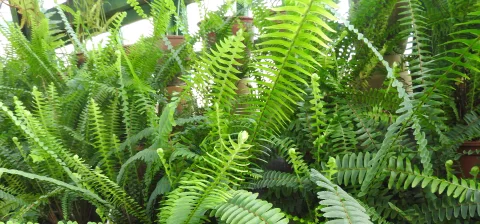 Boston Fern Nephrolepis exaltata Care guide
 -
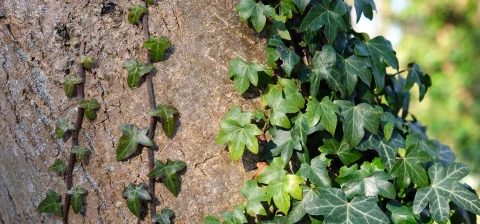 English Ivy Hedera helix Care guide
 -
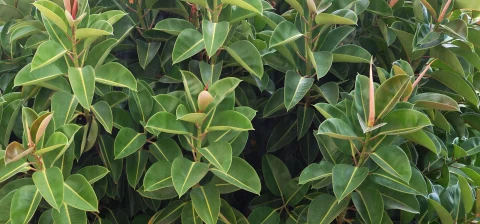 Rubber Plant Ficus elastica Care guide
 -
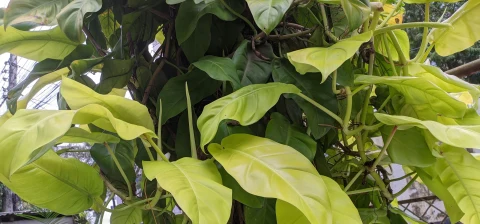 Heartleaf Philodendron Philodendron hederaceum Care guide
Frequently asked questions
How many plants does it take to purify the air in a room?
Scientific reviews published since the NASA study estimate that it would take an unrealistic number, far more than a living room can hold, to get a measurable effect in a home where the air is renewed. So there is no reasonable number to give you. To freshen the air, open the windows.
What is the best plant for improving bedroom air?
None can be presented as effective on this point. If you want a plant in the bedroom, choose it for its easy care and looks, for example a snake plant or a spider plant, and air the room every day.
Can houseplants make air quality worse?
Constantly soggy soil can encourage mould and fungus gnats, which does not help. Water only when the surface of the substrate has dried and empty the saucers.
Do plants humidify the air?
They release water vapour through their leaves, which makes the air slightly more humid around them. The effect stays local and does not replace a humidifier in a very dry room.