
How to Protect Your Plants From Frost: Balcony, Garden and Pots
Frost starts at 0 °C, but the risk depends on the plant, the length of the cold and where it grows. To protect it: bring tender potted plants indoors, mulch the base of those staying outside, cover with horticultural fleece whatever cannot be moved, and do not overwater before the cold. Each point is detailed below, with the plants concerned.
Knowing what each plant can take
Before acting, you need to know whether your plant freezes at 0 °C or whether it holds out fifteen degrees lower. Hardiness is the minimum temperature a plant withstands in open ground, usually given on the site’s plant pages. Three broad groups emerge.
Tropical or subtropical plants suffer well before frost: the bougainvillea (Bougainvillea glabra), for example, is damaged as soon as frost approaches. Tender plants that tolerate a light chill do not survive a real frost: the zonal geranium (Pelargonium hortorum) and the African lily (Agapanthus praecox) barely tolerate a few degrees above zero. Hardy plants spend the winter outside, like English lavender (Lavandula angustifolia) or the hardy fuchsia (Fuchsia magellanica), but need help in pots.
What to bring in before the first frosts
For the first group there is no hesitation: bring them in. Bougainvillea, oleander (Nerium oleander), lemon tree (Citrus limon), zonal geranium and African lily spend the winter under cover, in an unheated conservatory, a bright garage or a cool room. The ideal is a bright spot, cool but frost-free, where the plant slows down without growing leggy.
Bring them in before the first nights close to zero, not after. The lemon tree is sensitive to cold and drops its leaves when it freezes, and oleander tolerates cold slightly better than the others, but not a prolonged frost. Before bringing them in, inspect the leaves so you do not carry scale insects and aphids indoors, and cut back on watering.
Tender bulbs and tubers have their own method. The garden dahlia (Dahlia pinnata) and the canna lily (Canna indica) have their foliage destroyed by the first frost. In cold regions, you lift the tubers or rhizomes, let them dry, then store them dry and frost-free until spring.
What stays outside: mulching and wrapping
Mulch at the base
A thick layer of straw, dead leaves, wood chips or bark at the foot of a perennial or shrub protects the roots and the crown. It is the cheapest and most effective step. Lay it down before the ground freezes deep, and leave it in place until spring.
Horticultural fleece
For plants in the ground that cannot be moved, fleece laid over the plant gains a few degrees, which is why it suits a cabbage tree (Cordyline australis), whose heart is sensitive to damp and cold. Fix it firmly and tie it at the base, with no airtight plastic that creates condensation and encourages rot. Open it on mild days to let air in.
Hardy plants in pots
A pot exposes the roots to cold on all four sides, whereas in open ground the soil protects them. A hardy plant that would be fine in the ground can therefore freeze in a pot. Move the pots against a house wall, south-facing or sheltered from the wind, group them together, raise them on pot feet so they do not sit in water, and wrap the pots in bubble wrap or hessian. The olive tree (Olea europaea) tolerates moderate cold in the ground, but in a pot it needs more protection.
Common mistakes
- Bringing plants in too late. A single night of frost is enough to destroy a tropical plant.
- Bringing them into a room that is too warm and dark. The plant grows poorly for lack of light, turns leggy and attracts pests. A cool, bright place is better than a heated living room.
- Watering as in summer. A dormant plant drinks little, and soggy soil that freezes damages the roots.
- Covering with airtight transparent plastic, which holds in moisture and heats up in the sun, making the plant rot.
- Pruning in autumn. Pruning stimulates fragile shoots that frost will destroy. Wait for spring.
- Forgetting the wind. A cold wind dries out foliage and worsens frost damage, especially on evergreens.
Choosing the spot according to the real cold
The same garden does not have the same climate everywhere. A south-facing wall gives back at night the heat it stored during the day, the foot of a wall sheltered from the wind is milder than an open lawn, and the bottom of a slope where cold air pools freezes before everything else. Put your tender plants in the warmest, most sheltered corner, not in the prettiest spot.
On a balcony the situation is particular: pots are exposed to wind and cold from the sides, and from below too if the planter sits on a slab. Push them against the house wall, group them, insulate them from the ground with a board or pot feet, and wrap the pot in hessian or bubble wrap. Balconies on upper floors are windier, which makes the cold worse.
Following the weather without panicking
Look at the forecast minimum temperature for the night, not the daytime temperature. A clear, windless sky favours frost even if the afternoon was mild. When a cold night is forecast, bring tender pots in late in the afternoon and lay the fleece before dusk. A tropical plant needs to be sheltered well before that stage.
A minimum thermometer placed in the garden or on the balcony gives you the real temperature of the spot, often different from that of the nearest weather station. After one winter, you will know which areas freeze and which stay mild.
After the frost
If a plant has frozen, do not cut anything right away. The damaged leaves and twigs still insulate what lies beneath. In spring, scratch the bark lightly: if it is green, the wood is alive and the plant will recover. Prune back to healthy wood, without hurry.
As for pets, several of these plants are toxic according to the ASPCA: the lemon tree, zonal geranium, dahlia and lavender for cats and dogs, and oleander seriously for humans and animals alike. The African lily is described as harmful if eaten. The canna lily, fuchsia and bougainvillea are listed as non-toxic to cats and dogs.
Every plant mentioned has its own page with its hardiness and winter needs. The Plantalya app lets you identify a plant and receive reminders adapted to the season.
Plants mentioned in this article
-
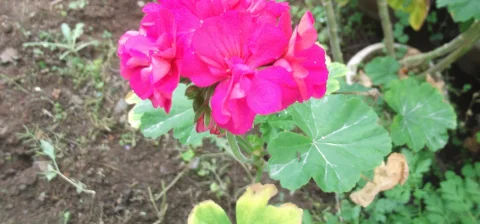 Zonal Geranium Pelargonium hortorum Care guide
 -
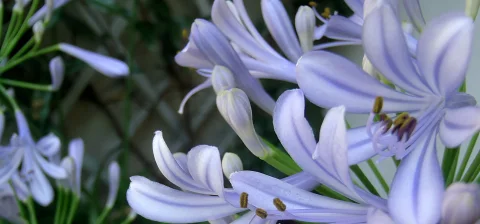 African Lily Agapanthus praecox Care guide
 -
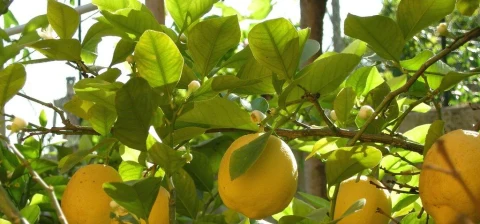 Lemon Tree Citrus limon Care guide
 -
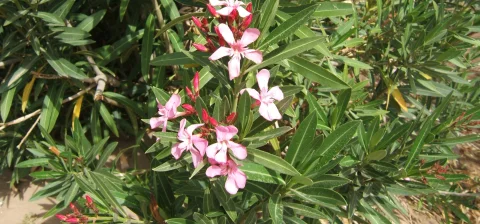 Oleander Nerium oleander Care guide
 -
 Paper Flower Bougainvillea glabra Care guide
 -
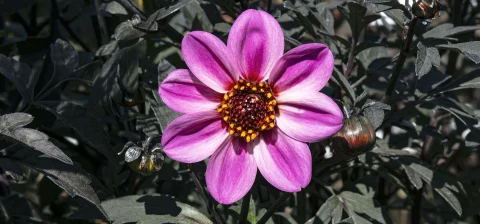 Garden Dahlia Dahlia pinnata Care guide
 -
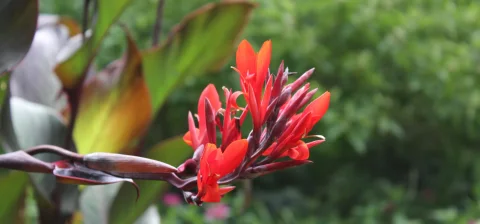 Canna Lily Canna indica Care guide
 -
 Olive Tree Olea europaea Care guide
 -
 Cabbage Tree Cordyline australis Care guide
 -
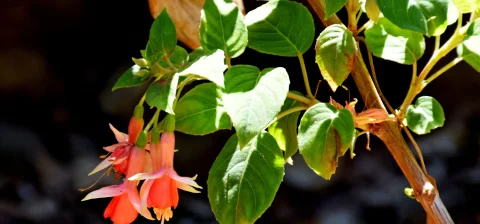 Hardy Fuchsia Fuchsia magellanica Care guide
 -
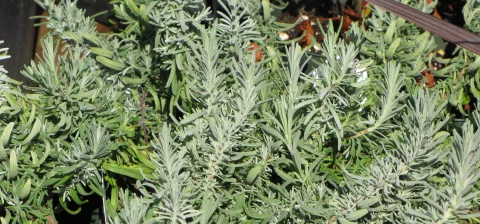 English Lavender Lavandula angustifolia Care guide
Frequently asked questions
At what temperature should plants be brought indoors?
As soon as nights approach 0 °C for frost-tender plants, and earlier for tropicals, which already suffer when it turns cool, around 10 °C. Watch the forecast minimum temperature, not the afternoon one.
Is horticultural fleece enough against a hard frost?
It gains a few degrees, no more, and does not replace sheltering a truly tender plant. For prolonged frost, combine it with a thick mulch and a spot sheltered from the wind.
Should you water before a frost?
Moist soil holds heat better than dry soil, but excess water freezes and damages roots in pots. Water moderately the day before, never in the middle of a frost.
My plants have frozen. What should I do?
Do not prune right away: the damaged parts still protect what is underneath. Wait for the return of mild weather, then cut back to living wood, which is green inside.