Sweet Cherry
Prunus avium
Family · Rosaceae
Sweet cherry only forgives pruning in July and August, needs a self-fertile cultivar or a partner tree, and loses its crop to birds without netting.
Prunus avium
Plant profile
- WateringModerateWater every 7 days
- Light exposureFull sun
- Ideal temperature-20–-15 °C
- Hardiness zoneUSDA 3–8
Growth
- Family
- Rosaceae
- Life cycle
- Perennial
- Growth speed
- 6/10
- Mature size
- 200–2000 cm
- Spread
- 150–1000 cm
- Flowering
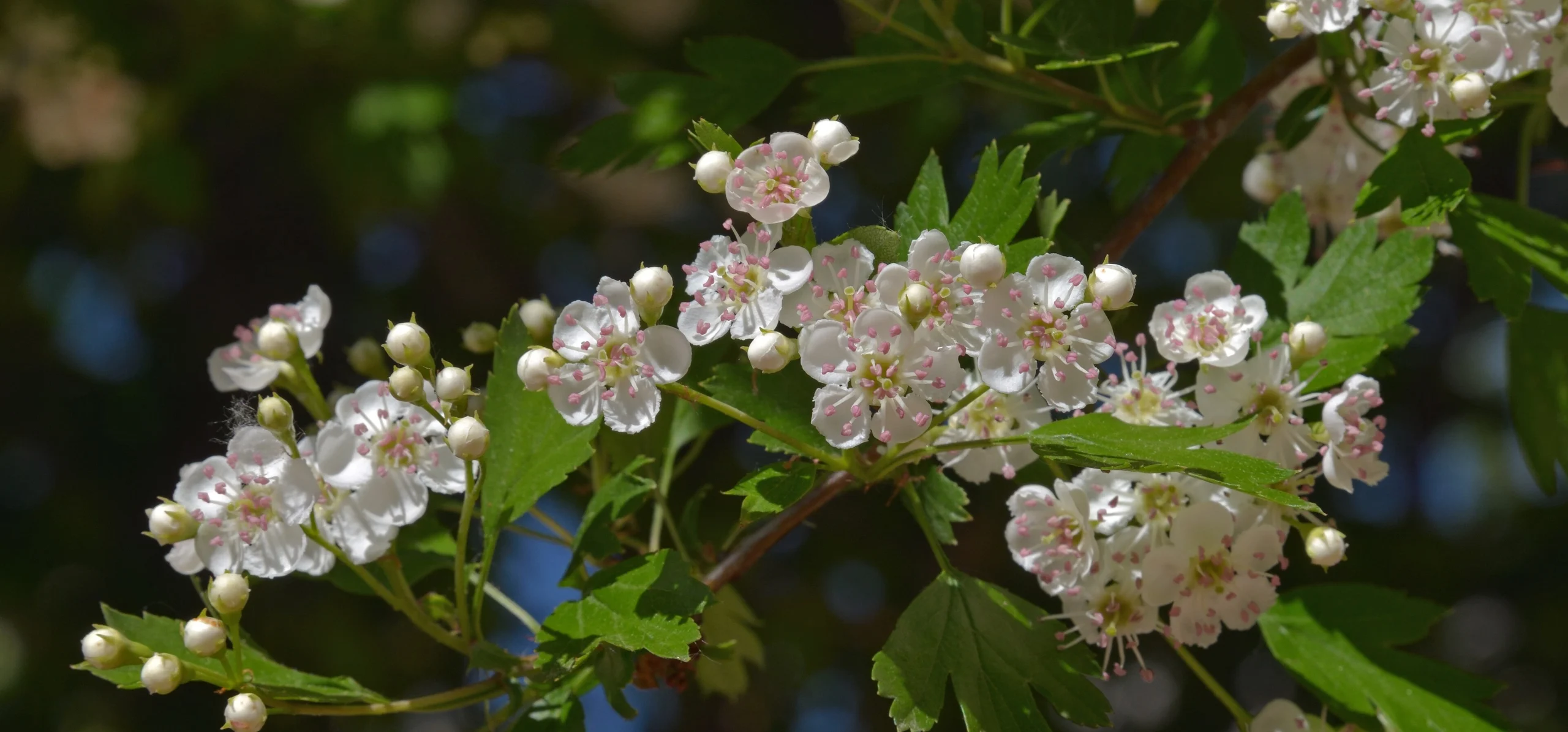
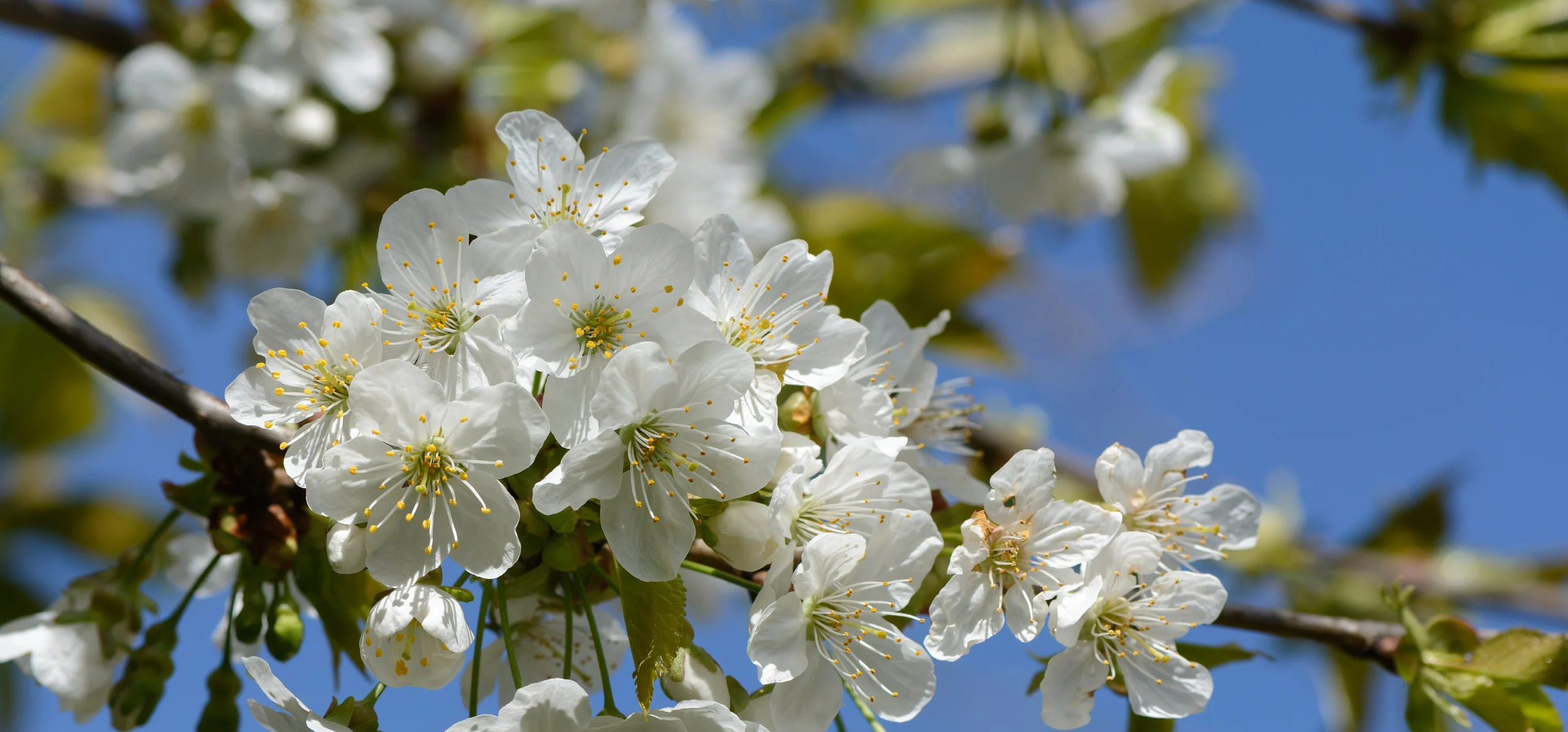
- Clusters of white flowers around 2.5 cm wide in April, before full leaf
- Propagation
- Grafting
- Cutting
- Seed
Dormancydeciduous, dormant in winter
Time to maturityfruits within 3 to 4 years on Gisela 5 or Colt rootstock (RHS/nursery data)
Soil & climate
- Soil pH
- pH 6–6.8
- Soil types
- loam, well-drained
- Saline soil
- Not tolerated
- Drought tolerance
- No
Light & Placement
- Origin
- Europe to Afghanistan and North Africa (POWO)
- Where to place it
- open sunny garden
- fan-trained against a warm wall
- sheltered orchard planting
- large container on Gisela 5 rootstock, short to medium term
Safety
- Toxicity
- CatsToxic
- DogsToxic
- HorsesToxic
Invasive speciesnot listed as invasive; the parent species of cultivated sweet cherries, native and widespread across Europe
Data fromGBIF Backbone Taxonomy: Prunus avium (L.Plants of the World Online (Kew): PrunusRHS: Prunus avium (wild cherry)RHS: Bacterial cankerRHS: Silver leafRHS: Spotted wing drosophila
Where it grows
World distribution
Sweet Cherry is native to 34 countries: Afghanistan, Albania, Algeria, Austria, Belarus, Belgium, Bulgaria, and Croatia….GBIF records 653,448 documented identifications across 85 countries, with the largest concentrations in France, United Kingdom, and Germany.
- Afghanistan
- Albania
- Algeria
- Austria
- Belarus
- Belgium
- Bulgaria
- Croatia
- Cyprus
- Czechia
- Denmark
- France
Show 22 more countriesShow fewer countries
- Georgia
- Germany
- Greece
- Hungary
- Iran
- Ireland
- Italy
- Libya
- Morocco
- Netherlands
- Norway
- Poland
- Portugal
- Romania
- Russia
- Spain
- Sweden
- Switzerland
- Tunisia
- Türkiye
- Ukraine
- United Kingdom
Yellow to orange dots: concentration of documented identifications per country. Green countries: sourced native range. Source: GBIFNative range from POWO (Kew).
Prunus avium is the wild, woodland cherry of Europe and the parent of every dessert cherry sold today, a tree that can reach 20 m or more left to its own devices but is usually bought as a grafted cultivar kept to a fraction of that size. Buying one means two decisions before anything else: whether the variety is self-fertile or needs a second tree nearby to set fruit, and which rootstock keeps it manageable in an ordinary garden. Get those two right and the rest, planting, watering, feeding, is straightforward; the rule that actually catches people out is pruning, which on this species has to wait for summer.
Choosing a Self-Fertile Cultivar or a Pollination Partner
Most sweet cherry varieties need a second, different cultivar flowering at the same time nearby to set fruit at all, which rules out a single tree in a small garden unless the cultivar is self-fertile. 'Stella' was the first self-fertile sweet cherry bred to genuinely good eating quality, released in Canada in the 1960s, and remains the standard choice where there is room for only one tree. 'Sunburst' and 'Lapins' are also self-fertile: RHS lists 'Lapins' as needing no pollinator while itself pollinating almost any other variety, useful if a second tree gets added later. A self-fertile tree still crops more heavily with a compatible partner nearby, so where there is space for two, pairing a self-fertile variety with an early or mid-season pollinator is worth doing even when not strictly required.
Rootstock: What Actually Controls the Size
The cultivar decides the flavour; the rootstock decides how big the tree gets and how soon it fruits, since ungrafted Prunus avium is a full-sized forest tree. Gisela 5 is the semi-dwarfing rootstock for an ordinary garden, keeping a tree to around 2 m and bringing it into fruit within 3 to 4 years, but a tree this size needs permanent staking and cannot support itself in wind. Colt is semi-vigorous, giving a tree of around 3 m at maturity after about 7 years, needs less staking once established, and suits a garden with more room to spare. Fan training against a warm wall is the traditional way to grow sweet cherry in a limited space regardless of rootstock, spreading the branches flat to catch heat that speeds ripening and makes netting far easier to rig at fruiting time.
Planting
Plant bare-root trees in winter while dormant, from November to March, in deep, fertile, well-drained soil in full sun with shelter from strong wind, which both cherry blossom and the tree's shallow root system dislike. RHS advice for sweet cherry cultivars specifies a slightly acid, free-draining soil; waterlogging in winter is one of the more common ways a young tree fails, so avoid low, poorly drained spots even if the site is otherwise sunny. Stake a tree on Gisela 5 or Colt for its first several years, since neither rootstock produces the root anchorage of a full-sized seedling tree, and water it in well at planting regardless of the season's rainfall.


Watering and Feeding
Water regularly through the first one to two growing seasons while the roots establish, then rely mainly on rainfall except in extended dry spells, particularly once fruit is swelling in early summer: a cherry that goes from dry soil to a sudden heavy watering or rain right as the fruit is ripening will split its skins, since the fruit absorbs water faster than it can expand. Keeping soil moisture even through that final swell, rather than catching up after a dry spell, avoids most splitting. Feed with a balanced general fertiliser in spring and mulch generously around the base each year with well-rotted organic matter, keeping the mulch clear of the trunk itself to avoid rot at the base.
Pruning: Summer Only, Never in Winter
Sweet cherry is pruned only while the tree is in leaf, ideally in July or August once the current year's growth has firmed up. Pruning outside this narrow window is the single biggest risk to the tree's long-term health: both silver leaf, caused by the fungus Chondrostereum purpureum, and bacterial canker, caused by Pseudomonas syringae, infect through fresh pruning wounds, and both pathogens release most of their spores in autumn and winter while wounds cut at that time of year also heal far more slowly. RHS advice on both diseases converges on the same window, July or August, when cut tissue is most resistant to infection and heals fastest. A tree pruned in winter can look fine for a season or two before dieback appears, by which point the infection is established in older wood; the safest rule is simply never to reach for secateurs on a cherry between autumn leaf fall and the following summer, whatever the reason.
Fan Training Against a Wall
A fan-trained cherry on Gisela 5 or Colt turns a boundary wall into most of a garden's cherry harvest: the warmth held by the wall advances flowering and ripening by days to weeks compared with an open tree, and the flattened framework makes both pollination and bird netting far more practical than on a free-standing canopy. Young growth is tied in to wires or trellis through spring and early summer to build the fan's ribs, and the same summer pruning window applies, shortening sideshoots back to encourage fruiting spurs along the main branches rather than letting the tree throw growth outward from the wall.
Netting Against Birds
Birds are the main practical threat to a garden cherry crop and will strip a tree of ripe fruit within days if it is left uncovered, often before the fruit is fully ripe by human standards. Fine-mesh netting thrown over the canopy or, more reliably, a permanent fruit cage around a fan-trained tree is the only dependable defence; netting has to go on before the fruit colours up, since birds target cherries as soon as they show red. The same fine mesh, kept below roughly 1 mm, also excludes spotted wing drosophila, a vinegar fly first recorded in Britain in 2012 whose females cut into ripening, still-firm fruit to lay eggs, unlike older fruit flies that only attack fruit already damaged or overripe; netted rows in cherry trials show measurably lower spotted wing drosophila numbers than unnetted ones.
Pests and Diseases
Cherry blackfly clusters on shoot tips in spring, curling and crumpling young leaves, but RHS notes it rarely threatens flowering or cropping; encouraging ladybirds, hoverflies and other aphid predators usually keeps numbers down without spraying. Brown rot and blossom wilt, both caused by Monilinia fungi, turn blossom and fruiting spurs brown and shrivelled in wet spring weather and can spread into ripening fruit as soft brown patches covered in grey-tan pustules; removing infected blossom, spurs and mummified fruit promptly, rather than leaving them over winter, is the main non-chemical control. Bacterial canker beyond the pruning-timing risk above shows as sunken, gummy patches of dead bark and small round leaf holes known as shothole; badly cankered branches are best removed in the July to August window.
Ornamental Value and 'Plena'
Even without fruiting in mind, wild cherry is grown as an ornamental tree for its clouds of pure white blossom in April, its glossy bark that peels in horizontal bands, and orange-red autumn colour that few other trees match. 'Plena', the double gean, carries fully double white flowers and sets no fruit at all, chosen purely for the spring display on a tree too large for most gardens unless there is real space to give it. Both the species and 'Plena' flower before most of the crown is in leaf, so the blossom shows against bare branches rather than being partly hidden by foliage.
Toxicity and Timber
The ASPCA lists cherry species, including sweet cherry, as toxic to cats, dogs and horses: the leaves, stems and pits contain cyanogenic compounds that release cyanide, most dangerous in wilted or damaged leaves, while the ripe fruit flesh itself is not toxic. Keep prunings and windfall pits away from pets and grazing animals. Away from the garden, wild cherry is valued as a timber tree in its own right: the honey-coloured, close-grained wood takes a fine polish and is used for furniture, cabinetry, veneer and turned objects, a use with nothing to do with the sweet fruit most gardeners actually plant it for.
Test your plant knowledge
Tap a card to flip it and reveal the answer.
Sweet cherry should be pruned in winter while the tree is dormant, like most fruit trees. Tap to reveal ✕ False
Some sweet cherry cultivars, such as 'Stella' and 'Lapins', are self-fertile and do not need a second tree to crop. Tap to reveal ✓ True
The rootstock a cherry is grafted onto has no effect on its eventual size. Tap to reveal ✕ False
Fine bird netting over a cherry tree also helps exclude spotted wing drosophila. Tap to reveal ✓ True
The flesh of a ripe cherry is toxic to dogs in the same way the leaves and pits are. Tap to reveal ✕ False
Sources
References consulted for this guide
- GBIF Backbone Taxonomy: Prunus avium (L.) L.gbif.org
- Plants of the World Online (Kew): Prunus avium (L.) L.powo.science.kew.org
- RHS: Prunus avium (wild cherry)rhs.org.uk
- RHS: Bacterial cankerrhs.org.uk
- RHS: Silver leafrhs.org.uk
- RHS: Spotted wing drosophilarhs.org.uk
- ASPCA: Toxic and Non-Toxic Plants, Sweet Cherryaspca.org
- North Carolina Extension Gardener Plant Toolbox: Prunus aviumplants.ces.ncsu.edu
- Reference entity : Wikipédiaen.wikipedia.org